-

-


Follow Us
-

 On Facebook
 On Flipboard


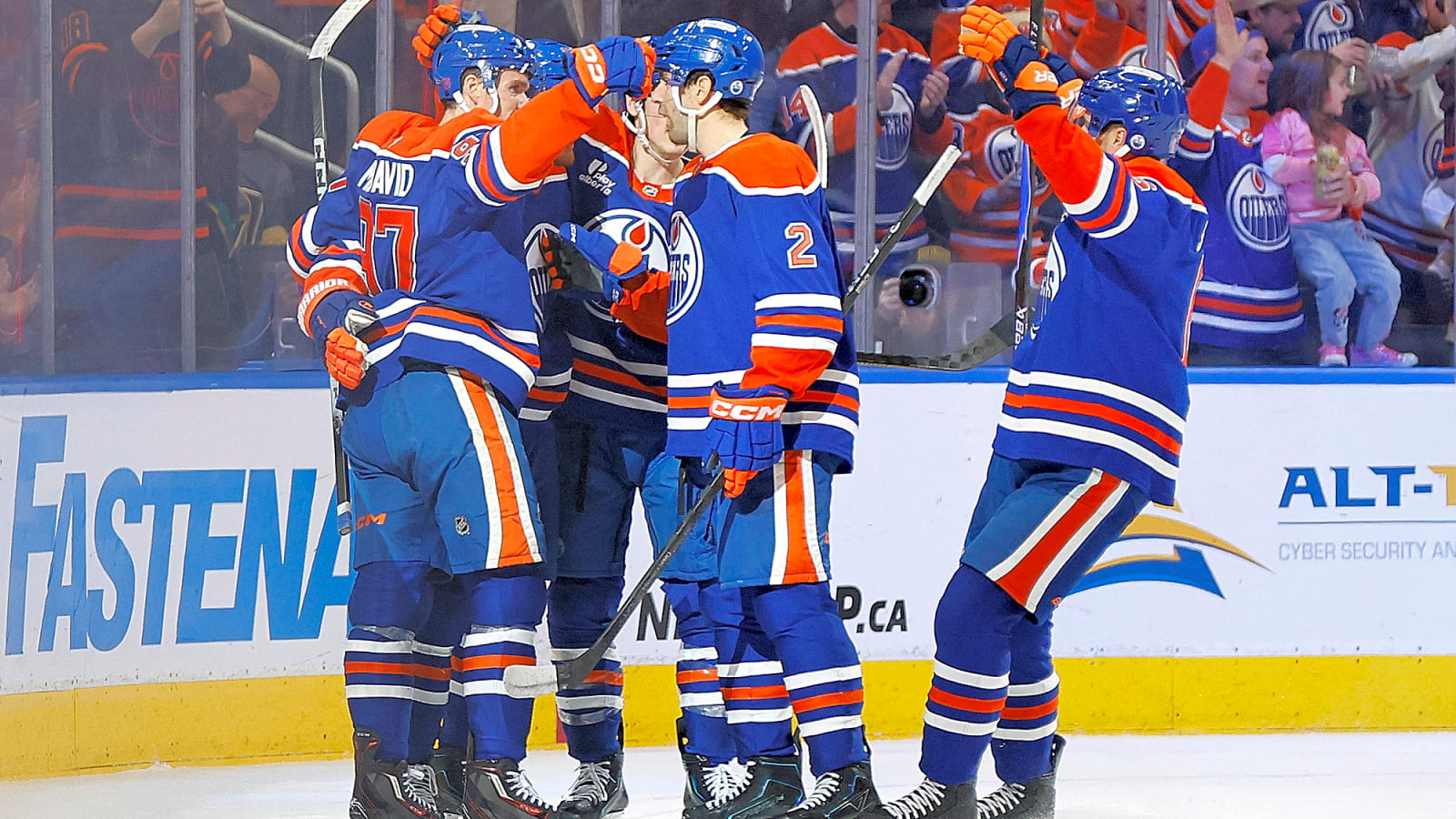
Connor McDavid and Evan Bouchard reached two significant offensive milestones on the same night, Friday, against the Seattle Kraken. McDavid scored his 15th goal of the season to reach 60 points, while Bouchard recorded his 30th assist, establishing another Edmonton Oilers franchise record.
Purchase tickets via Ticketmaster
However, Edmonton lost 4-2 at Rogers Place, extending its losing streak to five games. The Oilers still lead the Pacific Division, but their recent results raise an interesting question. How can a team receiving this level of offensive production from two players struggle to win games?
McDavid’s Historic Scoring Pace
McDavid has 15 goals and 45 assists through 28 games, averaging 2.14 points per game. According to the NHL, he is the sixth different player to reach 60 points in 28 games or fewer and the first since Mario Lemieux in 1995-96.
Lemieux needed just 21 games to reach the milestone that season. He finished with 161 points in 70 appearances for Pittsburgh. Wayne Gretzky accomplished the feat eight times, while Lemieux did so four times. Bernie Nicholls, Mike Bossy and Phil Esposito also belong to that group.
What makes McDavid’s start particularly interesting is the difference between his current production and his career-best season. He scored 64 goals and added 89 assists in 2022-23, finishing with 153 points in 82 games. This season, he is averaging fewer goals per game but considerably more assists.
His 45 assists are already more than half of what he recorded during that career year. He reached 40 assists in 22 games, matching Gretzky’s 1984-85 mark for the fastest start to that total. Furthermore, McDavid has 26 power-play points and 34 points in all other situations. His production isn’t limited to taking advantage of opposing penalties.
According to MoneyPuck statistics displayed by PuckPedia, McDavid is averaging 3.21 points per 60 minutes at five-on-five, compared to 2.45 last season. That measures his scoring relative to his playing time and offers another indication that his production has improved beyond the power play.
He leads Kirill Kaprizov by 11 points in the NHL scoring race. At his current rate, McDavid would finish with 180 points over the league’s expanded 84-game schedule. That’s a mathematical pace rather than a prediction, particularly given that his 23-game season-opening point streak ended against Tampa Bay on November 19.
NHL ·
Bouchard Surpasses Paul Coffey’s Records
Bouchard’s offensive start deserves just as much attention. The 27-year-old has 12 goals and 30 assists through 28 games, giving him an eight-point advantage over Minnesota’s Quinn Hughes among NHL defensemen.
Against Vegas on Tuesday, Bouchard reached 40 points in his 27th game. Paul Coffey previously held the Edmonton record after reaching that total in 30 games during the 1985-86 season. Friday’s assist also moved Bouchard ahead of Coffey’s 1986-87 mark of 29 games to reach 30 assists.
Additionally, Bouchard’s 287th career regular-season assist tied Charlie Huddy for third among Edmonton defensemen. His 42 points through 28 games also matched Bobby Orr for fifth in NHL history among defensemen at that stage of a season.
Coffey finished 1985-86 with 48 goals and 138 points in 79 games. Only Orr, with 139 points in 1970-71, has recorded more points in a season as a defenseman. Bouchard’s current 126-point pace puts those accomplishments into perspective without suggesting he has surpassed either player as an overall defenseman.
Bouchard led NHL defensemen with 95 points last season, so the improvement is coming from a player who was already among the league’s best offensive defensemen. The most encouraging aspect of Bouchard’s production is how much comes outside the power play. Of his 42 points, 16 have come with the man advantage. He has also improved his five-on-five scoring rate from 1.84 points per 60 minutes last season to 2.63 through his first 27 games, according to MoneyPuck data available through PuckPedia.
His shooting percentage of 17.1 percent is another factor worth monitoring. Maintaining that rate from the blue line will be difficult, but Bouchard’s offensive value extends beyond his shot. His ability to move the puck to Edmonton’s forwards and contribute to scoring opportunities is reflected in his assist totals.
NHL ·
Individual Success, Team Struggles
Edmonton has scored 14 goals while allowing 23, excluding the shootout-deciding goal, over its five-game losing streak, which includes a shootout defeat. That translates to 2.80 goals scored and 4.60 allowed per game. Before the stretch, the Oilers had won six consecutive games.
The recent results contrast sharply with Edmonton’s season-long performance. The Oilers have 38 points and a .679 points percentage. They have also outscored opponents by 20 goals using the standings totals, so their five-game stretch should not erase what they accomplished beforehand.
However, the underlying numbers suggest there are areas of concern. MoneyPuck’s player data shows Edmonton controlling 58 percent of expected goals at five-on-five with McDavid on the ice. The figure represents the team’s share of the estimated scoring value of both teams’ chances during his shifts.
Bouchard’s corresponding figure was 55 percent through November 24. Both players were substantially above the team’s expected-goal share without them according to the same provider’s relative metrics. While teammates and matchups influence those numbers, they suggest Edmonton’s difficulties extend beyond the players producing its offense.
The team numbers reinforce that concern. Through 28 games, PlayerWON estimates Edmonton has generated 1.69 expected goals per game at five-on-five while allowing 1.90. That is a negative balance despite the individual success of its two leading playmakers.
Edmonton’s power play is converting 30.6 percent of its opportunities this season. Yet the Oilers managed just one goal on eight opportunities Friday. Even a successful power play cannot be expected to overcome every mistake at even strength.
Bouchard was involved in one of those mistakes himself against Seattle. His intercepted pass led to the rush that produced Kaapo Kakko’s winning goal. His offensive accomplishments deserve recognition, but they do not remove the importance of defensive decisions, particularly when protecting a lead late in a game.
Tristan Jarry stopped 27 of 30 shots Friday, with Seattle adding an empty-net goal. That performance also offers a reason not to place the entire losing streak on Edmonton’s goaltending. The Oilers had a lead going into the third period and enough power-play opportunities to extend it.
Can Edmonton Capitalize on Historic Production?
It would be unfair to suggest Edmonton has received no offense beyond McDavid and Bouchard. Leon Draisaitl leads the NHL with 24 goals and has 48 points. Vasily Podkolzin also has 34 points and extended his career-best point streak to seven games Friday.
Nevertheless, the Oilers need more reliable results when their leading players are off the ice. Improving those minutes could be as valuable as asking McDavid or Bouchard to produce even more offense. That doesn’t necessarily require another high-scoring forward. Better defensive shifts, reliable puck management and contributions from the rest of the lineup can help preserve the leads Edmonton’s top players create.
Saturday’s rematch in Seattle provides an immediate opportunity to end the losing streak. More importantly, Edmonton has already demonstrated over the first third of the season that it can win consistently. The challenge over the remaining 56 games is to build on that success without requiring historically exceptional scoring from its two leading playmakers every night.
More must-reads:
- Matvei Michkov, Flyers relationship reaches possible point of no return after former first-rounder ruled out over 'internal' matter
- Devils defenseman Brenden Dillon suspended four games
- The 'Completion %-record by NFL team' quiz
Breaking News
Trending News





Customize Your Newsletter
 +




Get the latest news and rumors, customized to your favorite sports and teams. Emailed daily. Always free!
PRIVACY POLICY COOKIE POLICY CONTACT US
ABOUT YARDBARKER TERMS OF SERVICE


By using this site, you agree to our Terms of Service and Privacy Policy.
This site is for entertainment purposes only.
There is no gambling offered on this site.
Gambling Problem? Call 1-800-Gambler.