
-


Follow Us

 On Facebook
 On Flipboard
 On Twitter
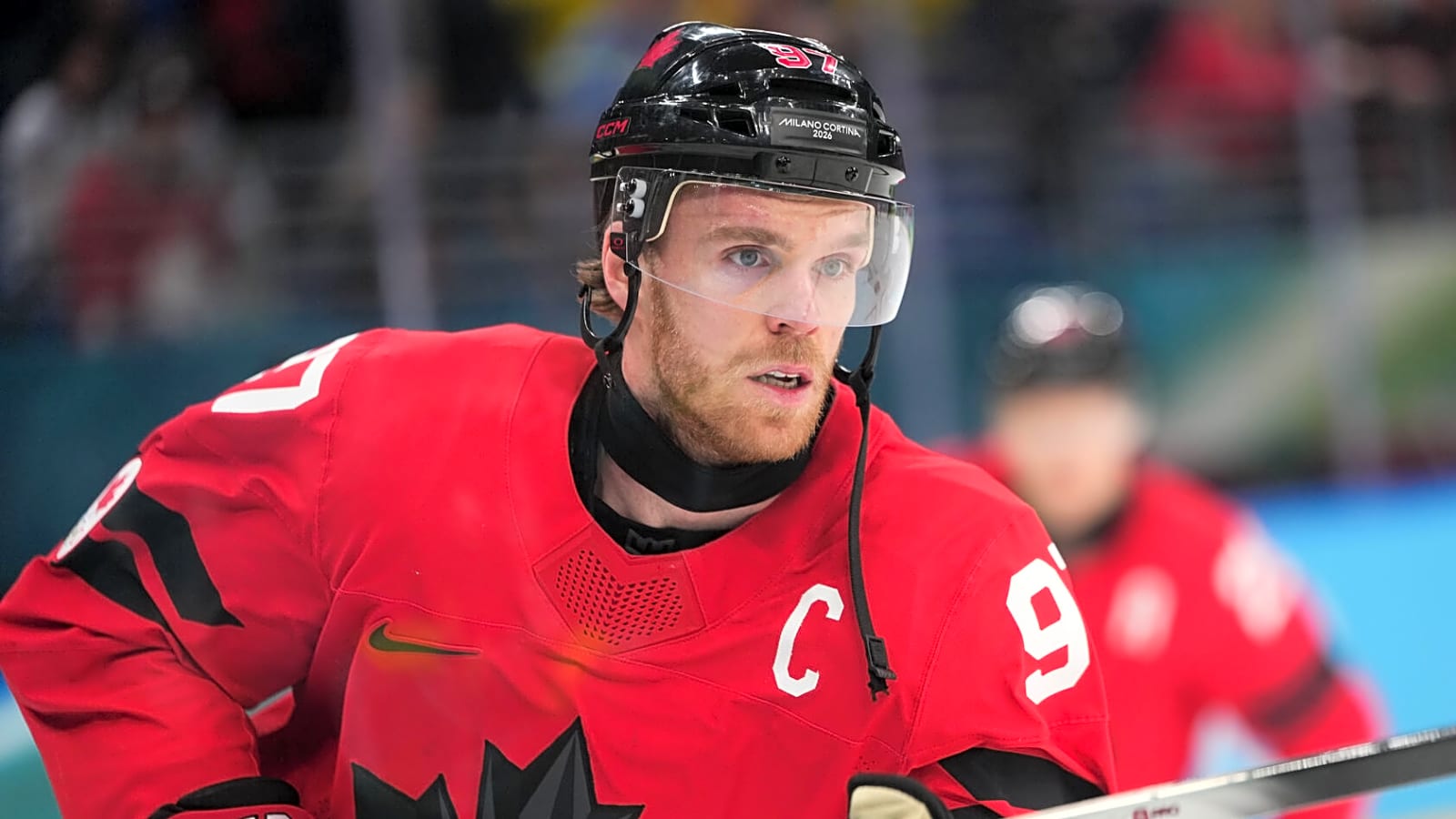
When you look at Connor McDavid‘s usage under Edmonton Oilers head coach Kris Knoblauch and compare those to the minutes under Team Canada Olympic head coach Jon Cooper, an interesting trend begins to emerge. In fact, it’s a trend that suggests Oiler fans might want to cut Knoblauch some slack.
McDavid’s high ice time in Edmonton is not exclusive to Edmonton. Cooper has often gone to the McDavid well, and his tendency to plop the NHL superstar on the ice reflects a broader trend: McDavid’s elite status means that even the best coach in the world will risk “overusing” No. 97.
Yes, Cooper is widely regarded as one of the NHL’s best bench bosses. He has two Stanley Cups with Tampa Bay, consistent playoff success, and he’s got the respect of players all over the league. Even he leans on McDavid heavily, and his lineup is far more stacked than Edmonton’s.
Looking at the Numbers
During the NHL 2025-26 season under Knoblauch, McDavid is averaging 23:07 minutes per game. That leads all Oilers forwards and ranks among the top five in NHL forwards overall. If we break down those minutes a bit more, we can see that, at even strength, he plays around 18-19 min, power play at around 3:37 min, and short-handed around. 1:06 min. He’s used in all situations.
These minutes are up slightly from his 2024-25 average (22:02), but consistent with his career norm (21:50 overall). Knoblauch has faced criticism for deploying McDavid and Leon Draisaitl (similar ~22-23 min) heavily, especially at 5-on-5, but the Oilers’ results (e.g., near-Cup run in 2025) justify it when the bottom six underperforms, which has long been a problem for the Oilers.
Team Canada doesn’t really have that excuse to fall back on.
2026 Winter Olympics (Under Cooper, Team Canada):
At the Olympics, with a team full of the top players Canada has to offer, McDavid’s minutes are up there. The IIHF doesn’t release specific minutes per game, but if we calculate his total minutes in five games and work out an average TOI per game, it sits around 19-20 minutes.
Exact per-game breakdowns aren’t readily available, but the pattern is obvious. Cooper is “taxing” McDavid alongside stars like Nathan MacKinnon and Macklin Celebrini. In other words, he’s doing what Knoblauch does, and what, frankly, every other coach in Edmonton did before and what most other coaches would do in the same situation.
McDavid Is Just That Good
It’s not as though his tournament performance doesn’t warrant what Cooper is doing. McDavid has 13 points (2G, 11A) in five games and is setting the NHL-era Olympic record for points in a single tournament. When you have a nuclear weapon, you use it.
What makes this argument so fascinating is that Team Canada has what many would consider to be several nuclear weapons. But in comparison to his teammates, McDavid is still well above stars like Mitch Marner or Mark Stone.
In past Olympics with NHLers (1998-2014), top forwards often saw reduced TOI due to depth. It was rare to see a forward get close to 18 minutes per game. The average total Olympic minutes for NHL forwards in 2014 was around 13-14 min/game. McDavid’s projected total, if the trend continues in the gold medal game, will blow that out of the water.
| Metric | NHL 2025-26 (Knoblauch) | Olympics 2026 (Cooper) | Historical Olympic Stars (e.g., Crosby 2014) |
|---|---|---|---|
| Avg TOI/Game | 23:07 | ~19-20 min | ~16-18 min |
| Points/Game | 1.66 (96P in 58GP) | 2.6 (13P in 5GP) | ~0.5 (3P in 6GP for Crosby) |
| Team Context | Oilers (depth issues; bottom-6 GF% ~42%) | All-stars (e.g., MacKinnon, Crosby; PP% 43.75%) | Balanced rosters, but lower star TOI |
Why We Should Be Knoblauch Some Slack
Fans are quick to jump on Knoblauch, suggesting he’ll be worn out by the time the playoffs roll around. And, to be fair, Cooper isn’t worried about Edmonton’s playoff hopes. He’s coaching in a short window, where taxing the best players is not as much of a concern. After Sunday, he’ll send McDavid back to the Oilers, and how tired the dynamic star is becomes the Oilers’ problem.
Still, maybe Oiler fans shouldn’t be so hard on Knoblauch.
McDavid’s Usage Transcends Coaches and Contexts:
Even on a Team Canada loaded with Hall of Fame-caliber talent (Crosby, MacKinnon, Cale Makar), Cooper deploys McDavid for nearly 20 min/game—high for international play where depth typically reduces star minutes. This shows McDavid’s irreplaceable value isn’t Knoblauch-specific; it’s a “best player in the world” reality.
Blasting Knoblauch ignores that top coaches like Cooper (praised for balanced lineups in Tampa) do the same in pressure situations.
Results Justify Using McDavid:
Under Knoblauch, McDavid’s high TOI is directly tied to the team’s success. If he’s going, the Oilers are going. If he’s not, Edmonton struggles. Something similar can be said about these Olympics.
Depth has stepped up at crucial times, but McDavid has been the star of the tournament. In the Olympics, McDavid’s heavy minutes are fueling a gold medal push.
Knoblauch Doesn’t Have the Depth Cooper Does:
Knoblauch’s critics point to McDavid/Draisaitl playing 23+ min while the bottom-six gets faded, but it’s hard to blame Knoblauch when the depth isn’t doing enough to keep McDavid off the ice.
This mirrors Cooper’s approach when depth falters. Team Canada has been falling behind in games, forcing Cooper to ice his top guys a lot more often than he’d ideally like.
More must-reads:
- Jaxon Smith-Njigba wants the Brinks truck treatment
- Bears take another 'meaningful step' in plans to potentially ditch Illinois for Indiana
- The 'Most seasons played by NFL team' quiz
Breaking News
Trending News






Customize Your Newsletter
 +
+




Get the latest news and rumors, customized to your favorite sports and teams. Emailed daily. Always free!
PRIVACY POLICY COOKIE POLICY CONTACT US
ABOUT YARDBARKER TERMS OF SERVICE


By using this site, you agree to our Terms of Service and Privacy Policy.
This site is for entertainment purposes only.
There is no gambling offered on this site.
Gambling Problem? Call 1-800-Gambler.
