-

-


Follow Us
-

 On Facebook
 On Flipboard


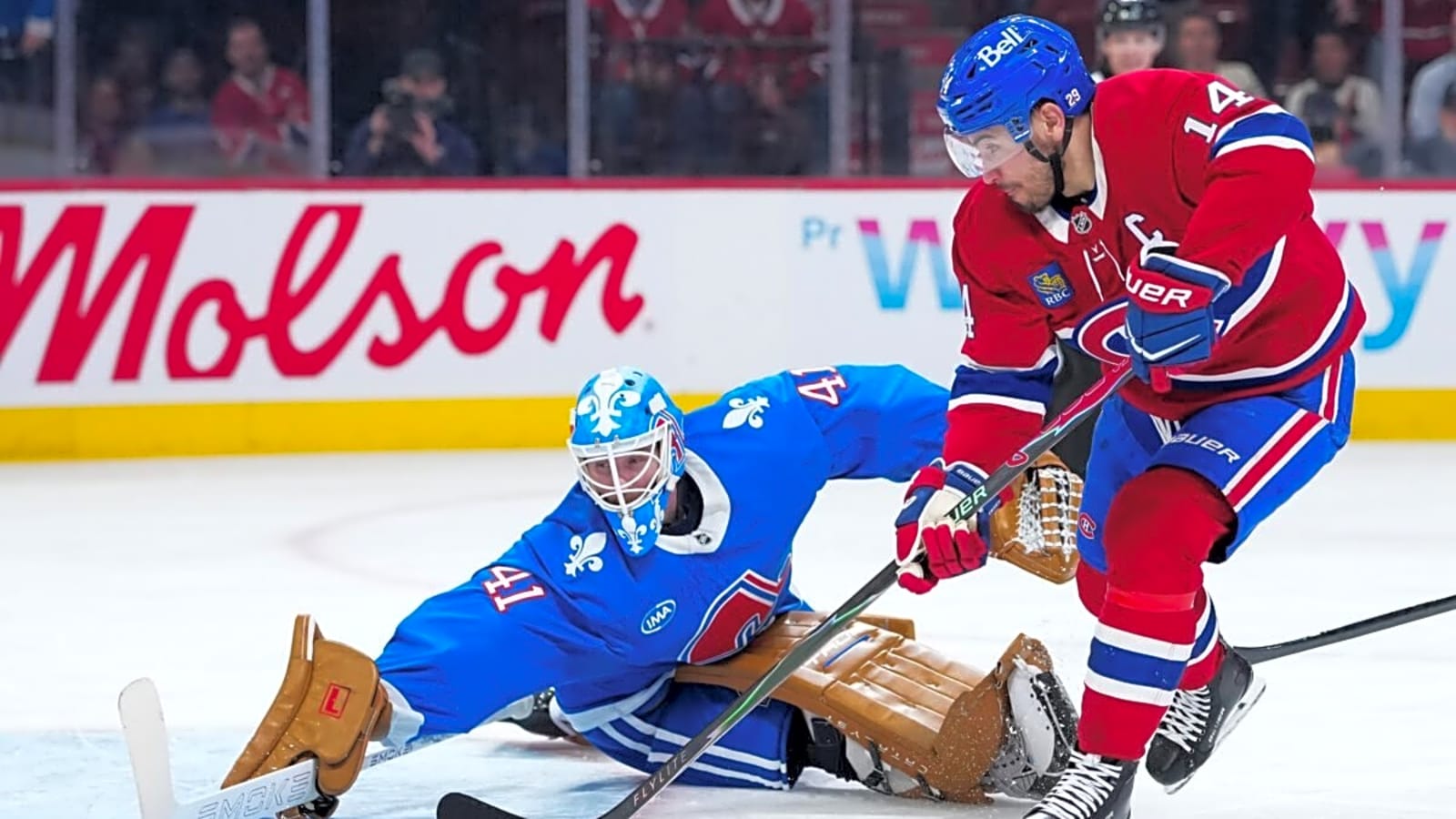
For anyone following the Montreal Canadiens, you hear the same refrain online and in some form from players and coaches: whenever a game turns heavy, nobody is going to hand you an inch of ice in this league. You skate into it, you pass through it, or you physically carve it out—and when an opponent tries to take it away by force, somebody has to set the price.
That reality was impossible to ignore in Denver on Wednesday night after Colorado Avalanche captain Gabriel Landeskog drove Kaiden Guhle into the end boards from behind in the second period of a 6-0 Avalanche win. While the hit can be called clean because Guhle turned at the last moment, it was still a hit that knocked Montreal’s top-four shutdown defenceman out of the game without an arm going up.
Kaiden Guhle left the game Wednesday night due to this hit from Gabriel Landeskog#NHL pic.twitter.com/cYzV4TxNFs
— TSN (@TSN_Sports) November 26, 2026
This led to the Canadiens becoming disoriented and focused not on hockey, but on vengeance, all but guaranteeing a win for the Avalanche, which can be argued was the outcome their captain hoped to generate.
A Disorganized Response
Arber and Florian Xhekaj combined for 38 penalty minutes trying to extract a response. Landeskog declined to answer the bell, then stepped in front of the microphones afterward to question whether the brothers’ antics belonged in someone wearing the sweater of “one of the most storied franchises in all of hockey.”
"I think for one of the most storied franchises and one of the most respected franchises in all of hockey, and then the two guys doing that."
— TSN (@TSN_Sports) November 26, 2026
Gabriel Landeskog criticizes the Xhekaj brothers after Kaiden Guhle left the game with an injury.
(via @DNVR_Avalanche) pic.twitter.com/V2U0MmKKGC
It was an easy soundbite to clip, and an even easier night for critics to point at the box score. Florian’s late third-period slew-foot on Fedor Svechkov 100% crossed the line, earning him a deserved match penalty and a maximum fine from the league on Thursday. Undisciplined retaliation in the dying minutes of a blowout doesn’t win hockey games, and nobody inside Montreal’s room would pretend otherwise.
Still, reducing the Xhekaj brothers to a messy third period in Colorado misses the bigger picture entirely, especially given the current state of Montreal’s lineup. With Josh Anderson and Chris Kreider both sidelined by lower-body injuries since mid-November, the Canadiens haven’t just lost secondary scoring. They’ve lost two of the biggest, heaviest bodies on their roster.
In that context, Wednesday night was merely one loud flashpoint illustrating a far more urgent truth: for a Canadiens team built around high-end speed and skill, Arber and Florian Xhekaj aren’t a nostalgic luxury. They are a structural necessity.
The Hidden Cost of Losing Anderson and Kreider
When Anderson (out three to four weeks) and Kreider (out six to eight weeks) went down after Montreal’s mid-November win over the Boston Bruins, the immediate conversation centred on replacing their production, Anderson’s eight goals in 19 games and Kreider’s nine points and net-front presence on the power play.
What gets overlooked on the stat sheet is the sheer physical real estate those two veterans occupy every shift. Both are 6-foot-3 power forwards who lean on opposing defencemen on the forecheck, win battles below the goal line, and park themselves in the crease without being moved. Yes, it’s on the bottom-six, but those minutes wear down opposing defenders.
Great forecheck by Kreider and Newhook, Josh Anderson left completely alone in front.
— Matt Drake (@DrakeMT) October 14, 2026
1-0 #Habs pic.twitter.com/FTc475dids
When you strip both of them out of the forward group at the same time, alongside blue-line injuries to Mike Matheson and now Guhle, Montreal’s lineup suddenly gets noticeably lighter and easier to push around.
Opponents recognize that immediately. Without Anderson and Kreider barreling down the wings to keep opposing defenders honest, teams can pinch harder at the blue line, take extra liberties in the corners, and turn games into physical attrition matches. That puts the entire burden of physical pushback squarely on the shoulders of the Xhekaj brothers.
Accountability When the Whistles Go Quiet
Every team in the NHL talks about letting the officials police the game, right up until the night a foundational defenceman is out with an injury, and the whistles stay silent, or the offending attacker refuses to answer the call for retribution as the unwritten code tends to demand.
Losing Guhle, a player whose injury history makes every awkward collision feel like a gut punch for the organization, was the real damage done in Denver. Captain Nick Suzuki didn’t hide his frustration afterward, stating plainly that the hit didn’t look clean and acknowledging how massive a hole Guhle’s absence leaves on Montreal’s back end.
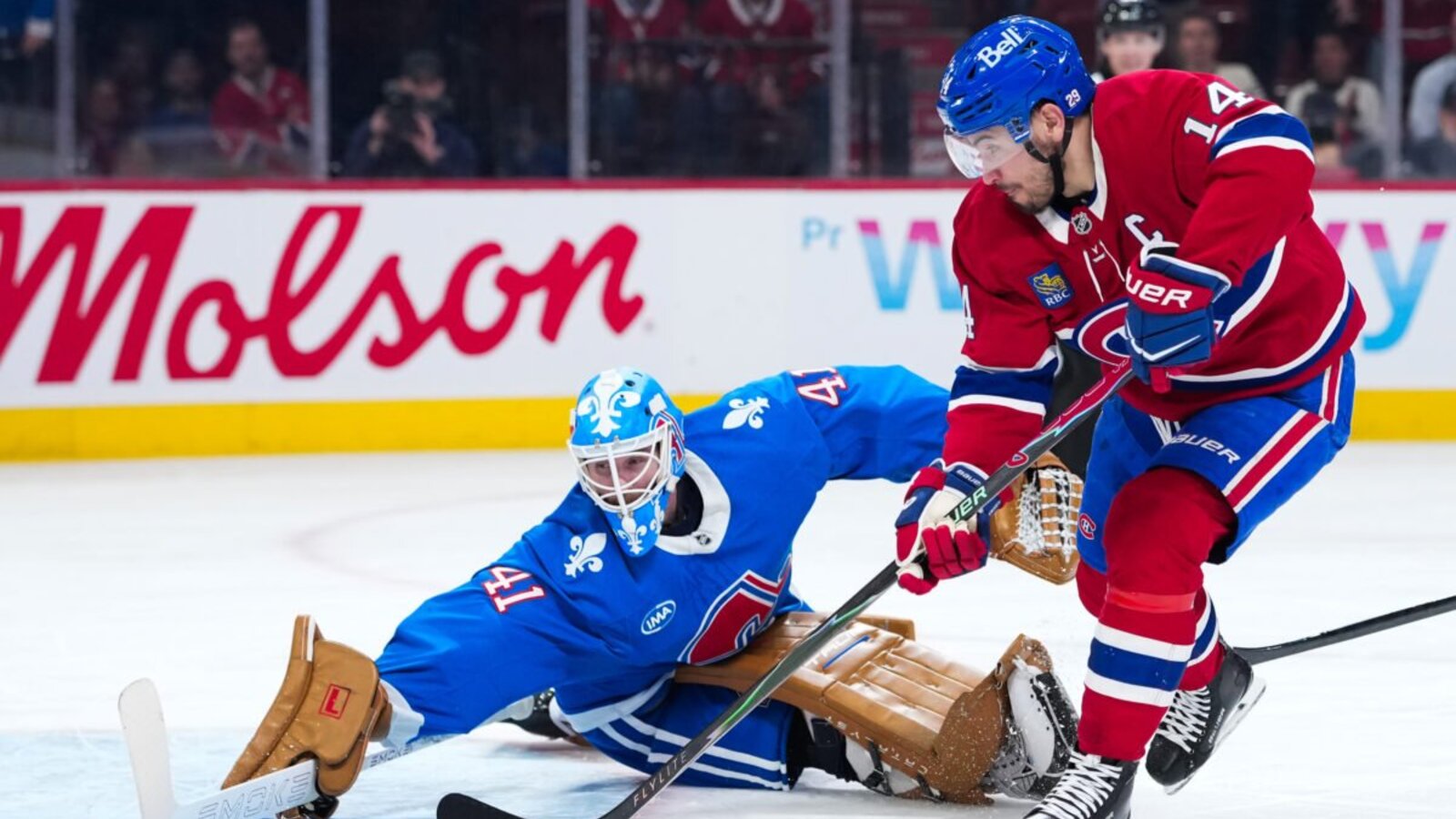
When officiating leaves a vacuum in moments like that, players inevitably step into it. The Arber Xhekaj hit on Brent Burns was revenge, and it mimicked the hit on Guhle, but Florian’s slew-foot on Svechkov went too far. The underlying instinct behind the Xhekaj brothers’ pushback is non-negotiable for a young group establishing its footing in the league.
Opponents watch tape. If a team sees that it can run Montreal’s top players with impunity, decline a fight, and skate away untouched, that blueprint spreads around the NHL by the weekend. Having two 6-foot-4 brothers willing to step into the breach ensures that taking liberties with the Canadiens’ core comes with an immediate, uncomfortable tax.
Protecting Montreal’s Skill Core
Montreal’s competitive identity is built around elite creators who thrive when they have time and space, players like Cole Caufield, Nick Suzuki, Lane Hutson, and Juraj Slafkovsky.
When opponents game-plan against that kind of pace and puck movement, the counter-strategy is predictable: finish every check a half-second late, slash hands around the dots, and crowd the blue paint until skill players start rushing plays. With Anderson and Kreider out of the mix until at least December and January, respectively, having both Xhekajs in the lineup is the primary thing keeping Montreal from getting bullied out of open ice.
Having Arber on the back end gave the Canadiens a deterrent for roughly 15 to 20 minutes a night. Having Florian up front gives head coach Martin St. Louis a physical presence he can deploy across the rotation, buying milliseconds of extra breathing room for Hutson to walk the line or Caufield to find soft ice in the slot.
Montreal also doesn’t get to pick its geography. Sitting in the top three of the Atlantic Division at 14-7-4, the Canadiens spend half their schedule wading through heavy, punishing rosters in the Florida Panthers, Tampa Bay Lightning and Boston Bruins, teams built to turn tight games into wars of attrition, especially in the playoffs.
Surviving the regular season, and eventually winning a seven-game series in the spring, requires players who don’t shrink when the whistles go away, and the ice disappears. Just as importantly, neither Xhekaj brother is a one-dimensional throwback who forces St. Louis to shorten his bench.
Arber handles legitimate third-pair minutes and kills penalties. Florian earned his NHL roster spot out of training camp this fall on the strength of back-to-back 24- and 17-goal seasons with the Laval Rocket, proving he can forecheck, cycle pucks, and chip in offensively on a fourth line.
Walking the Line Without Losing the Edge
None of this lets either brother off the hook when it comes to learning where the boundary sits. The next step in their evolution, especially for Florian in his first full NHL campaign, is channelling that emotional investment into momentum-shifting hits and clean, heavy shifts rather than five-minute majors that leave the penalty kill under siege.
Still, Landeskog’s attempt to lecture the Canadiens on franchise history missed the irony completely. From Sprague Cleghorn to John Ferguson Sr., and Larry Robinson to Chris Nilan and Lyle Odelein, Montreal’s greatest teams never asked opponents for permission to take up space on the ice.
Until Anderson and Kreider return to restore some much-needed muscle to the top nine, the Canadiens’ margin for physical pushback is thinner than ever. Arber and Florian Xhekaj still have to refine how they walk that line, but Montreal is far better off with two brothers willing to toe it than without them.
More must-reads:
- Matvei Michkov, Flyers relationship reaches possible point of no return after former first-rounder ruled out over 'internal' matter
- Devils defenseman Brenden Dillon suspended four games
- The 'Completion %-record by NFL team' quiz
Breaking News
Trending News

Customize Your Newsletter
 +




Get the latest news and rumors, customized to your favorite sports and teams. Emailed daily. Always free!
PRIVACY POLICY COOKIE POLICY CONTACT US
ABOUT YARDBARKER TERMS OF SERVICE


By using this site, you agree to our Terms of Service and Privacy Policy.
This site is for entertainment purposes only.
There is no gambling offered on this site.
Gambling Problem? Call 1-800-Gambler.