-

-


Follow Us
-

 On Facebook
 On Flipboard


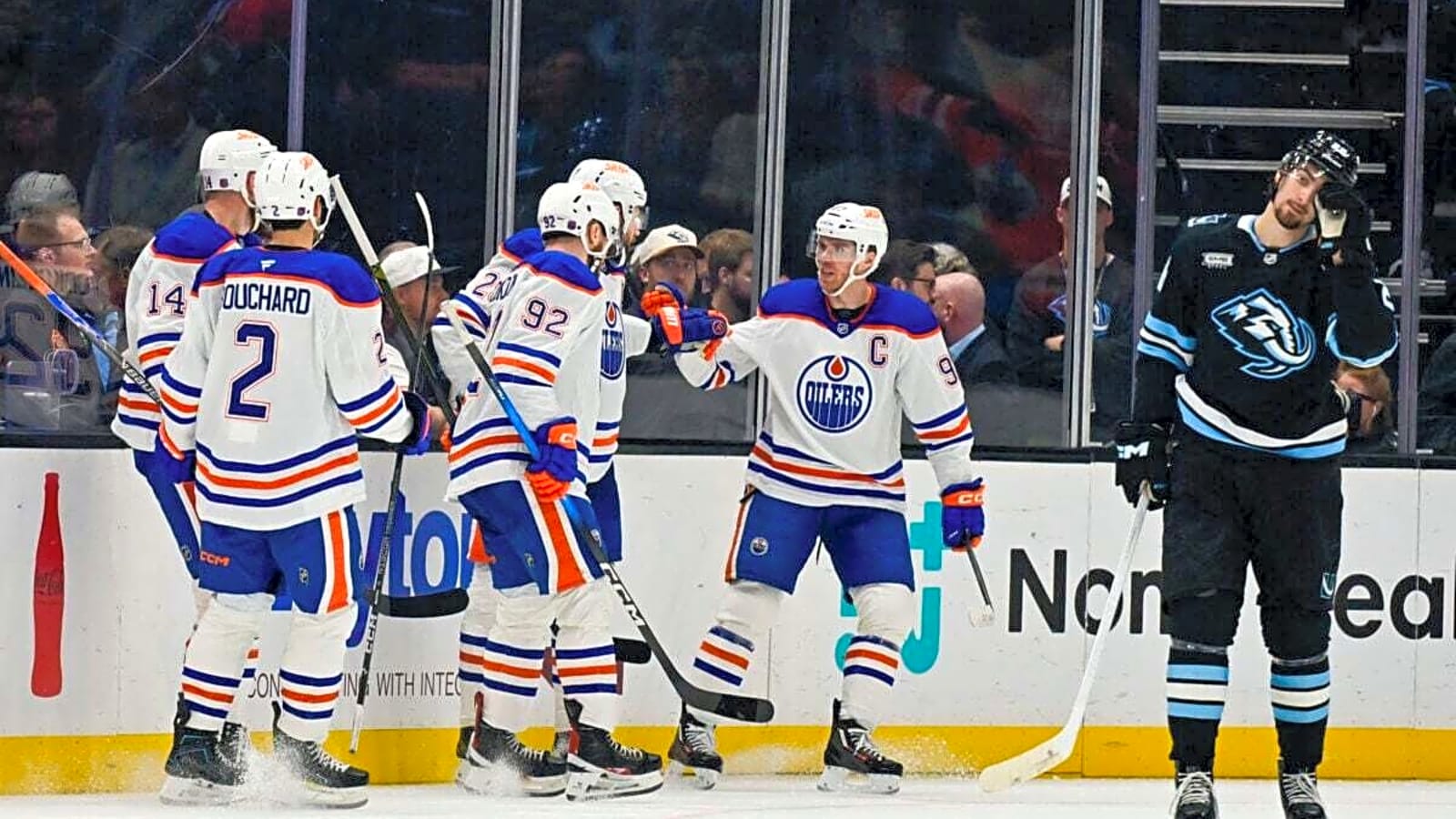
The Edmonton Oilers have been one of the NHL’s best teams to begin the 2026-27 season, posting a 14-3-3 record through their first 20 games. With Connor McDavid producing at an extraordinary pace, improved goaltending and a new defensive system under head coach Mike Babcock, Edmonton has found ways to win even when it hasn’t played particularly well.
However, their impressive record doesn’t tell the entire story. The Oilers have struggled to control possession, generate consistent five-on-five offence and limit quality scoring opportunities against. While their ability to overcome these issues speaks to the talent throughout the lineup, it raises questions about whether their current approach is sustainable over an 84-game season.
Wednesday’s 3-2 overtime victory over the Philadelphia Flyers was another example. Edmonton was outshot 32-24, including 28-13 through the opening 40 minutes, but managed to secure two points behind a 30-save performance from Tristan Jarry. Zach Hyman scored twice before Evan Bouchard delivered the overtime winner. The Oilers continue to collect points, but if their underlying numbers don’t improve, their current style of play could eventually catch up to them.
Oilers’ Underlying Numbers Raise Concerns
One of the biggest concerns surrounding Edmonton’s early success is the difference between its actual results and its expected performance. Through their first 15 games, the Oilers held an 11-2-2 record despite ranking near the bottom of the NHL in several important five-on-five categories. Their expected goals share (xGF%) was just 46.30 percent, ranking 25th in the league, while their 47.92 percent Corsi-for percentage ranked 23rd.
Their struggles extended beyond possession. Edmonton controlled only 46.62 percent of shots on goal, ranking 26th, and 47.31 percent of high-danger scoring chances, ranking 23rd. These numbers suggest the Oilers were spending too much time defending and allowing opponents to generate more quality scoring opportunities than they were creating.
Expected goals account for factors such as shot location and type to assess the quality of scoring opportunities a team generates and allows. Teams consistently falling below the 50 percent mark are generally giving up more quality chances than they create. Edmonton’s 46.30 percent share is particularly concerning, as opponents have accounted for nearly 54 percent of the expected goals at five-on-five, suggesting the Oilers are being outchanced despite their strong record.
The Oilers also surrendered 136 high-danger opportunities while generating 125 through those first 15 games. Although the difference isn’t enormous, it reinforces the concern that Edmonton hasn’t consistently controlled the most dangerous areas of the ice. For a team with Stanley Cup aspirations, those are numbers that need to improve.
Oilers Relying Heavily on Goaltending and Shooting Efficiency
Edmonton’s ability to overcome its underlying struggles has largely been driven by strong goaltending and an unusually high shooting percentage. Through 15 games, the Oilers carried a 13.04 percent shooting percentage at five-on-five, while their goaltenders combined for a .911 save percentage. That produced a PDO of 1.042, placing Edmonton among the league’s highest-performing teams in the category.
PDO combines a team’s shooting and save percentages and is often used to evaluate whether its results are likely to be sustainable. While talented teams can maintain above-average shooting percentages, unusually high figures tend to move closer to normal levels over time. Of course, Edmonton isn’t an average offensive team. With McDavid and Leon Draisaitl leading the attack, the Oilers have two players capable of converting opportunities that others might not.
Nevertheless, relying on exceptional finishing and goaltending to compensate for being outplayed is a difficult formula to maintain throughout an entire season. Jarry has been particularly important to Edmonton’s success. His 30-save performance against Philadelphia demonstrated how valuable reliable goaltending can be, especially when the team struggles to generate offensive pressure.
However, expecting Jarry and Devon Levi to consistently compensate for defensive breakdowns creates unnecessary pressure on both netminders. The Oilers don’t necessarily need their goaltenders to steal fewer games. They need to make those performances less of a requirement.
Babcock’s Defensive System Has Shown Promise
Despite the concerning statistics, Edmonton’s defensive play hasn’t been entirely negative. Babcock has emphasized protecting the middle of the ice, limiting cross-ice passes and forcing opponents to take lower-percentage shots from the perimeter. There is an important distinction between allowing a high volume of shots and allowing high-quality scoring opportunities. A team can surrender 30 or more shots while still defending effectively if most attempts come from less dangerous areas.
Following Wednesday’s victory, Jarry credited his teammates for helping make his workload manageable by limiting difficult lateral movements and allowing him to see shots clearly. However, Babcock also acknowledged the team’s struggles, admitting, “I thought we gave up too much.” Edmonton’s Nov. 7 victory over the Vancouver Canucks demonstrated what the system can accomplish when executed properly. The Oilers controlled 58.76 percent of expected goals at five-on-five, generating 1.71 expected goals while surrendering 1.20.
They also held an 8-5 advantage in high-danger scoring opportunities. That performance showed Edmonton can control the quality of opportunities at both ends of the ice. The issue is consistency. When the Oilers manage the puck effectively, support their defencemen and limit turnovers through the neutral zone, they look like a legitimate championship contender. When those details disappear, they become overly reliant on their goaltending and offensive stars.
McDavid and Draisaitl Cannot Do Everything
Another concern is Edmonton’s continued reliance on McDavid and Draisaitl to generate offence. McDavid has been outstanding through the opening 20 games, recording 49 points while extending his season-opening point streak to 20 games. Draisaitl has also continued producing at an elite level, giving Edmonton one of the NHL’s most dangerous offensive combinations. However, Babcock’s decision to frequently deploy the two together creates challenges elsewhere in the lineup.
While opponents have difficulty containing McDavid and Draisaitl on the same line, Edmonton becomes easier to match against when so much of its offence is concentrated in one unit. The numbers illustrate that problem. Through the first 15 games, the Oilers controlled just 33.51 percent of expected goals at five-on-five when McDavid, Draisaitl and Bouchard were all off the ice. That is a significant concern for a team hoping to compete against the NHL’s strongest opponents.
Injuries to Hyman, Ryan Nugent-Hopkins, Jason Dickinson and Matthew Savoie have contributed to Edmonton’s lack of offensive depth at different points this season. However, the Oilers need their supporting cast to generate more consistent pressure regardless of who is available. Separating McDavid and Draisaitl more frequently could help establish two legitimate scoring lines while making Edmonton more difficult to defend. The Oilers don’t necessarily need their bottom six to produce at an elite rate. They need those players to maintain possession, generate offensive-zone time and avoid spending entire shifts defending.
Oilers Have Been on the Other Side of This Situation
Interestingly, Edmonton experienced almost the opposite problem during the 2023-24 season. Through its first 13 games that year, the team struggled to a 3-9-2 record despite controlling 57.86 percent of expected goals at five-on-five. The Oilers were generating opportunities and controlling play but weren’t receiving the finishing or goaltending necessary to turn those performances into victories.
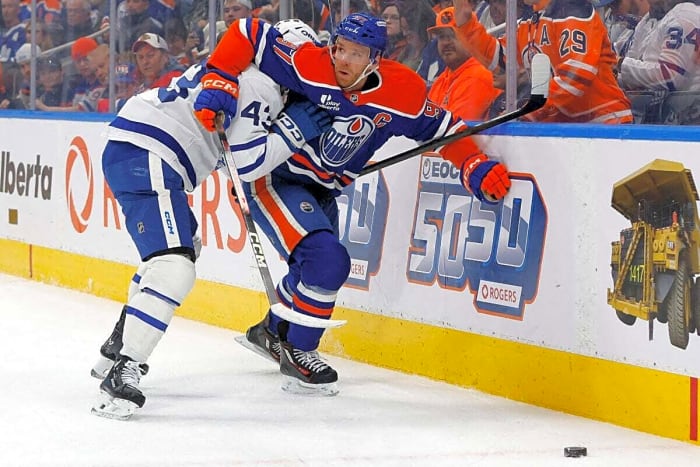
Following Kris Knoblauch’s arrival, Edmonton eventually turned its season around and reached the Stanley Cup Final. Over the subsequent 69 games, the Oilers controlled 56.93 percent of expected goals. The comparison is significant because it demonstrates how a team’s record doesn’t always reflect the quality of its performances. In 2023-24, Edmonton was losing despite playing well enough to win. This season, the Oilers have frequently been winning despite struggling to control games. Neither situation guarantees what happens next, but the underlying numbers provide important context when evaluating whether a team’s success can continue.
Oilers Need to Improve Before the Playoffs
The Oilers have enough talent to remain among the NHL’s best regular-season teams. Their ability to overcome difficult performances and secure points is encouraging, particularly as the players continue adjusting to Babcock’s system. However, there is a difference between winning games despite defensive struggles and consistently playing a style that limits those struggles. Edmonton cannot expect to surrender more quality scoring opportunities than it generates, rely on unusually high shooting percentages and receive exceptional goaltending every night.
Against stronger playoff opponents, those weaknesses become increasingly difficult to overcome. The solution doesn’t necessarily require Babcock to abandon his defensive philosophy. Instead, the Oilers need cleaner breakouts, improved puck management, greater offensive-zone possession and more consistent contributions throughout the lineup. Their upcoming six-game road trip, beginning Saturday against the Toronto Maple Leafs, will provide another opportunity to evaluate whether those adjustments are taking hold.
Edmonton’s 14-3-3 start has provided an excellent foundation for the remainder of the season, but its underlying performance suggests there is still considerable room for improvement. The Oilers have already demonstrated they can win without playing their best hockey. That is an important characteristic of a championship-calibre team. However, if they hope to turn their early success into a Stanley Cup run, they must eventually prove they can consistently control games rather than simply survive them. Winning despite being outplayed is a valuable ability. Relying on it every night is a dangerous strategy.
More must-reads:
- Flyers GM Daniel Briere says Matvei Michkov's reported trade request is 'all news to me'
- Nikita Kucherov's trade request has not stopped him from dominating for Lightning
- The 'Last 30-rush game by NFL team' quiz
Breaking News
Trending News








Customize Your Newsletter
 +




Get the latest news and rumors, customized to your favorite sports and teams. Emailed daily. Always free!
PRIVACY POLICY COOKIE POLICY CONTACT US
ABOUT YARDBARKER TERMS OF SERVICE


By using this site, you agree to our Terms of Service and Privacy Policy.
This site is for entertainment purposes only.
There is no gambling offered on this site.
Gambling Problem? Call 1-800-Gambler.