
-

-


Follow Us
-

 On Facebook
 On Flipboard

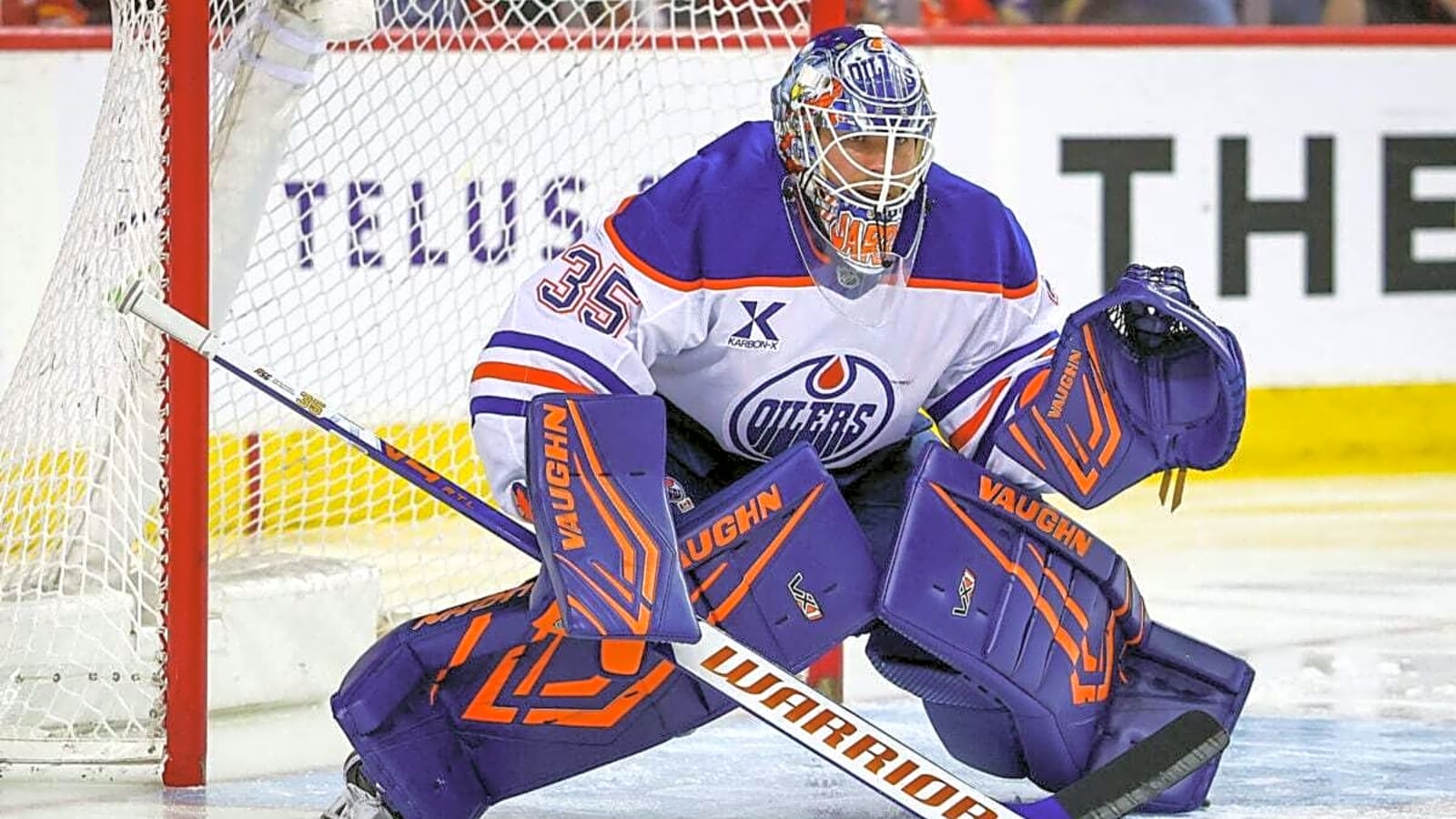
The Edmonton Oilers enter tonight’s rematch against the Vancouver Canucks with a decision to make in goal: does Tristan Jarry get another opportunity, or do they change starters after Tuesday’s 6–5 overtime loss?
In Edmonton’s first game of the season, Jarry stopped 17 of 23 shots for a .739 save percentage. Those numbers invite criticism, particularly for a team trying to establish defensive consistency. But deciding whether he should stay in net requires more than counting the shots that beat him. The Oilers need to distinguish between preventable goals and high-danger chances created by defensive breakdowns.
I would give Jarry another start, provided the coaching staff sees no technical or physical reason to change course. However, that opportunity should come with clear expectations for both him and the players protecting him.
Shot Volume Does Not Equal Shot Difficulty
Allowing six goals on 23 shots is a poor result. It does not, however, establish how much responsibility belongs to the goaltender. A shot total counts an attempt from the boards and an uncontested chance near the crease equally. Where a shot originates from, what happens beforehand, and whether the goaltender must move across his crease all affect chance quality.
Sportsnet’s Mark Spector described Vancouver’s opportunities as high quality, while also criticizing Jarry’s inability to provide timely saves. Both observations can be accurate: Edmonton allowed dangerous chances, but their goaltender needed to stop more of them.
The coaching staff should therefore review how often Jarry faced a settled shooter with a clear sightline, compared with chances requiring an immediate adjustment. That would provide a stronger foundation for deciding who should get the starting job tonight than save percentage alone.
The Third-Period Goal Deserves Particular Scrutiny
The most revealing sequence was Vancouver’s goal early in the third period. Jonathan Lekkerimaki scored from the right circle following an Edmonton giveaway, beating Jarry between the pads. There are two factors here. The turnover created the opportunity, but Jarry’s execution determined whether that opportunity became a goal.
A giveaway does not make the shot unstoppable. The coaches should assess whether Jarry established his angle, arrived balanced and closed the space beneath him. If he was positioned to make the save, the preceding mistake cannot explain the result. That goal was a soft one that broke a 2-2 tie.
A save would have preserved a tied game and given Edmonton an opportunity to recover from its mistake. Instead, the Oilers allowed another Canucks goal under two minutes later. That is precisely where dependable goaltending can change the direction of a period.
Expected Goals Would Help, but Cannot Replace Video
Goals saved above expected could compare Jarry’s actual goals allowed with the number an expected-goals model assigns to the chances he faced. However, different models can produce different results, and publicly available data does not capture every detail affecting a save. Screens, deceptive releases and the timing of passing plays may be represented imperfectly. A shot-location model can help identify high-danger chances without fully explaining what the goaltender could see or how much time he had to react.
The strongest evaluation combines the statistical estimate with video. If both show Jarry allowed goals on comparatively manageable chances, there is cause for concern. If the numbers look poor while the footage shows repeated defensive exposure, Edmonton must address those breakdowns alongside his performance. Analytics should sharpen the assessment, rather than provide a convenient way to assign all responsibility to one position.
Jarry’s Edmonton History Raises the Standard
Although one game is a small sample, concern surrounding Jarry did not begin Tuesday. He posted an .857 save percentage and a 3.86 goals-against average in 19 appearances with Edmonton last season. Those results make it harder to dismiss the opener as an isolated setback.
Still, they should be treated as evidence requiring further examination. They establish that his previous Edmonton results were inadequate; they do not explain the balance between goaltending performance and defensive support.
His history, however, means getting the start on Thursday is not justifiable based on his experience or an assumption that he will improve over time. Jarry needs to demonstrate repeatable execution: tracking shots cleanly, arriving under control and managing rebounds when possible. Edmonton should judge that process over successive appearances, while recognizing that patience is indefensible if the same preventable goals continue.
Another Start Would Offer a Useful Test
Starting Jarry again will allow the Oilers to evaluate his response against the same opponent. That comparison is valuable, although the data would still be imperfect. Vancouver could generate different chances, and changes in Edmonton’s defensive play would alter the workload. A better result would need to be examined as carefully as the poor one.

If Jarry allows fewer goals because Edmonton gives up far fewer dangerous opportunities, that would demonstrate team improvement. If he also handles comparable chances more effectively, the evidence of an individual rebound becomes stronger. Conversely, another difficult outing allowing manageable shots to beat him might justify the argument for a change.
The decision should depend on the coaching staff’s assessment of his readiness and the available alternative. Giving him another opportunity is reasonable. Guaranteeing further starts regardless of performance would be hard to defend.
Edmonton Needs Reliability Without Demanding Perfection
Jarry acknowledged the importance of making additional saves after Tuesday’s game: “I need one or two of those.” That is a realistic standard. Edmonton cannot expect its goaltender to erase every breakdown, but it needs enough saves to prevent mistakes from repeatedly becoming decisive. The Oilers also need to avoid treating a goalie change as a defensive solution. Poor puck decisions and dangerous chances remain problems regardless of who starts.
Tonight offers an opportunity to establish a better baseline. Jarry should receive another chance if he is ready, and Edmonton should provide a more manageable game in front of him. Neither side needs perfection in October. Both need sustainable progress, so the Oilers can collect points without relying on exceptional offence.
More must-reads:
- Penguins captain Sidney Crosby breaks Steve Yzerman's NHL record
- 'Wild West' gets wilder after Golden Knights extend William Karlsson
- The 'Oldest 2-passing-TD NFL games' quiz
Breaking News
Trending News








Customize Your Newsletter
 +
+




Get the latest news and rumors, customized to your favorite sports and teams. Emailed daily. Always free!
PRIVACY POLICY COOKIE POLICY CONTACT US
ABOUT YARDBARKER TERMS OF SERVICE


By using this site, you agree to our Terms of Service and Privacy Policy.
This site is for entertainment purposes only.
There is no gambling offered on this site.
Gambling Problem? Call 1-800-Gambler.
