
-

-


Follow Us
-

 On Facebook
 On Flipboard
 On Twitter
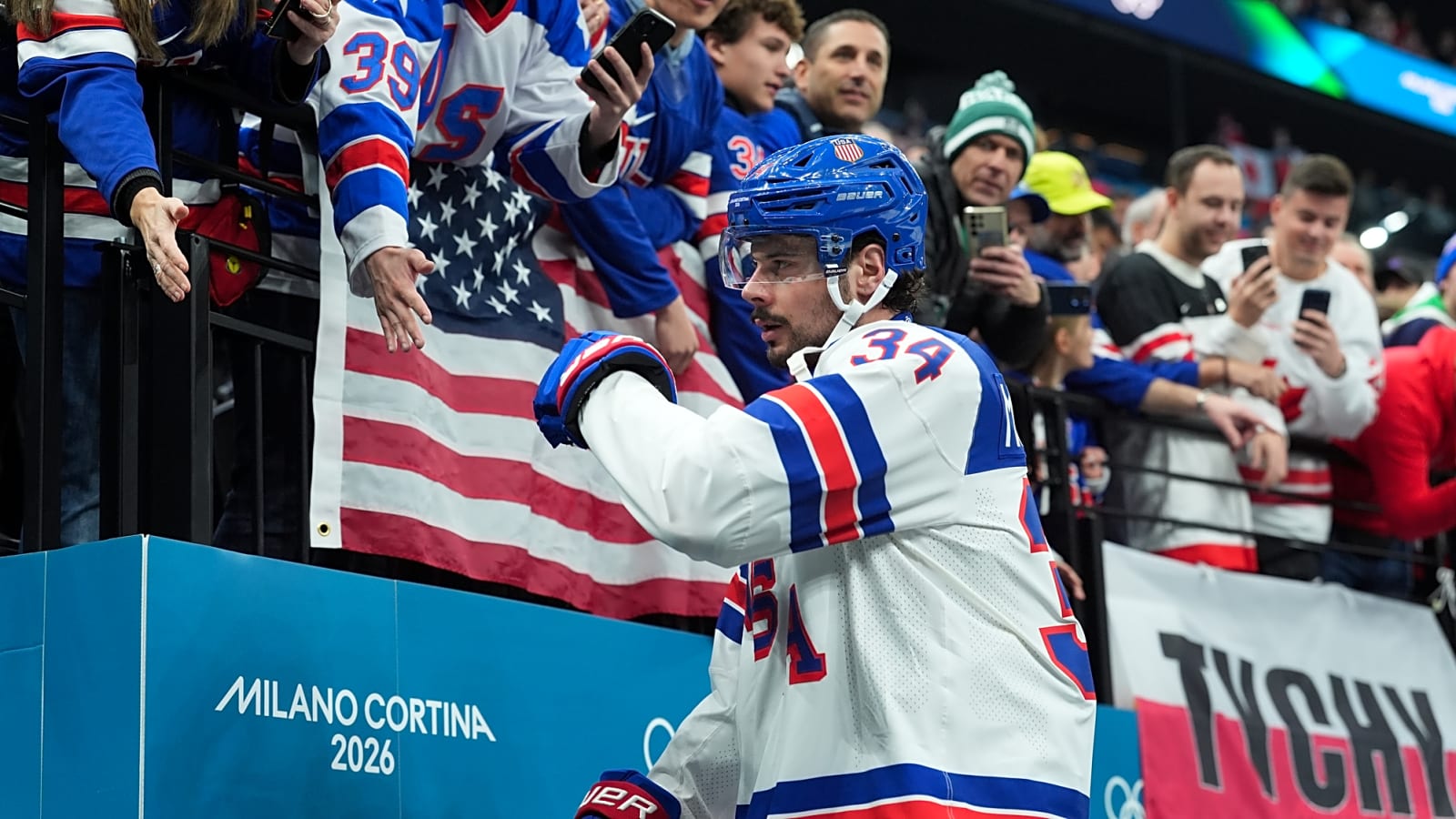
The moment itself was brief. But the reaction is what lingers.
In the video now circulating on social media, what stands out is not the political context or the commentary that preceded it. It is the response. After the President remarked that he would “have to invite the women too,” the entire room laughed. That reaction is what stays with me now.
People will argue the politics of it. I’m arguing something simpler: you don’t mock your teammates. And that includes both sides of the ice.
Some will dismiss it as harmless. Arguing it was a joke, a passing second in a crowded room where drinks were flowing. But when you represent Team USA Hockey, when you wear those colors and carry that crest, even brief moments behind closed doors carry added weight.
Especially when both teams stood on the same podium.
It becomes difficult to separate optics from meaning when that reaction comes while wearing the same colors your fellow teammates wore. When two teams represent the same country and achieve the same result, the standard for respect should not shift between them.
At this moment, the Women’s team has declined the President’s invitation.
This Is About Team Culture
Strip away the politics, and what remains is a question of team culture.
Team culture is not complicated. The crest on the front is meant to matter more than the name on the back. That belief is woven into hockey’s identity. It is why the words delivered by Herb Brooks in Miracle still resonate decades later:
“When you pull on that jersey, you represent yourself and your teammates. And the name on the front is a hell of a lot more important than the one on the back. Get that through your head!”
Kurt Russell as Herb Brooks, Miracle, 2004
Forty-six years after 1980, that message still defines what many of us believe this crest and this sport represent. Leadership is not only revealed on the ice. It is revealed in those unscripted moments and in how athletes respond, in how they carry themselves, and in how they honor the teammates who share their crest.
As someone who works in sports — and as a woman who has covered Team USA Men’s Hockey closely — it is difficult to ignore how moments like this land. Women in this space navigate legitimacy, respect, and visibility in ways that are subtle but constant. We step into those spaces anyway, even when they are uncomfortable as it is for me now, because progress rarely happens from the outside.
At times, it is exhausting. But we continue, because stepping back has never been what moves anything forward. We love this sport just as much. That is why moments like this hit closer to home than we wish they would.
Less than 24 hours earlier, I felt proud. Proud of the resilience and of the toughness. Proud of the performance that reminded fans why Team USA Men’s Hockey is so easy to believe in.
For a brief moment, it felt like something unified us. In a time that has felt divided in so many ways, there was a chance to rally around something shared. That feeling matters. It is part of why international competition resonates so deeply.
Which is why the shift feels sharp.
Legacy Is Built in the Small Moments
I think back to another image: the team holding up Matthew’s jersey, standing with his daughter in their arms, united in ongoing grief and respect for someone they lost. That moment transcended hockey. It reflected the version of this team that fans connect with — the version that feels bigger than wins and losses.
I also think about Johnny Gaudreau Jr. One day, he will grow up and watch the moments that defined the team his father was so proud to represent. He will see the tributes and see the unity. He will see how his father’s name was honored.
And he may also see this.
Legacy is not built only in championship games or memorial tributes. It is built in everyday reactions.
How does a team reconcile the image of unity in one moment with the echo of division in another?
Team culture is revealed just as much in reaction as in ceremony. It is heard in how teammates respond to one another and in how they carry the responsibility of representing something larger than themselves. Respect should not be conditional.
Less than a day ago, I felt pride without hesitation. Today, that feeling is more complicated.
My hope for this team is simple: if you believe you were wrong, acknowledge it. Not because of pressure. Not because of headlines. But because you genuinely believe it.
Show people who you are.
Every woman in your life is listening.
What sound comes next?
More laughter?
Or accountability?
SOURCE: O’Connor, G. (Director). (2004). Miracle [Film]. Walt Disney Pictures.
- Olympics: Brady Tkachuk and Team USA Look Ahead to Milano Cortina
- Opinion: The Boston Bruins Are Doing That Thing Again
- 3 Takeaways From The Florida Panthers vs San Jose Sharks Game 01/19/2026
- Olympics Game Preview: Slovakia vs. Finland with Projected Line Combinations 2/11/2026
- Olympics: Auston Matthews to Captain Team USA at 2026 Winter Olympics
More must-reads:
- Maple Leafs GM Brad Treliving breaks silence on team's struggles
- Devastating injury update emerges on Maple Leafs' Auston Matthews after 'dirty' hit from Radko Gudas
- The 'Active 30-point triple-doubles' quiz


Customize Your Newsletter
 +
+




Get the latest news and rumors, customized to your favorite sports and teams. Emailed daily. Always free!
PRIVACY POLICY COOKIE POLICY CONTACT US
ABOUT YARDBARKER TERMS OF SERVICE


By using this site, you agree to our Terms of Service and Privacy Policy.
This site is for entertainment purposes only.
There is no gambling offered on this site.
Gambling Problem? Call 1-800-Gambler.
