
-

-


Follow Us
-

 On Facebook
 On Flipboard

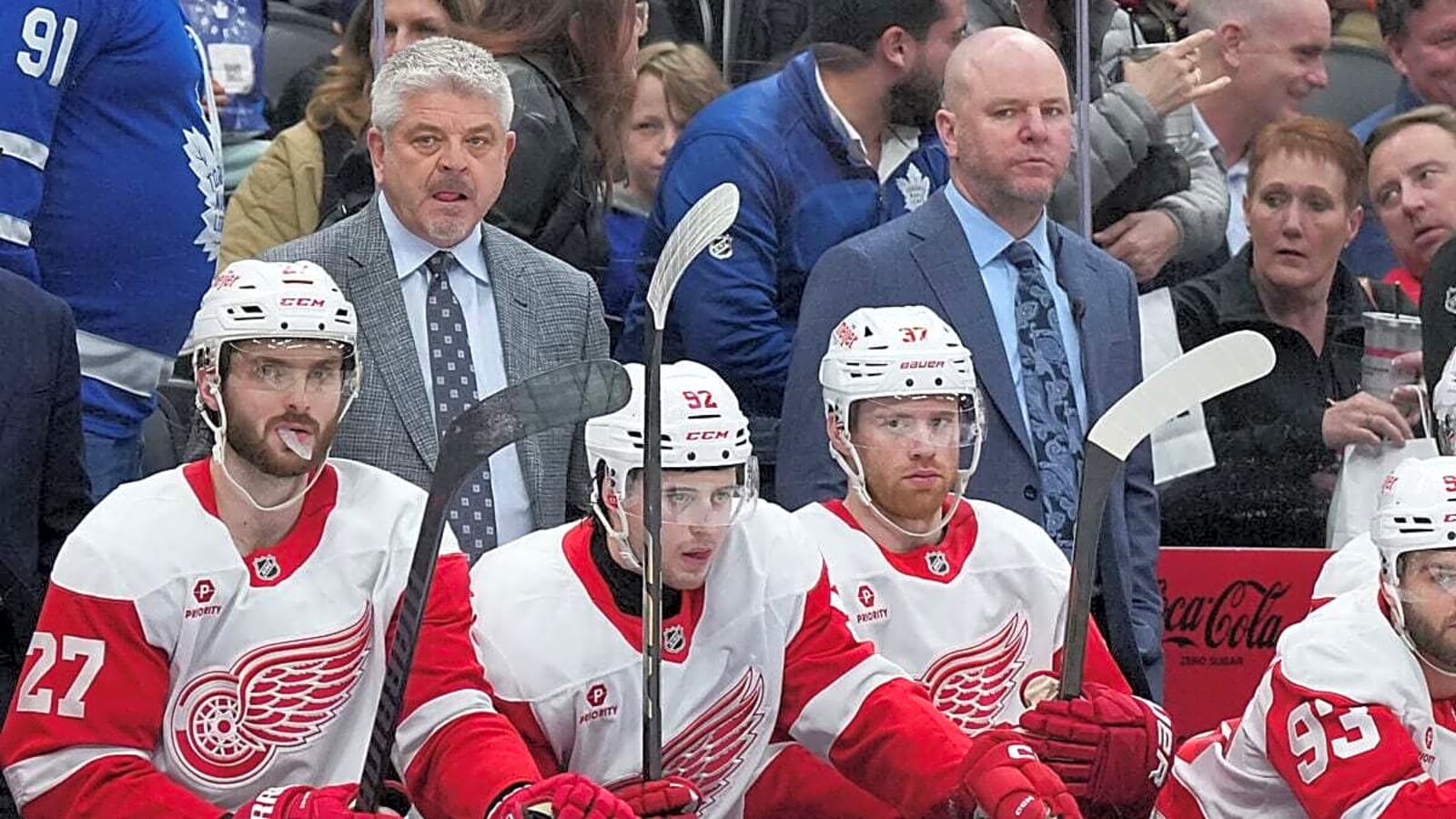
The Detroit Red Wings have had many memorable rivalries throughout their century of existence. In the year 2026, their biggest rival might be the month of March.
In recent years, the Red Wings have seen their playoff aspirations get pushed to the brink in the month of March, and this year has been no different. They entered this month with an 80 percent likelihood of making the playoffs, but with one game left in the month, their playoff odds have fallen all the way down below 50 percent, and they no longer control their own fate in the playoff race.
It’s a frustrating time in Detroit right now, so let’s open the notebook and take a look at what’s working and what isn’t.
Red Wings Overworking Another Goalie?
In recent years, the Red Wings have had either bad luck or a bad habit. Whether it was Alex Nedeljkovic, Ville Husso or Alex Lyon, their top goaltender has often been force-fed starts as the Red Wings tried to stay afloat in the playoff chase. Naturally, their goaltending results became unstable as the organization’s lack of trust or unwillingness to turn to their backup eventually doomed their starter.
The Red Wings find themselves in that situation yet again as John Gibson’s decline in performance has directly correlated to the team’s decline.
From December through February, Gibson maintained a save-percentage (SV%) above .920, a goals-against average (GAA) below 2.20, and he posted wins in 19 out of 25 starts. He was genuinely one of the top goalies in the NHL during this stretch. In the month of March, he has four wins in 12 appearances, a SV% of .904 and a GAA of 2.62.
All of this is happening while 38-year-old backup Cam Talbot has appeared in just nine games since the start of the new year. His numbers this season (3.01 GAA, .892 SV%) don’t exactly inspire confidence, but it is startling to see the Red Wings ride Gibson so hard that he’s starting in back-to-back games; the coaching staff is basically saying that they trust Gibson at 50-75 percent more than they trust Talbot, who is probably rusty more than anything.
To make matters more interesting, the Red Wings’ depth at the goaltending position is well documented, with former first round pick Sebastian Cossa holding down the fort in the American Hockey League along with free agent signee Michal Postava, and Trey Augustine expected to sign an entry-level contract soon now that his season with Michigan State University has come to a close.
With the sheer amount of goaltending talent in Detroit’s system, it is puzzling that they never took the time to see what Cossa or Postava could do at the NHL level this season. Not only would it help the organization plan for next season, but it could have potentially led to the Red Wings having another option down the stretch other than Gibson.
Now the Red Wings face a reality where their playoff hopes hinge on Gibson’s ability to produce quality goaltending despite playing the most games he’s played in at least three seasons.
Players & Jerseys
Head coach Todd McLellan commented recently about the team’s surprising lack of desperation and compete given their circumstances. He also mentioned that the team has too many “jerseys” playing right now – players that aren’t contributing much, if anything to the team’s efforts.
Let’s be honest here: there are quite a few players that could fit into the “jersey category”. There are maybe seven or eight forwards they can count on to engage with the game on a nightly basis. There are four or five others that are too inconsistent with their efforts, and it often makes Detroit’s bottom six effectively useless.
This is the time of year where every team’s depth is tested, and the month of March has proven that the Red Wings do not have as much depth as they maybe thought back in January.
This issue goes beyond coaching, too. We know this because the Red Wings and their fans witnessed these same issues pop up when Jeff Blashill and Derek Lalonde were behind the bench. Players have come and gone from the roster, and some of the current culprits are players that have hundreds of games of experience in the NHL; you can’t make a career out of doing nothing at the NHL level, so it stands to reason that there is something of a culture problem in Detroit’s locker room.
It is understandable that players are anxious about the team’s playoff position and desperate to end the organization’s playoff drought, but the team is still far too fragile given the experience of past playoff chases they’ve accumulated. That they still struggle to get a complete effort from all 19 players in the lineup on a consistent basis is what is ultimately holding this team back.
Did Yzerman Make a Mistake at the Deadline?
Given the Red Wings’ precarious position in the playoff hunt, it is natural for the mind to wander back to the trade deadline and the one significant move Red Wings general manager Steve Yzerman made before the deadline. Detroit traded a good prospect in Dmitri Buchelnikov as well as an unprotected first round pick in this year’s draft to the St. Louis Blues in exchange for defenseman Justin Faulk.
While Faulk has made Detroit’s blue line slightly more competent, the cost of acquisition is looming large. If the playoffs started today, the Red Wings would have traded the 15th pick in this summer’s draft for a 34-year-old defenseman with one year left on his contract. That would give St. Louis two picks inside the top-15, and that’s without considering the nightmare possibility that Detroit’s pick “wins” the lottery and jumps up 10 spots in the draft order.
The Red Wings have drafted 15th overall twice in the last five drafts: 2021 when they drafted Cossa and 2024 when they drafted Michael Brandsegg-Nygård. Good prospects are always available at 15th overall, and it’s going to sting seeing the Blues add a quality prospect with that pick if Detroit couldn’t end their playoff drought.
But that then begs the question: what would people be saying if Yzerman hadn’t made that trade? The Red Wings probably wouldn’t be too far off from where they are now, but the prevailing narrative would be that it’s because Yzerman didn’t make a move at the deadline just like last season.
You can certainly still argue that Yzerman didn’t make the right additions at the deadline considering the team’s lack of five-on-five scoring, but there was a near-unanimous understanding of the Faulk trade when it happened. It just feels like the exclamation point on March 2026 that the Red Wings finally acted like buyers at the trade deadline and now it looks likely that it will come back to bite them.
With nine games left on their schedule, the Red Wings will need to dig deep if they’re going to pacify the rising anxiety in Detroit. There are winnable games left, but they’ll need fewer passengers and a potentially heroic effort from their starting goaltender to get the job done.
The season is far from over, but make no mistake: it’s time for the Red Wings to put up or shut up if they’re going to save their season.
More must-reads:
- Four NHL teams under most pressure to win the Stanley Cup this season
- Justin Verlander shares emotional moment with his daughter upon exiting final career start
- The 'Multiple 30/30 MLB seasons' quiz
Breaking News
Trending News








Customize Your Newsletter
 +
+




Get the latest news and rumors, customized to your favorite sports and teams. Emailed daily. Always free!
PRIVACY POLICY COOKIE POLICY CONTACT US
ABOUT YARDBARKER TERMS OF SERVICE


By using this site, you agree to our Terms of Service and Privacy Policy.
This site is for entertainment purposes only.
There is no gambling offered on this site.
Gambling Problem? Call 1-800-Gambler.
