
-

-


Follow Us
-

 On Facebook
 On Flipboard


The 2026 NHL Draft was a jam-packed event with a lot of trades and player movement, especially in the first round. It was expected after a busy trade market leading into the first round last week. However, there were still a few surprises. One of the more surprising trades happened when the Detroit Red Wings sent Sebastian Cossa to the Utah Mammoth.
The trade itself was rather straightforward. The Red Wings sent Cossa to the Mammoth, and in return, received the 23rd pick in the 2026 NHL Draft. Utah had acquired the 23rd pick from the Boston Bruins in the JJ Peterka trade earlier in the night.
With the dust having settled on the 2026 NHL Draft, let’s take a deeper dive into this trade. It’s time to grade both the Red Wings and Mammoth for their parts in the Sebastian Cossa trade.
Red Wings trade Sebastian Cossa from position of strength
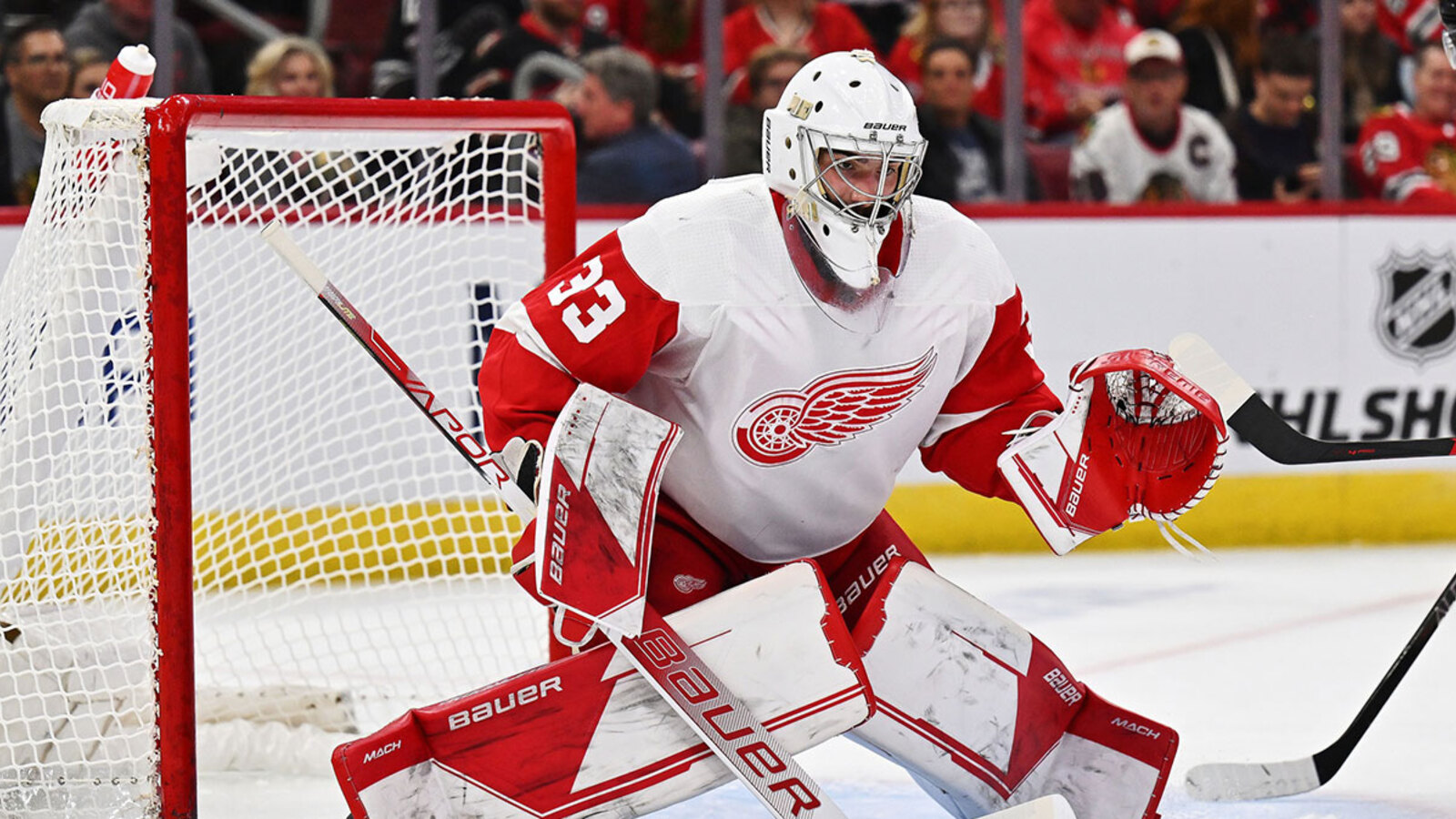
It felt as if a Cossa trade this summer was inevitable. The former first-round pick has played in just one NHL game since being taken in the 2021 NHL Draft. And this is not due to unideal performance with the AHL’s Grand Rapids Griffins, at least for the most part.
Cossa has been the full-time starting netminder in Grand Rapids in each of the last three seasons. In each season, he has posted a save percentage of .910 or better. This past season saw him post a record of 26-8-4 with a .915 save percentage. The Griffins were the best team in the AHL for much of the regular season, as well.
However, the Red Wings front office never saw enough to make him apart of the NHL rotation. Even when veteran netminder Cam Talbot was struggling as John Gibson’s backup, he never saw the NHL. Michal Postava, a free agent signing out of the Czech league last summer, received the emergency callups when the Red Wings needed someone to fill in case of injury.
Detroit didn’t trust Cossa, and they have a very deep goaltending prospect pool. With this in mind, trading Cossa made sense. With the 23rd pick, Detroit drafted winger JP Hurlbert from the Kamloops Blazers of the WHL. Hurlbert has a ton of skill and could be a future top-six winger if he pans out.
Everyone knew Detroit was going to trade Cossa. It wasn’t a closely guarded secret by any means. But they still traded from a position of strength to address their need for high-end skill in the prospect pool. All in all, this is good business from general manager Steve Yzerman.
GRADE: B+
Mammoth take chance on potential franchise goaltender
The Utah Mammoth made the Stanley Cup Playoffs in 2026, and they look like a sure bet to return in 2027. Utah got stronger after the NHL Draft, trading for Vincent Trocheck and signing Anders Lee in NHL Free Agency. Their trade for Cossa fills a need that they simply couldn’t fill in the draft or free agency.
Utah has a rather strong roster. Even without Lee and Trocheck, this is a team that can make noise in the Western Conference. Logan Cooley, Dylan Guenther, and Clayton Keller are legitimate star forwards. MacKenzie Weegar and Mikhail Sergachev led the defensive corps. What they lacked, though, was a clear No. 1 goaltender.
Karel Vejmelka has been solid for a number of years. This past season, he recorded 7.34 Goals Saved Above Expected and was worth nearly 4.5 wins above replacement, according to HockeyStats.com. These are fine numbers, but he isn’t a franchise goaltender.
Cossa did have his faults with the Griffins. Specifically, the former first-round pick had issues with consistency once the season drew to a close. In fact, his issues down the stretch were so bad that Postava claimed the starter’s net in the Calder Cup Playoffs.
Despite this, Cossa has the potential to be a franchise goaltender. The tools are there, and he’s proven he’s ready for a full-time role in the NHL. Trading the 23rd pick for a goaltender with one NHL game is a steep price. However, Cossa helps this team more than anyone at the 23rd pick, or any of the goalies in this draft. It’s a bet the Mammoth can afford to take right now.
GRADE: B+
More must-reads:
- Rangers goalie Igor Shesterkin scores first career goal
- Penguins captain Sidney Crosby breaks Steve Yzerman's NHL record
- The '2009 NFL Week 1 starting QBs' quiz
Breaking News
Trending News






Customize Your Newsletter
 +
+




Get the latest news and rumors, customized to your favorite sports and teams. Emailed daily. Always free!
PRIVACY POLICY COOKIE POLICY CONTACT US
ABOUT YARDBARKER TERMS OF SERVICE


By using this site, you agree to our Terms of Service and Privacy Policy.
This site is for entertainment purposes only.
There is no gambling offered on this site.
Gambling Problem? Call 1-800-Gambler.
