-

-


Follow Us
-

 On Facebook
 On Flipboard


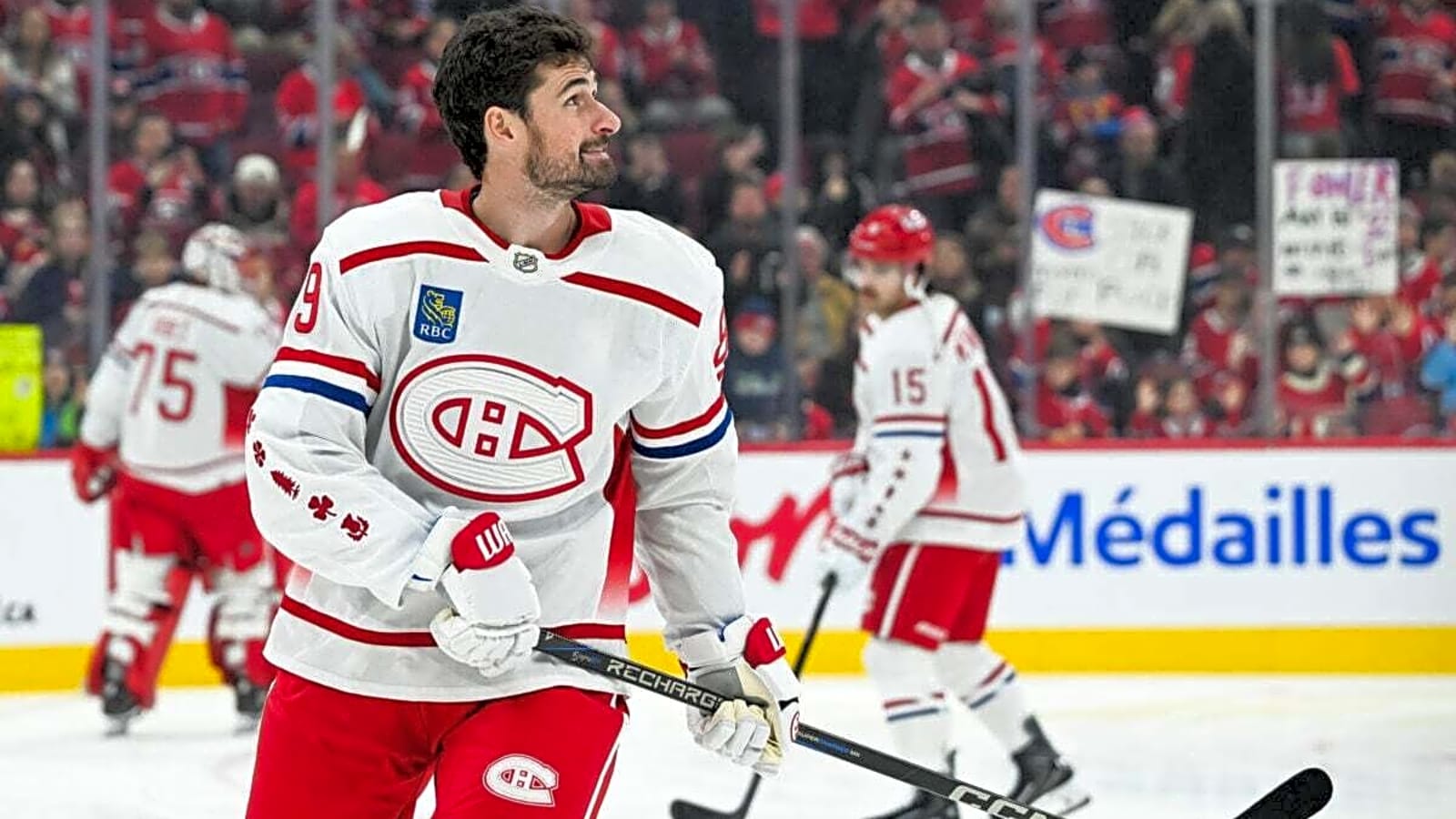
After a strong start to the season, the Montreal Canadiens have hit a rough patch over the last few weeks. While the organization made a significant statement by acquiring Dylan Larkin from the Detroit Red Wings, the team has struggled considerably to generate offense. The Canadiens have enough offensive talent to be much better than what they have shown recently, but their inability to find the back of the net is quickly becoming a concern.
A Concerning Lack of Production
Dating back to November 14, the Canadiens have scored more than two goals on just two occasions in seven games. Over that stretch, Montreal has scored a combined 11 goals, which has unsurprisingly resulted in only two wins. Things have not gotten any better since the acquisition of Larkin, either. In their first two games following the blockbuster trade, the Canadiens have scored just one goal, including an embarrassing 6-0 loss at the hands of the Colorado Avalanche.
While it would be unfair to expect Larkin to immediately solve all of the Canadiens’ offensive issues, the timing of their struggles is certainly frustrating. The organization paid a significant price to improve its offensive group, yet the team has struggled to generate anything since his arrival.
Larkin will need time to develop chemistry with his new teammates and adjust to a new system after spending his entire NHL career in Detroit. However, the Canadiens cannot afford to wait for their newest acquisition to single-handedly turn things around.
For a team that has significantly increased its expectations with the acquisition of Larkin, averaging fewer than two goals per game over an extended stretch is simply not good enough.
Injuries and a Struggling First Line
To be fair to the Canadiens, their forward group has been dealing with several significant injuries. Ivan Demidov, Josh Anderson and Chris Kreider are all currently sidelined, leaving Montreal without three forwards who bring different elements to its offensive game.
Demidov’s absence is particularly noticeable given his creativity and ability to generate scoring opportunities. The young Russian also represents an important piece of the Canadiens’ power play, another area in which the team has struggled this season. Meanwhile, Anderson and Kreider bring size, physicality and a willingness to get to the difficult areas of the ice. Their absence limits Montreal’s ability to generate offense around the net and makes the forward group somewhat easier to defend against.
However, injuries cannot entirely excuse the Canadiens’ recent offensive struggles, especially considering that their first line has not been producing at its usual rate. Nick Suzuki, Cole Caufield and Juraj Slafkovsky have established themselves as one of the most important components of Montreal’s success. When that trio is clicking, the Canadiens are a significantly more dangerous offensive team. Unfortunately, the three forwards have struggled to consistently generate offense in recent games. Given how heavily Montreal has relied on its first line over the last few seasons, those struggles have exposed the lack of production throughout the rest of the lineup.
The addition of Larkin should eventually help alleviate some of that pressure, particularly once Demidov returns. In the meantime, however, Montreal needs more from its best offensive players.
The Young Goaltenders Need Support
Another important aspect of the Canadiens’ offensive struggles is the situation between the pipes. Following the departure of Samuel Montembeault, Montreal is relying on two young goaltenders in Jacob Fowler and Jakub Dobes. While both possess considerable potential, expecting them to consistently steal games is neither realistic nor sustainable.
Even when Fowler or Dobes delivers a strong performance, winning hockey games becomes incredibly difficult when the team in front of them scores just one or two goals. There will inevitably be growing pains with such a young goaltending tandem, and the Canadiens need to provide their goaltenders with enough offensive support to allow them to navigate those challenges.
The organization has invested heavily in building a talented offensive group, and that investment needs to translate into results on the ice. The eventual returns of Demidov, Anderson and Kreider should certainly help, as should Larkin becoming more comfortable with his new teammates. There are reasons to believe that Montreal’s current offensive struggles are temporary.
Nevertheless, with the Canadiens now entering a more competitive phase of their development, expectations are considerably higher. They have too much offensive talent to be struggling this significantly to score goals, and finding a solution needs to become a priority before this difficult stretch turns into a much bigger problem.
More must-reads:
- Kirill Kaprizov breaks his own record in Wild's win vs. Sharks
- Canadiens show they are all in by acquiring Dylan Larkin from Red Wings in blockbuster
- The 'Most 12-sack NFL seasons' quiz?
Breaking News
Trending News






Customize Your Newsletter
 +




Get the latest news and rumors, customized to your favorite sports and teams. Emailed daily. Always free!
PRIVACY POLICY COOKIE POLICY CONTACT US
ABOUT YARDBARKER TERMS OF SERVICE


By using this site, you agree to our Terms of Service and Privacy Policy.
This site is for entertainment purposes only.
There is no gambling offered on this site.
Gambling Problem? Call 1-800-Gambler.