
-


Follow Us

 On Facebook
 On Flipboard
 On Twitter
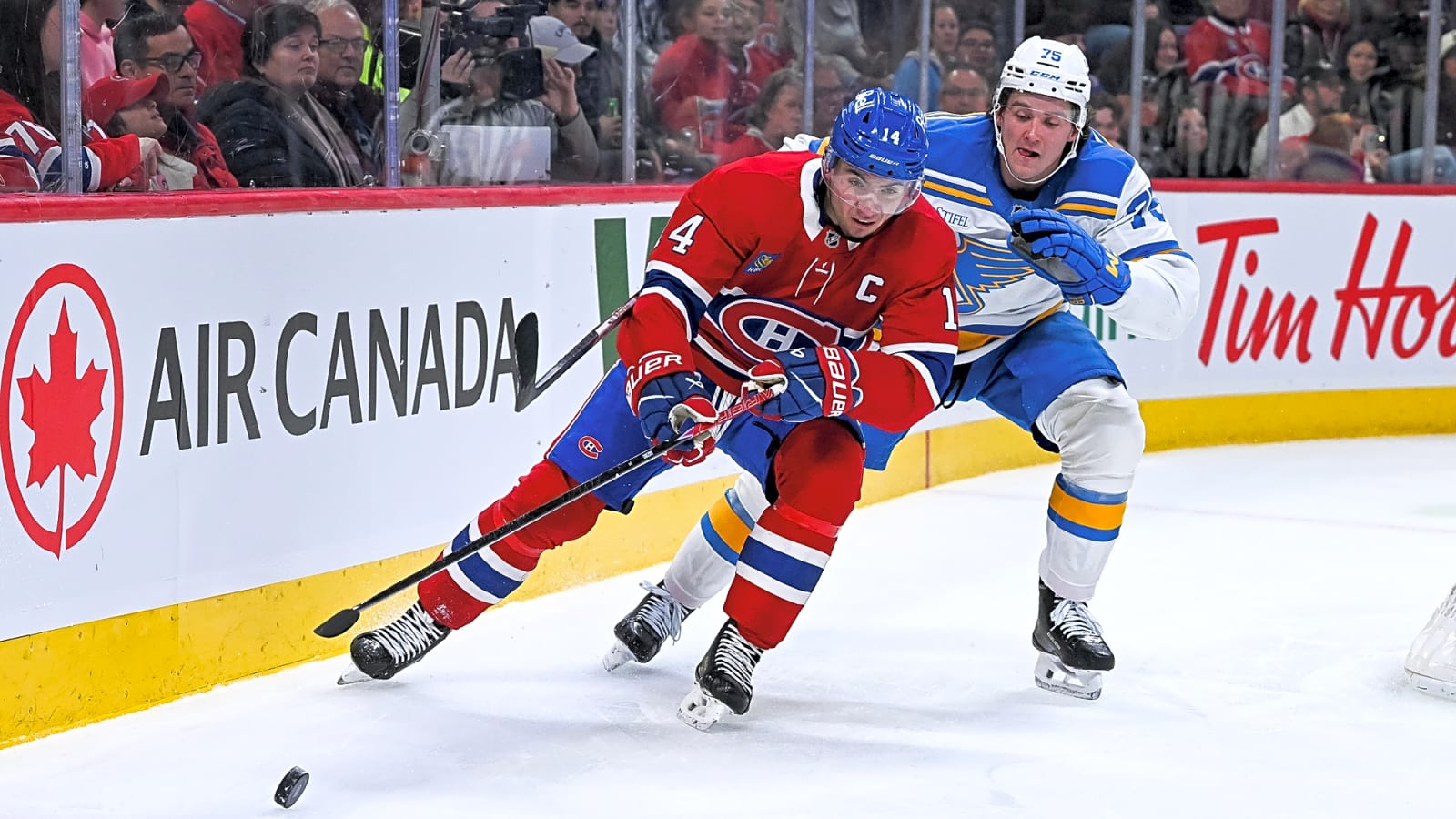
Every NHL team has a line that sets the temperature for the rest of the team. For the Montreal Canadiens, that line includes Nick Suzuki and Cole Caufield. When it’s humming, the team plays downhill. When it isn’t, everything feels harder than it should.
Right now, the line isn’t humming.
Head Coach Martin St. Louis Wants His Top Line to Break Out
Martin St. Louis talked this week about wanting that line to get “in space” to break out of its rut. It’s a familiar coaching phrase, and it sounds good. Space means time. Space means confidence. Space means goals.
But here’s the problem: space disappears as the season goes on. As the standings tighten, games feel heavier. Teams clamp down. What you’re seeing now, especially against teams fighting for the same oxygen, is playoff hockey in January clothing. There is less room, not more. And waiting for space to appear magically isn’t a plan—it’s a hope.
If Suzuki’s line is going to get going, it won’t start on open ice. It has to start in traffic.
For the Canadiens, Tight Ice and Hard Truths
St. Louis hinted at the real issue beneath the phrasing. Winning battles, extending offensive-zone time, and playing through people instead of around them are the keys to success. That’s where space comes from at this time of year—not off the rush, but off retrievals, second efforts, and staying connected as a unit.
This isn’t about one player being off. It’s about the line functioning as a line.
When that group isn’t winning the first puck battle, the second battle doesn’t exist. When they don’t extend a shift, there are no extra touches. And without those touches, skill never gets a chance to show itself. The frustration creeps in, and, as St. Louis notes, it’s evident. There are missed passes, rushed shots, and plays forced instead of earned.
St. Louis knows this. You could hear it when he said the answers are “everywhere.” Coaches say that when the solution isn’t tactical, it’s competitive.
Why the Canadiens’ First Line Matters So Much
The Canadiens don’t need their line to be fancy. They need it to be dependable. Suzuki is at his best when the game is orderly and predictable—when he can read layers and manage pace. Caufield thrives when plays are extended just long enough for seams to open. Neither player benefits from one-and-done shifts or constant defending.
That’s why this line is the Canadiens’ top line, whether it wants that label or not. When they control the puck, the bench settles. When they don’t, the game quickly starts to wobble. Young teams especially need their top line to absorb pressure, not add to it.
Putting other combinations together to “get the team going” is understandable. Coaches do it all the time. But ultimately, this comes back to the core. If Suzuki’s line isn’t driving play, the Canadiens are chasing the game instead of shaping it.
St. Louis Sounds Like a Coach When He Says Space Is Earned, Not Found
There will be moments of space—there always are. But they arrive after hard work, not before. They come after sticks on pucks, bodies in lanes, and shifts that stretch past discomfort.
That’s the challenge in front of this line now. As their coach notes, they can’t wait for the game to open up. They’ve got to force it open.
Because if the Canadiens’ top line gets moving again, a lot of other things fall into place. And if it doesn’t, no amount of talk about space is going to change the standings.
More must-reads:
- Kings star Kevin Fiala's status revealed after Olympic injury
- Keshad Johnson of the Miami Heat dances his way to dunk title
- The 'Daytona 500 winners' quiz
Breaking News
Trending News





Customize Your Newsletter
 +
+




Get the latest news and rumors, customized to your favorite sports and teams. Emailed daily. Always free!
PRIVACY POLICY COOKIE POLICY CONTACT US
ABOUT YARDBARKER TERMS OF SERVICE


By using this site, you agree to our Terms of Service and Privacy Policy.
This site is for entertainment purposes only.
There is no gambling offered on this site.
Gambling Problem? Call 1-800-Gambler.
