
-

-


Follow Us
-

 On Facebook
 On Flipboard
 On Twitter
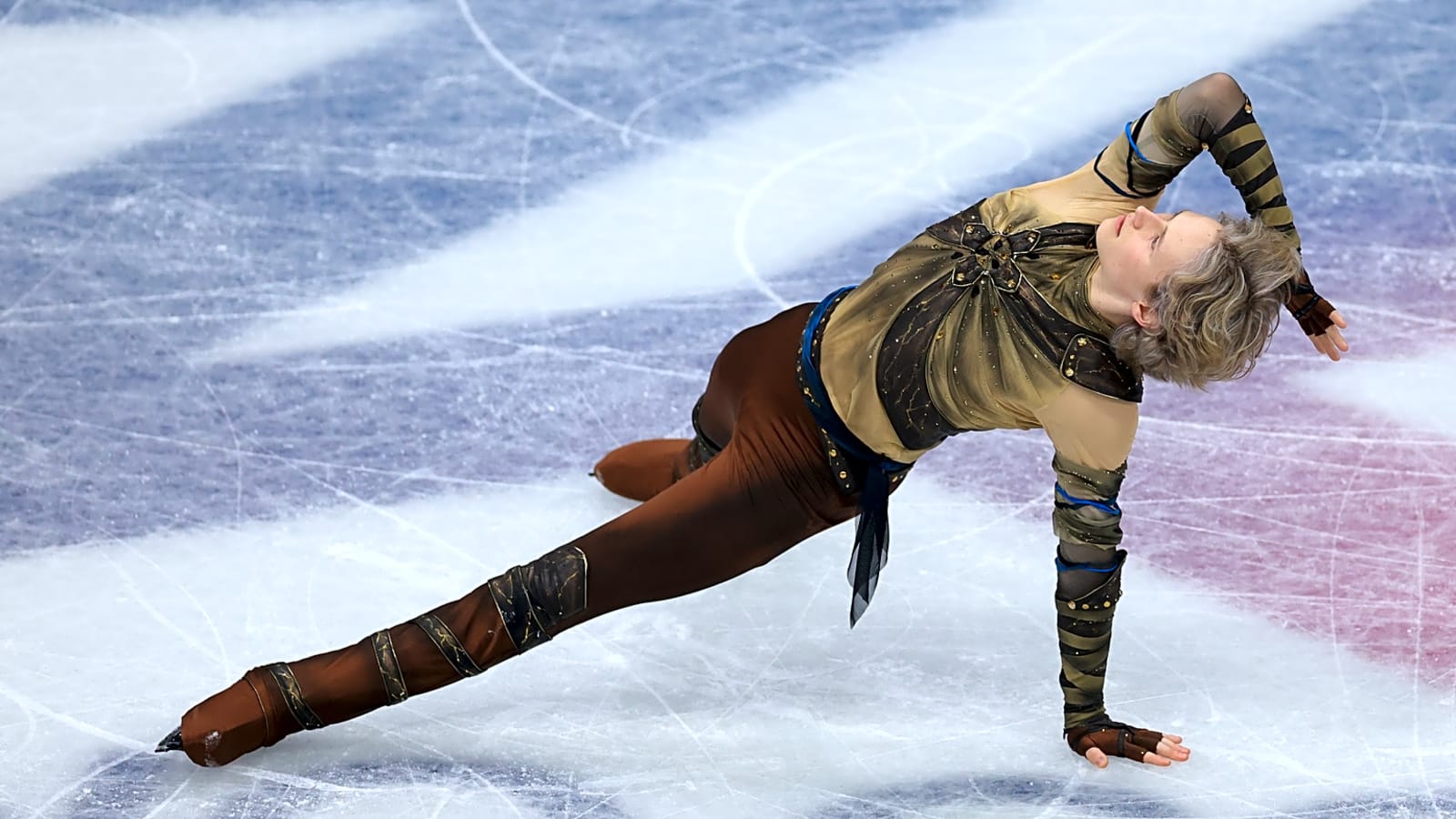
Ilia Malinin misses Olympic podium after disastrous free skate
The Olympic men’s figure skating competition came to a shocking end on Friday, Feb. 13. Heavy favorite Ilia Malinin, the American skater known as the “Quad God” for his arsenal of quadruple-rotation jumps, crashed off the podium after a calamitous free skate. His short program performance put him in first place with a massive five-point lead; his long program dropped him all the way down to eighth.
Kazakhstan’s Mikhail Shaidorov took home the gold medal thanks to a brilliant long program, while Japan’s Yuma Kagiyama and Shun Sato took home silver and bronze, respectively.
A season-defining shock
It was supposed to be the surest thing at the Olympics. Malinin, the unstoppable American figure skater, was destined for gold.
He entered these Games with staggering statistics. He was the only man in the field capable of landing a quad axel and the only one who dared attempt seven quads in one program. He’d won every single one of the last 14 international competitions he’d entered. He’d been the clean-up hitter for the United States in the Olympic team skating competition, and he’d performed this exact free skate with steely confidence to deliver his nation a gold medal.
Here, though, Malinin was tentative. He nailed his first jump, a routine quad salchow, but bailed early on a planned quad axel — set to be the first in Olympic history — and turned it into a double. From there, it all fell apart. Malinin’s balance and confidence deserted him, and he struggled his way through even the simplest elements of his program.
By the time he hit his final pose, shock and horror etched clear across his face, Malinin had dropped a whopping 72 points on jumping errors.
The heavy weight of expectation
Malinin’s “Quad God” moniker is one that he gave himself. He’s always been someone who sidles right up to the edge of arrogant, and until this Olympic long program, his work had justified it. The media, charmed by his skill, was only too happy to push the “Quad God” narrative; his fans, riding off his competitive highs, turned his narrative into legend. All this confidence came from a good place, but its effect was to render Malinin infallible.
He isn’t. He never was. And Malinin’s collapse shows just how heavy the weight of perceived infallibility becomes on a stage as big as the Olympic Games. His long program struggle wasn’t physical; replays of his botched jumps showed no obvious signs of setup or takeoff errors. His struggle was mental, pure and simple, and it was exacerbated by the narrative he, his fans and the media created for him.
Malinin is just 21, and these are his first Olympic Games. This was a failure of expectations, not skill, and it raises important questions about how we should talk about generational talents in the future. Malinin’s struggle mirrors those of slalom skier Mikaela Shiffrin in 2022 and of gymnast Simone Biles in 2021. It doesn’t matter how talented an individual may be: Put them on a high enough pedestal and their legs will start shaking when they look down.
What’s next
Malinin’s Olympics have come to a close, but Team USA will continue on its hunt for an individual skating gold medal. The U.S. women — Alysa Liu, Amber Glenn and Isabeau Levito — will begin their competition on Tuesday, Feb. 17.
More must-reads:
- Ilia Malinin had three-word response to his disastrous Olympic performance
- Josh Morrissey leaves Canada’s group stage win over Czechia
- The 'Winter Olympic medal leaders' quiz
Breaking News
Trending News








Customize Your Newsletter
 +
+




Get the latest news and rumors, customized to your favorite sports and teams. Emailed daily. Always free!
PRIVACY POLICY COOKIE POLICY CONTACT US
ABOUT YARDBARKER TERMS OF SERVICE


By using this site, you agree to our Terms of Service and Privacy Policy.
This site is for entertainment purposes only.
There is no gambling offered on this site.
Gambling Problem? Call 1-800-Gambler.
