
-

-


Follow Us
-

 On Facebook
 On Flipboard
 On Twitter
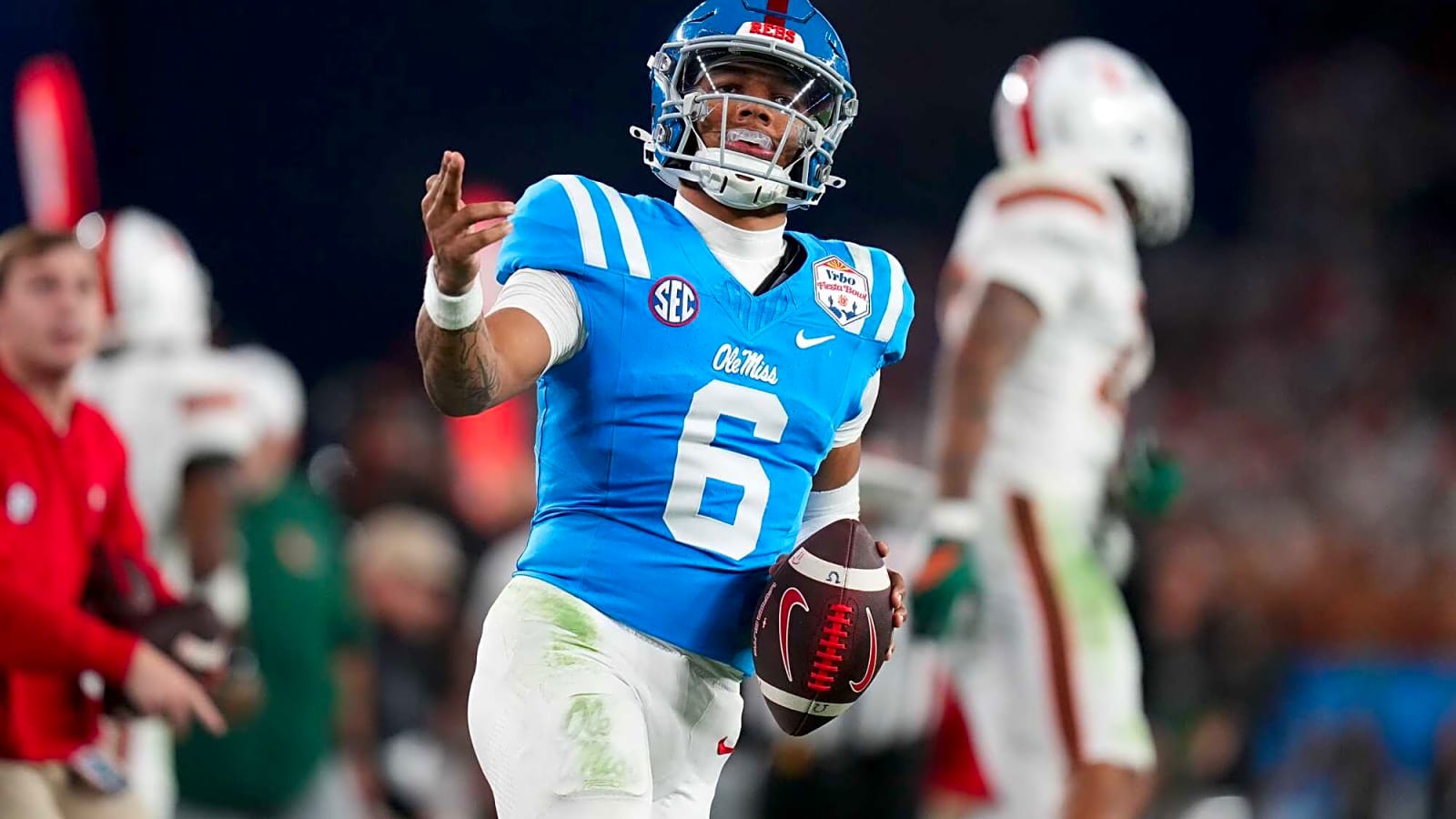
NCAA eligibility ruling on Trinidad Chambliss doesn’t set new legal standard
Every NCAA eligibility ruling — approval or denial — costs the association something it cannot recover: time.
In a statement following its decision involving Ole Miss quarterback Trinidad Chambliss, the NCAA argued the outcome undermines its eligibility framework and threatens future opportunities for athletes. Yet despite a growing number of court challenges across the country, the organization has not updated its bylaws or issued meaningful new guidance to address the uncertainty it warns about.
No new legal standard
Despite concerns that the Chambliss decision set a precedent for interpreting eligibility rules differently across states, the ruling does not establish a new legal framework.
Future decision makers do not have to apply the same legal reasoning to every case. There is no new standard set to determine eligibility requirements, and determinations will remain on a case-by-case basis.
An athlete's outcome will be determined by the documentation and interpretation of his or her filings, not lumped together with rulings from other cases.
NCAA statement in response to the Trinidad Chambliss decision: "We will continue to defend the NCAA’s eligibility rules against repeated attempts to rob future generations of the opportunity..."
— Ross Dellenger (@RossDellenger) February 12, 2026
The association continues to urge Congress to take action. pic.twitter.com/FbUmrK5GiI
These decisions remain fact-specific. Even if judges interpret rules differently across cases, each eligibility determination must still be made on the merits of the individual situation. The NCAA retains the power to approve or deny individual requests.
If an athlete who has been denied files for relief, the outcome for that athlete does not dictate the result for another. While different courts may weigh differently, the reality remains that athletes are still at the mercy of documentation and interpretation.
We've heard this before
This rhetoric is not new.
In Michael McCann's Feb. 11 column for Sportico, the NCAA warned that if such rulings were taken to their “logical conclusion,” athletes could compete for as many as 18 seasons.
The association regularly invokes slippery-slope scenarios, yet it has not consistently worked with member institutions to modernize its eligibility framework. That inaction invites more challenges — and prolongs uncertainty for athletes.
The NCAA can characterize each case as precedent, but little has materially changed. Eligibility decisions remain discretionary and fact-specific. Until the bylaws evolve, future athletes will continue navigating the same uncertainty.
More must-reads:
- What's next after Ole Miss QB Trinidad Chambliss is granted preliminary injunction?
- Ole Miss Rebels celebrate Trinidad Chambliss ruling in statement
- The 'College football color teams' quiz
Breaking News
Trending News






Customize Your Newsletter
 +
+




Get the latest news and rumors, customized to your favorite sports and teams. Emailed daily. Always free!
PRIVACY POLICY COOKIE POLICY CONTACT US
ABOUT YARDBARKER TERMS OF SERVICE


By using this site, you agree to our Terms of Service and Privacy Policy.
This site is for entertainment purposes only.
There is no gambling offered on this site.
Gambling Problem? Call 1-800-Gambler.
