
-


Follow Us

 On Facebook
 On Flipboard
 On Twitter
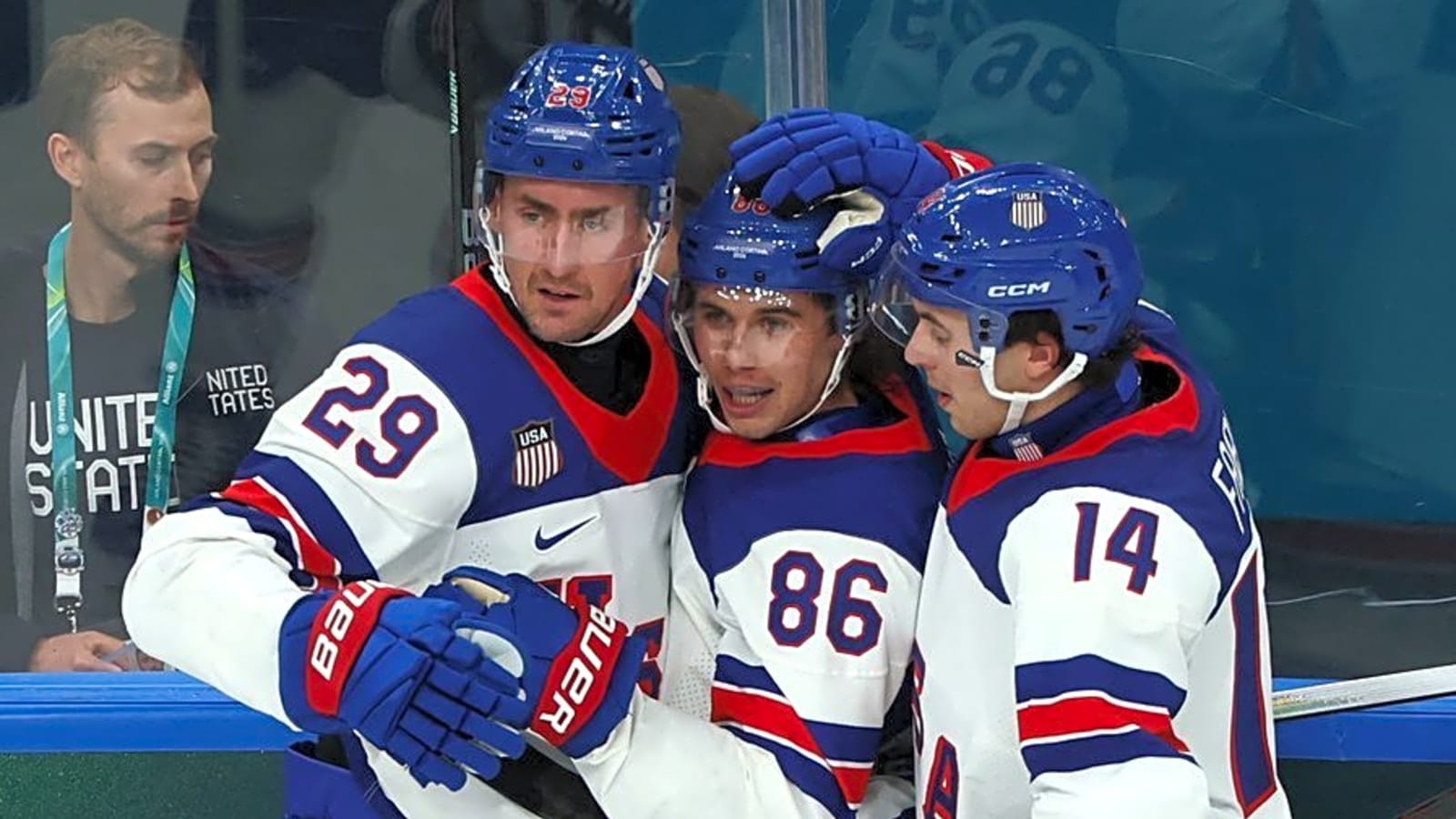
Much was made of Team USA’s decision to bring certain depth forwards to the 2026 Olympics. After GM Bill Guerin left behind offensively gifted wingers like Cole Caufield, Alex DeBrincat and Jason Robertson, Guerin’s apparent bias for hard-checking veterans was a scrutinized narrative going into the tournament.
Colorado Avalanche center Brock Nelson (29 goals and 49 points in the NHL this season) was among the players questioned by the masses when he was named to Team USA; after Thursday’s first game versus Team Latvia, he proved why Guerin had him as a borderline lock from the beginning.
Registering two goals — and an additional one that was disallowed in the first period — Nelson was a force to be reckoned with for the Americans in their first game of the tournament. Skating in more than 13 minutes and having a 75% faceoff rate, Nelson did exactly what he was brought to Italy to do.
The Americans have high-end talent for days. They could’ve easily brought one of the aforementioned wingers to further supplement said talent. While I do think Robertson could’ve been used in a bottom-six role (over a J.T. Miller or Vincent Trocheck) given his skillset, guys like Caufield or DeBrincat aren’t as versatile and would’ve needed specific deployment.
As it was described to me a few months back, either of those players would’ve had to have top-six roles and consistent power-play time to have had an impact; it was clear that the Americans were not comfortable moving out any of their wingers further down the lineup more than they had already done.
Speaking of players pushed down the lineup, Jack Hughes talked about heading into Game 1, as was his placement on the fourth line; he shined alongside Nelson, registering two assists. Though a natural center — and playing in a different role — Hughes was able to excel on the fourth line Thursday, in large part due to his chemistry with Nelson and the latter’s ability to get to the middle of the ice.
The collective play of the Nelson line (with Miller in addition to Hughes along with Trocheck rotating in) was so stellar that it rivalled the ice time of the projected third trio, made up of Kyle Connor, Dylan Larkin and Tage Thompson. I wrote two days ago that the Larkin line had the makings of a major factor for the Americans potentially winning games; while they were fine in their own right, the fourth line was the major standout. Thompson did register a power-play goal late in period 2 and figures to be a key component of the top unit for the Americans on the man advantage going forward.
There was justifiable criticism for USA going into the tournament given the personnel decisions, but Nelson has, at least temporarily, silenced them. Providing a different element of size and versatility contrary to his compatriots that were left home, coupled with his ability to not only elevate his own game but that of Hughes as well, in the early goings of this tournament is reason why Guerin never had a doubt of bringing Nelson over.
It is still fair to question some of the other personnel decisions, in my opinion, like Trocheck and/or Miller over Robertson, but Nelson has separated himself from that argument. What’s left to be seen is if Nelson will be able to bring that level of game and overall impact once the competition gets tougher.
More must-reads:
- Kings star Kevin Fiala's status revealed after Olympic injury
- Ugly Kevin Fiala injury highlights risk NHL takes at Olympics
- The 'Winter Olympic medal leaders' quiz
Breaking News
Trending News





Customize Your Newsletter
 +
+




Get the latest news and rumors, customized to your favorite sports and teams. Emailed daily. Always free!
PRIVACY POLICY COOKIE POLICY CONTACT US
ABOUT YARDBARKER TERMS OF SERVICE


By using this site, you agree to our Terms of Service and Privacy Policy.
This site is for entertainment purposes only.
There is no gambling offered on this site.
Gambling Problem? Call 1-800-Gambler.
