
-


Follow Us

 On Facebook
 On Flipboard
 On Twitter
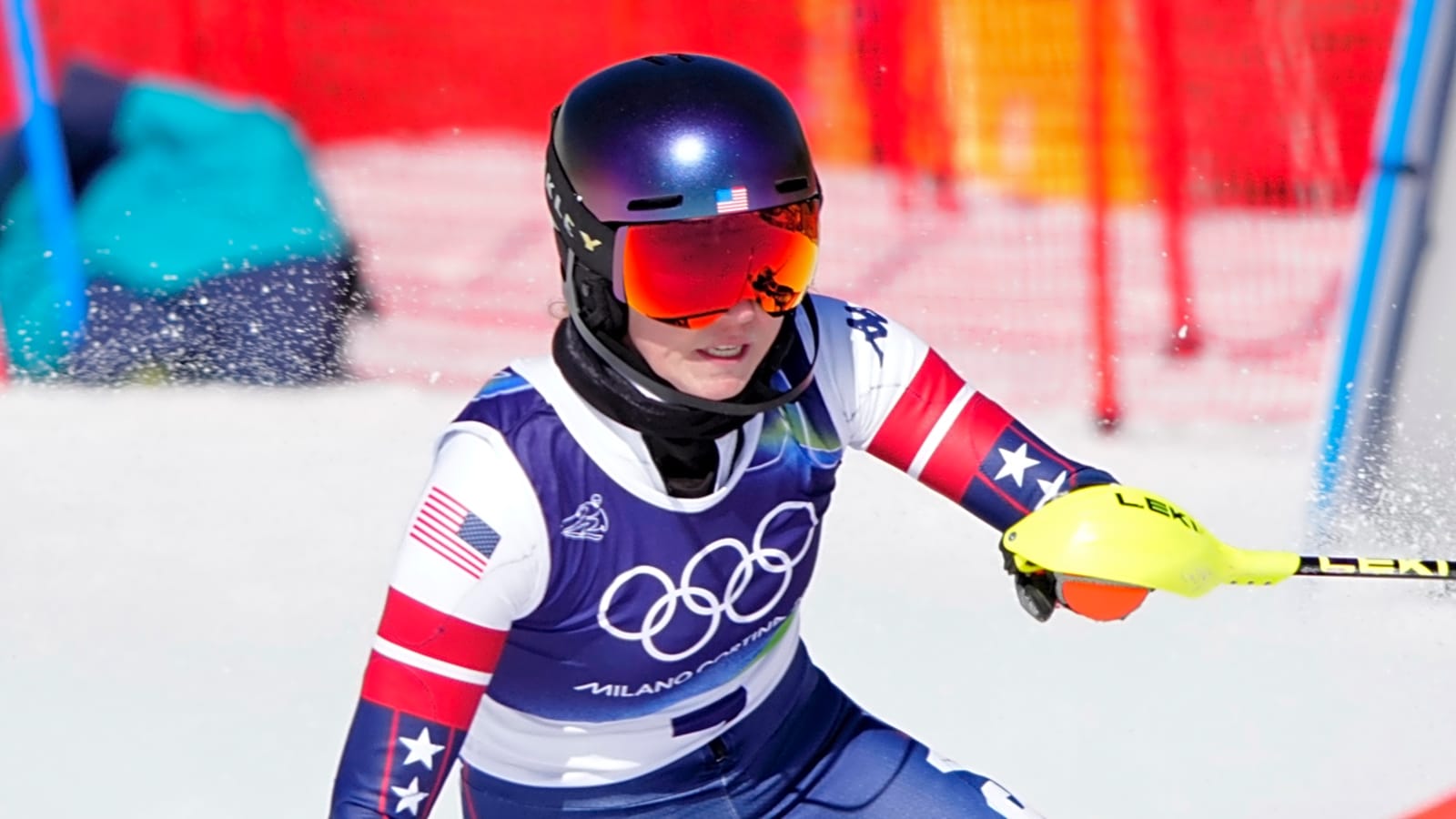
Mikaela Shiffrin storms to slalom gold to rewrite her Olympic history
It took two long weeks, but on the final day of the 2026 Olympic alpine skiing program, Mikaela Shiffrin finally showed the world her best.
The Colorado native won gold in the slalom event, crushing the rest of the field by 1.5 seconds over two course runs.
For those who watch Shiffrin on the World Cup circuit, this dominant performance was nothing special. She entered these Games having won seven of eight slalom events on the 2025-26 World Cup skiing circuit.
For those who only watch her during the Olympics, though, her win was a wild aberration. It was Shiffrin's first gold medal performance in 13 attempts across three separate Olympic Games.
"I wanted to be free, I wanted to unleash," Shiffrin said, via Brian Mann of NPR.
"In the end, today, showing up — that was the thing I wanted most. More than the medal. Now, to also get to have a medal is unbelievable."
From triumph to tragedy
Shiffrin is just 30 years old, but she's been an Olympic fixture for nearly two decades. She made her Games debut at the 2014 games in Sochi and was christened the world's best after winning the slalom event in style. She followed up that strong start with two medals—a gold and a silver—in the 2018 games in Pyeongchang.
From there, though, while Shiffrin dominated skiing's yearly World Cup events, she struggled to make her mark on the Olympic Games. The 2022 Olympic Games were a disaster for Shiffrin: she entered every single alpine event and failed to medal in any of them.
In hindsight, that wasn't exactly surprising. Beijing was unfamiliar territory for everyone, not just Shiffrin, as it wasn't a regular stop on the winter sports calendar. Nobody knew what to expect from its alpine courses, and Shiffrin, an athlete who relies heavily on preparation and routine, was thrown off balance.
“People think we are in control at the Olympics, of the time zone where we travel, when we work out, and how we train and eat,” Shiffrin said, via Matthew Futterman of The Athletic. “It’s the opposite. None of that is in our control. It’s the least amount of control we have.”
Put on a pedestal by NBC after her strong performances in the previous two Games, Shiffrin's Beijing struggles appeared in sharp contrast to her public persona. The effect was devastating.
"My relationship with the Olympics is that there are so many people who tune in who maybe don’t take enough care to know more of the backstory and understand enough," she said, via Futterman.
"And there are certainly, I guess, like, repercussions might not be the right word, but let’s go with that for now, for not being able to exceed whatever expectations might be set.”
A question of expectation
Shiffrin isn't the only athlete to fall victim to the Olympic expectation curse. Simone Biles famously struggled with it at the Tokyo Games in 2021, and figure skater Ilia Malinin went through it on an accelerated timeline at these 2026 Games. But Biles returned four years later in Paris to reclaim her Olympic title, and Malinin still managed to win a team gold even though he disappointed in the individual event.
Biles and Malinin got their Olympic redemption. Shiffrin, for years, remained without it. Her first two races in Milano Cortina left her wanting: a slower-than-expected slalom run in the team combined left her fourth, while a slip-up in the giant slalom left her eleventh.
Not anymore. This strong slalom performance puts Shiffrin right back where she belongs: on top of the Olympic podium as the world's undisputed slalom champion.
More must-reads:
- Team Canada discusses rallying after Sidney Crosby's injury in Olympic quarterfinal: 'We didn't want this to be Sid's last game'
- Winter Olympics women's figure skating: Favorites, outside challengers, wild cards
- The 'Winter Olympic medal leaders' quiz
Breaking News
Trending News







Customize Your Newsletter
 +
+




Get the latest news and rumors, customized to your favorite sports and teams. Emailed daily. Always free!
PRIVACY POLICY COOKIE POLICY CONTACT US
ABOUT YARDBARKER TERMS OF SERVICE


By using this site, you agree to our Terms of Service and Privacy Policy.
This site is for entertainment purposes only.
There is no gambling offered on this site.
Gambling Problem? Call 1-800-Gambler.
