
-

-


Follow Us
-

 On Facebook
 On Flipboard
 On Twitter
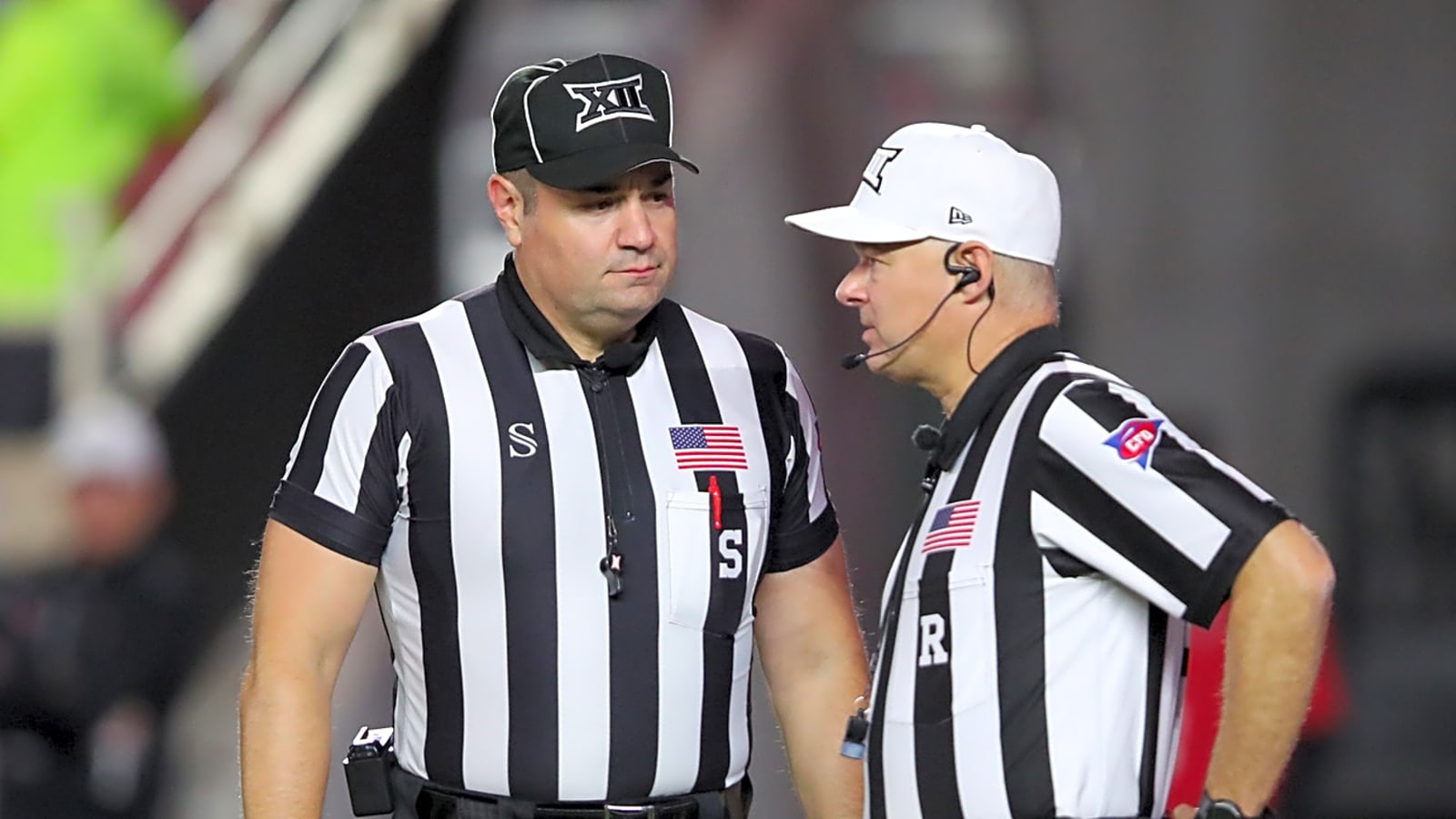
NCAA Rules Committee proposal on targeting a good tart to fixing rule
The targeting rule exists with the best of intentions in mind. It hoped to take dangerous hits out of the game and limit head injuries. But good intentions don't always mean a rule works.
Now, major changes could be coming to the targeting rule.
As it stands now, a targeting call is a 15-yard penalty and an automatic ejection. If that ejection occurs in the second half of a game, it gets carried over, and a player is suspended for the first half of their next game. That's even if the game is vital, like a College Football Playoff game, or if it's the first game of a new season.
The NCAA Football Rules Committee has reportedly proposed that first offenders flagged for targeting won't have their penalty carry over to the next game regardless of which half the infraction occurred in.
Targeting is a flawed rule
Targeting was first implemented in 2008, with the ejection portion of the penalty implemented in 2013. Several changes have come in subsequent years, like allowing replay to call for a review on targeting that officials may have missed.
In 2020, players began to be allowed on the team bench after an ejection rather than being sent to the locker room. Later, in 2022, a process was added to appeal the first-half suspension on targeting calls.
On the surface, targeting is a good rule. It tries to prevent unnecessary, violent hits to reduce the risk of head and neck injuries. That's all good, but the problem has been its enforcement.
From conference to conference, it can feel as though officials have different training on what is and isn't targeting. That may not be a surprise, given that each conference provides its own officials. However, it creates a lack of uniformity that makes the rule less black and white than it should be.
On top of that, the penalties for targeting have been too harsh. An automatic ejection for what is often accidental contact can change the shape of a game. Add a first-half suspension, and it can change two games.
The proposed change to the targeting rule would remove the suspension, helping to correct the over-punishment.
More changes are needed to fix targeting
The fact is that the rule is still going to be highly controversial until the penalty can be consistently officiated. The problem is that most rules aren't consistently officiated. Different crews have different approaches.
What can change, however, is the enforcement of the penalty.
There are a couple of options. The first is to create levels of targeting. One that carries the ejection and one that doesn't. The second option is to make the ejection a punishment that comes on a second offense.
Facemasks used to have layers based on how egregious they were, at five or 15 yards. However, too much subjectivity can lead to controversy. So, it's better to choose the latter option. Remove the automatic ejection altogether. Make a suspension a punishment that comes with a second offense. That way, potential human mistakes from officials don't have a disproportionate impact on games.
For now, removing the suspension is a step forward. It's also a step that's not official just yet. Next, the FBS Football Oversight Committee must approve it when they meet in March.
More must-reads:
- Top eight college football stars who passed on the 2026 NFL Draft
- Mike Elko, Deion Sanders fuel growing call for college football commissioner
- The 'College football color teams' quiz
Breaking News
Trending News



Customize Your Newsletter
 +
+




Get the latest news and rumors, customized to your favorite sports and teams. Emailed daily. Always free!
PRIVACY POLICY COOKIE POLICY CONTACT US
ABOUT YARDBARKER TERMS OF SERVICE


By using this site, you agree to our Terms of Service and Privacy Policy.
This site is for entertainment purposes only.
There is no gambling offered on this site.
Gambling Problem? Call 1-800-Gambler.
