
-

-


Follow Us
-

 On Facebook
 On Flipboard
 On Twitter
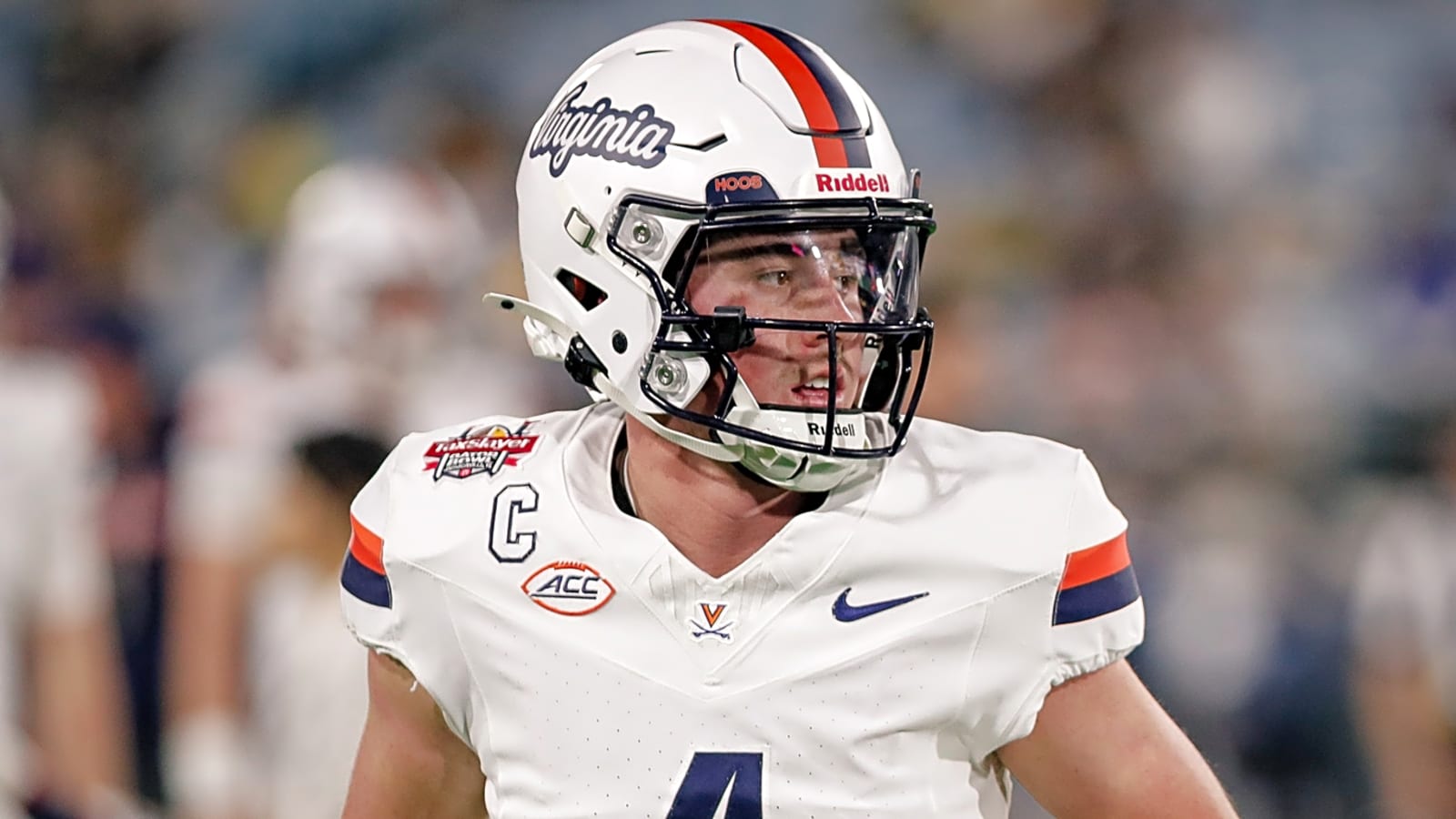
Does Virginia's Chandler Morris deserve a seventh season of eligibility?
The recent rash of lawsuits over eligibility in college football looked like it had come to an end with Joey Aguilar.
That's when Virginia Cavaliers quarterback Chandler Morris threw his hat in the ring, arguing for a seventh season of college football in his own lawsuit.
The NCAA had previously denied his medical redshirt waiver and appeal. However, Morris is now clearly looking to find a way around that. The lawsuit has been filed in Charlottesville Circuit Court, and according to initial reports, Morris is asking a judge to "prohibit the NCAA from enforcing its eligibility standards."
Morris previously played for four different schools over six seasons. The 25-year-old has made stops at Oklahoma, TCU, North Texas and Virginia, leading the Cavaliers to an 11-win season in 2025.
The argument Chandler Morris is making
Morris is likely going to model his argument for another season similarly to Trinidad Chambliss. The Ole Miss quarterback recently won his lawsuit and gained another season of eligibility after the NCAA denied his medical redshirt waiver. That does mean there's some precedent here.
There is a key difference, though. Chambliss didn't play at all during his medical redshirt season. Morris played in four games, suffering a knee injury in the opener, before appearing in three more as a backup. He is also claiming mental health issues as a result of the injury, which is not uncommon for athletes.
Those mental health issues are going to be key to the argument. In particular, proving that they cost Morris time because he played in four games overall. That's a vital difference from the argument Chambliss made when he didn't play at all.
In his previous six seasons, 2020 didn't count toward eligibility for anyone. Then, in 2021, he played in four games and used a redshirt. From that point on, without a medical redshirt, each season would normally count against his eligibility regardless of how much he played.
NCAA has found legal success in eligibility cases
By now, it's clear the NCAA has a relatively weak track record in court. Most of its rules simply don't hold up to legal scrutiny. However, one place where it tends to have more success than others is in eligibility rulings. There are certainly times it loses there, too, like the Chambliss case, but there are plenty of wins.
The NCAA won the Joey Aguilar decision. That Knoxville judge ruled against the Tennessee quarterback, ruling that JUCO counted the same as Division I football as far as eligibility was concerned. Then, an Alabama judge denied Alabama basketball player Charles Bediako his eligibility, having played professionally. Both of those were major wins for the NCAA.
Another trend is players making their cases in local courts, rather than federal ones. The idea is that you may find a friendlier judge. Morris is doing that, too. However, as Aguilar and Bediako found out, it doesn't ensure success.
Ultimately, the Morris case is most easily going to be compared to the Chambliss case because they're both over medical redshirts. However, the distinction over having played a limited amount versus not at all could end up being its own precedent now.
If Morris does return to college, he will not have the transfer portal to find a new school. At Virginia, there will likely then be a quarterback battle with Beau Pribula. In the event he loses, Morris will likely try his hand at the professional level.
More must-reads:
- Does Big Ten's push for CFP expansion come down to its TV partners?
- Top eight college football stars who passed on the 2026 NFL Draft
- The '2024-25 college football bowl game host cities' quiz
Breaking News
Trending News



Customize Your Newsletter
 +
+




Get the latest news and rumors, customized to your favorite sports and teams. Emailed daily. Always free!
PRIVACY POLICY COOKIE POLICY CONTACT US
ABOUT YARDBARKER TERMS OF SERVICE


By using this site, you agree to our Terms of Service and Privacy Policy.
This site is for entertainment purposes only.
There is no gambling offered on this site.
Gambling Problem? Call 1-800-Gambler.
