
-

-


Follow Us
-

 On Facebook
 On Flipboard
Four second-year players to watch in 2026 NBA season
Last season's crop of rookie players was a delight to cover. A rookie class for the ages? Possibly. Time will tell if they can match the classes of 1984, 1996 or 2003.
Now that they’ve had a year of collective experience, what should we expect from this group? Who is primed for a breakout? Who faces increased expectations?
Let’s examine four NBA sophomores with questions to answer in Year 2.
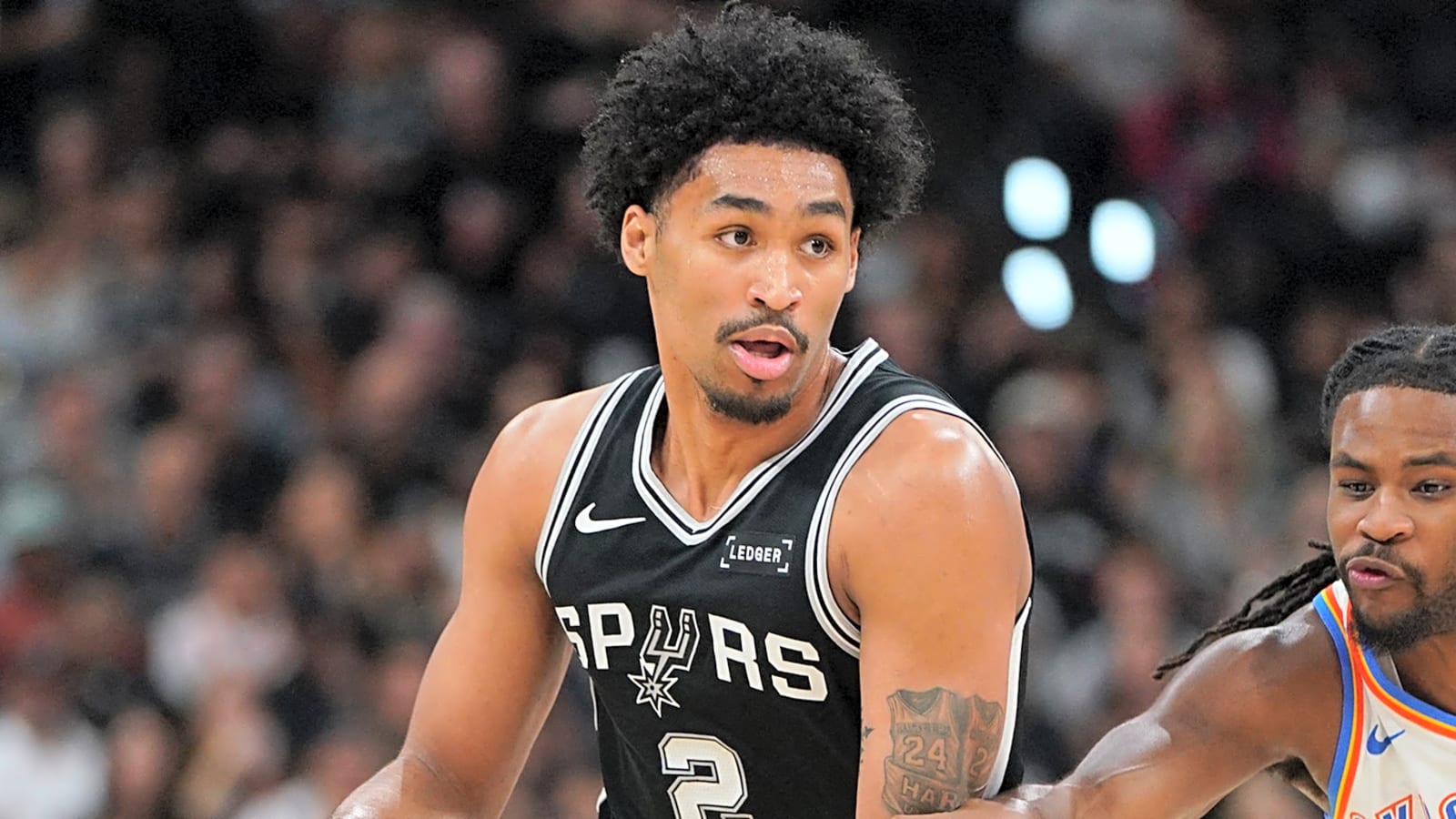
Dylan Harper – San Antonio Spurs
With great expectation comes increased pressure. For the 20-year-old Harper, a breakout postseason performance that helped fuel a surprise finals run, sets a possibly unfair baseline that the NBA world supposes Harper to reach.
Is that reasonable, though? With Stephon Castle and the now healthy De’Aaron Fox again expected to start, Harper will once more be limited to a sixth-man role, though he will likely play more than the 22 minutes per game he did as a rookie. Sixth Man of the Year is certainly a realistic goal, assuming head coach Mitch Johnson doesn’t experiment with a three-point-guard starting group, or Fox gets traded.
With a generous dollop of Tony Parker to his game, it’s easy to imagine he and Victor Wembanyama as the Parker-and-Tim-Duncan of this generation. Harper, though, will have to remain patient for the time being.
Egor Demin – Brooklyn Nets
The best of a speculative bunch of Brooklyn sophomores, Demin answered one rookie concern emphatically, making 2.4 three-pointers per game at 38.5% as a rookie. The fact that a full 72% of his shot attempts were treys, though, raised questions about his ability to create separation.
Looking noticeably sturdier in Summer League, Demin used craft and strength to apply more rim pressure than he had as a rookie, becoming a consistent 20-point scorer in the process.
Whether that can translate to regular-season action remains to be seen, but if the 6-foot-8 playmaker can balance his shooting with rim pressure, there is a long-term starting point guard in there.
Joan Beringer – Minnesota Timberwolves
Perhaps a surprise name on this list, Beringer has been thrust into the spotlight via Minnesota’s volatile off-season. The decision to focus their star power at the guard position, trading bigs Julius Randle and the beloved Naz Reid in the process, suddenly makes the 19-year-old Frenchman a key rotation piece.
Beringer made just 40 appearances as a rookie, averaging less than eight minutes in those games. Drafted as an eventual successor to Rudy Gobert, Beringer showed a little something in an 18-point, 12-rebound, four-block Summer League debut.
He has better hands than Gobert will ever possess, but his ability to be a roller/lob threat is secondary at the moment. The Wolves simply need him to be a reasonable defensive facsimile of Gobert, helping to anchor their suddenly wafer-thin frontcourt.
V.J. Edgecombe – Philadelphia 76ers
Starting all 75 of his games as a rookie, Edgecombe enjoyed a stellar first pro season, posting a nightly 16 points, 5.6 boards, 4.2 assists and 1.4 steals. He and Tyrese Maxey established themselves as a potential superstar backcourt, with Edgecombe a good second option when Joel Embiid was, as he often is, unavailable.
The much-discussed addition of Jaylen Brown adds a significant wrinkle to Edgecombe’s sophomore campaign. Brown will clearly soak up a substantial amount of usage alongside Edgecombe, who may be making the most significant sacrifice of the Sixers Big-Four.
Brown’s deliberate stylings also complicate things for Edgecombe. He and Maxey fly up and down the floor in the blink of an eye. Brown, though, likes to catch, hold and assess his options. That should dovetail with Embiid, while Maxey has shown he can thrive in any environment. It will be fascinating to watch how Edgecombe adapts.
More must-reads:
- Jalen Brunson shares warning for Knicks about trying to repeat as NBA champions
- LeBron James is holding the entire NBA hostage again
- The '3 3-pointer, 3-block Playoff games' quiz
Breaking News
Trending News




Customize Your Newsletter
 +
+




Get the latest news and rumors, customized to your favorite sports and teams. Emailed daily. Always free!
PRIVACY POLICY COOKIE POLICY CONTACT US
ABOUT YARDBARKER TERMS OF SERVICE


By using this site, you agree to our Terms of Service and Privacy Policy.
This site is for entertainment purposes only.
There is no gambling offered on this site.
Gambling Problem? Call 1-800-Gambler.
