
-

-


Follow Us
-

 On Facebook
 On Flipboard

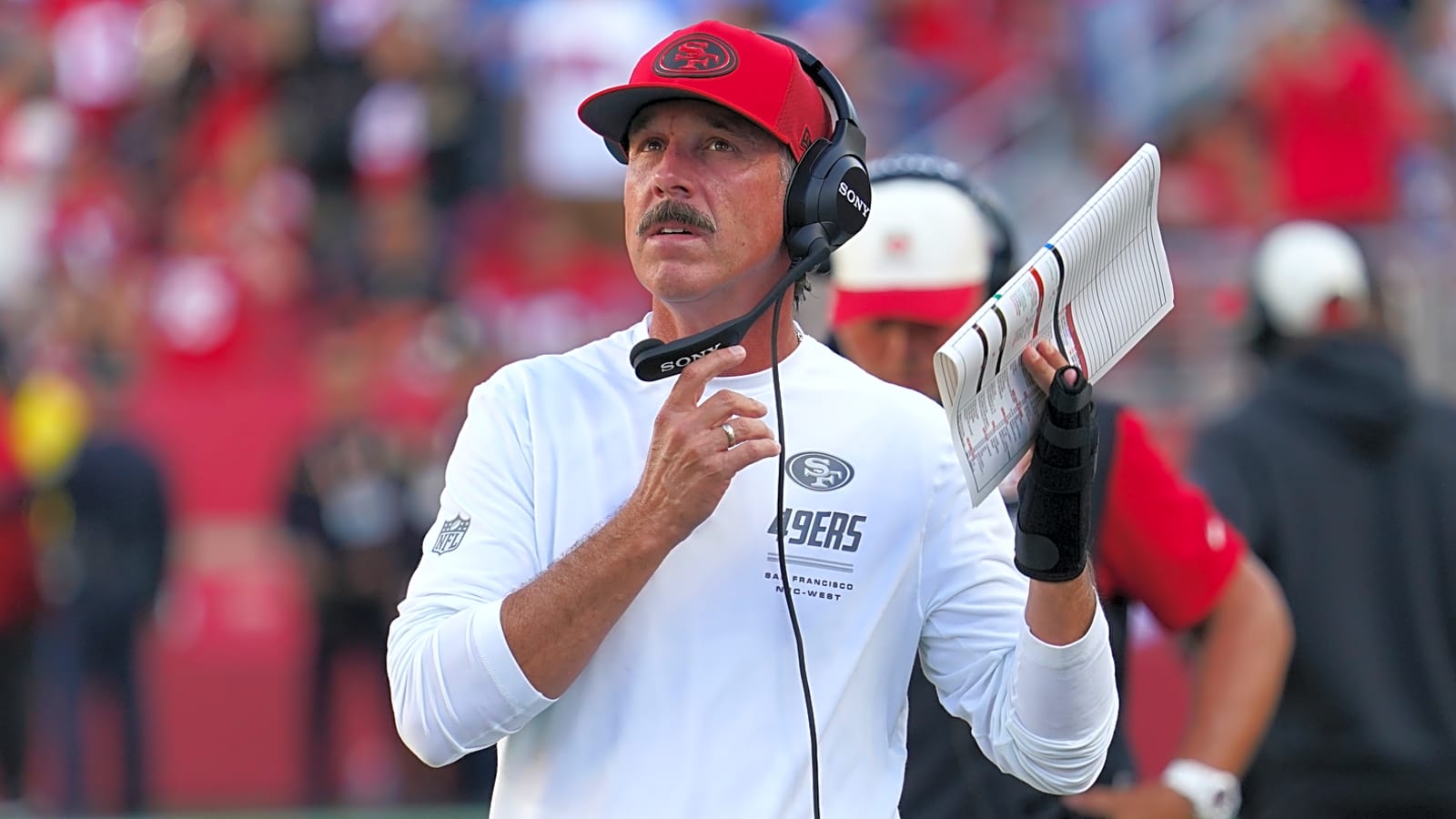
Kyle Shanahan's comments expose behind-the-scenes chess match for making roster cuts
NFL roster cuts appear painfully simple from the outside. Teams choose their best 53 players, release everyone else and begin preparing for Week 1.
Kyle Shanahan’s guarded response during a news conference after the San Francisco 49ers’ preseason finale on Thursday against the Las Vegas Raiders exposed how much more complicated the process becomes behind closed doors.
Kyle Shanahan refuses to identify 49ers standouts
Several young players apparently strengthened their cases during San Francisco’s final exhibition game. When asked who made an impression, Shanahan declined to provide names.
It wasn't because no one deserved recognition. He simply did not want to hand useful information to the rest of the league.
“I have no problem with praising people, but people in this league get paid a lot of money to read everything we say and evaluate decisions over these next three days based off of practice squads and depth charts and stuff,” Shanahan said. “So, I’ve got to be pretty careful with that.”
That answer offered a rare glimpse into the paranoia surrounding NFL roster cuts. A coach praising a young player may appear harmless. Another organization could interpret those comments as evidence that San Francisco wants to retain him.
Suddenly, a routine compliment becomes a scouting clue.
The 49ers must consider more than which players deserve roster spots. They also have to predict who could attract interest elsewhere, which players might remain available and how another team could interpret every decision they make.
Shanahan is not merely evaluating his own roster. He is attempting to predict 31 other front offices simultaneously.
Practice squad carries enormous value for 49ers
Shanahan also pushed back against treating the practice squad as an afterthought. In his view, choosing those 16 players can be nearly as significant as building the initial active roster.
“When you go to the 53, who you want to use for the 16 on practice squad, when you look at the big picture, is almost just as important as the 53,” Shanahan said.
That explains his reluctance to identify players who impressed him. San Francisco could value someone without having room for him on the opening roster. Publicly advertising that interest would only make it harder to retain him.
Shanahan admitted he dislikes roster battles that force coaches to predict future development without a clear answer. He would rather have players settle the debate themselves.
“I hate when we have to make a real tough decision, when we’re kind of on the fence about something and you’re trying to make your best educated guess how the future’s going to go,” Shanahan said. “I like when guys make it real obvious when you have a position battle.”
Some younger players apparently did that during the finale. Shanahan said their performances made certain decisions easier, though he predictably kept the useful details to himself.
The secrecy may sound excessive. In a league where teams employ people to dissect news conferences for competitive clues, however, loose lips can cost an organization a player.
Final cuts are not simply about identifying the best 53. Teams must build an active roster, protect developmental talent and conceal enough information to keep rivals guessing.
Shanahan understands the game being played. That is why the most revealing part of his news conference was everything he refused to reveal.
More must-reads:
- 49ers' Kyle Shanahan shifts focus to regular season: 'It's going to get real, real fast'
- Man scams women out of $1.3 million by posing as 49ers player
- The 'Most 200-receiving-yard games' quiz
Breaking News
Trending News






Customize Your Newsletter
 +
+




Get the latest news and rumors, customized to your favorite sports and teams. Emailed daily. Always free!
PRIVACY POLICY COOKIE POLICY CONTACT US
ABOUT YARDBARKER TERMS OF SERVICE


By using this site, you agree to our Terms of Service and Privacy Policy.
This site is for entertainment purposes only.
There is no gambling offered on this site.
Gambling Problem? Call 1-800-Gambler.
