-

-


Follow Us
-

 On Facebook
 On Flipboard



ESPN nuked college football: 5 ways the sport will never be the same again
Eight and four.
That is the new bar for excellence in college football. If your team goes 8-4 next season, it has every chance to earn a berth into the new 24-team College Football Playoff field.
ESPN and the CFP finalized a $1.7 billion agreement to expand the sport's postseason tournament from 12 to 24 teams Monday, a shameless sellout which removes any lingering disbelief that the college game is anything but minor league football anymore. Mediocrity is the new excellence.
Proponents will argue that access to the playoff field has doubled. That's true for middle-of-the-pack Big Ten and SEC teams and second-tier ACC and Big 12 teams. As for schools such as South Florida, New Mexico and San Diego State, we'll believe it when we see it.
Here are five ways college football is changing with the dawn of the 24-team playoff next season:

Bowl system is toast
College football's postseason bowl tradition dates to the first Rose Bowl in 1902, and it has grown to an annual extravaganza featuring dozens of games.
Even in the 12-team playoff era, it still matters to receive a bowl invitation. A bowl berth offers a chance for teams to practice for another month, a reward for grinding through the schedule with six-plus wins. But Notre Dame declined a bowl invitation last year after being left out of the 12-team CFP. Imagine how many schools (and individual players) will decide that bowl games are no longer worth the effort now that the size of the field has doubled.
I've always felt like bowl games should be for the fans to a certain extent. It's a chance to take your support on the road without having to visit an enemy stadium. As someone who has attended the Rose Bowl (twice), Holiday Bowl (thrice), Orange Bowl (twice), St. Petersburg Bowl (twice), Citrus Bowl, Outback Bowl, Alamo Bowl and Bluebonnet Bowl, it's disappointing to realize that several of these games are probably on life support, effective immediately.

Rivalry games have been cheapened
The sport's decision-makers seem fairly certain that end-of-season rivalries won't be minimized moving forward, because playoff seeding will be at stake. But what happens when a five-loss team limps into its rivalry game with nothing but pride on the line? What happens when both teams are in that position? What's to stop a mass exodus of opt-outs?
You might ask what's new about this situation? The transfer portal, that's what. It has turned players into mercenaries, and they might as well start thinking about their next team as soon as their current team is effectively eliminated from playoff contention. That's what happened when Florida State was snubbed by the CFP in 2024, leading to a 60-point Orange Bowl loss after 20-plus players opted out.
No Power 4 conference championship games
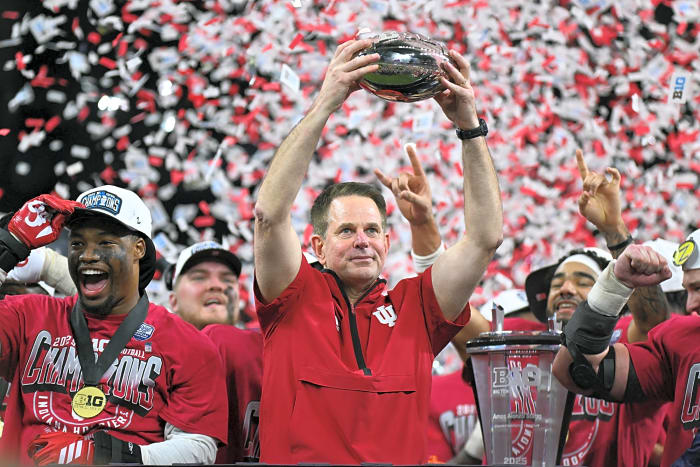
Maybe this is a silver lining. Power 4 conference championship games lost much of their luster when the playoff field expanded from four to 12 teams in 2024. So trashing them to accommodate the expanded playoff schedule might not be a huge loss.
That said, the SEC Championship Game seemingly served as the de facto national championship game at one time, with the conference claiming 13 of 17 national titles from 2006-22, including seven in a row at one point. And every once in a while, we're treated to an upset for the ages — like when Texas, a three-touchdown underdog to Nebraska in the 1996 Big 12 title game, inexplicably aired it out on a crucial fourth-and-1 to wrest the conference crown from the mighty Cornhuskers.

Notre Dame gets de facto permanent playoff berth
Notre Dame has long been one of college football's flagship brands. The Fighting Irish claim 11 national championships, and today they are the only "power" independent program in the sport.
Now, Notre Dame stands to be one of the biggest beneficiaries of the 24-team playoff format. With unparalleled scheduling freedom, the Irish will have a difficult time missing the playoff. What incentive, other than pleasing broadcast partner NBC, do the Irish have to assemble a tough schedule? They will be best positioned by scheduling a couple of tough games, but mostly middle- and lower-tier Power 4 opponents.
Notre Dame was spurned by the CFP last season, but that's not likely to happen again as long as the Irish avoid a reprise of 2007.

Army-Navy loses standalone window
Not even the service academies escape unscathed in the new CFP format.
The storied Army-Navy game will be moved up one week starting in 2027 to accommodate the expanded playoff schedule. That means Army-Navy loses its coveted standalone television window and now shares a Saturday with Group of 6 conference championship games.
Without that standalone window, viewership for the classic matchup will almost certainly drop.
For years, universities and TV networks have sold us on the tradition, art and pageantry of college football. They imply that the college game is somehow more meaningful than its professional counterpart. That is no longer the case, and it's not because players are getting paid.
It's because 8-4 is good enough now. Mediocrity is the new excellence.

More must-reads:
- College football rankings: Predicting the CFP top 12 after Week 10
- How the 24-team College Football Playoff would look in 2026
- Can you name the top 15 passers in Notre Dame Fighting Irish history?
Breaking News
Trending News








Customize Your Newsletter
 +




Get the latest news and rumors, customized to your favorite sports and teams. Emailed daily. Always free!
PRIVACY POLICY COOKIE POLICY CONTACT US
ABOUT YARDBARKER TERMS OF SERVICE


By using this site, you agree to our Terms of Service and Privacy Policy.
This site is for entertainment purposes only.
There is no gambling offered on this site.
Gambling Problem? Call 1-800-Gambler.