-

-


Follow Us
-

 On Facebook
 On Flipboard

'Laundering money': Former Iowa State AD's admission should make college sports fans nervous
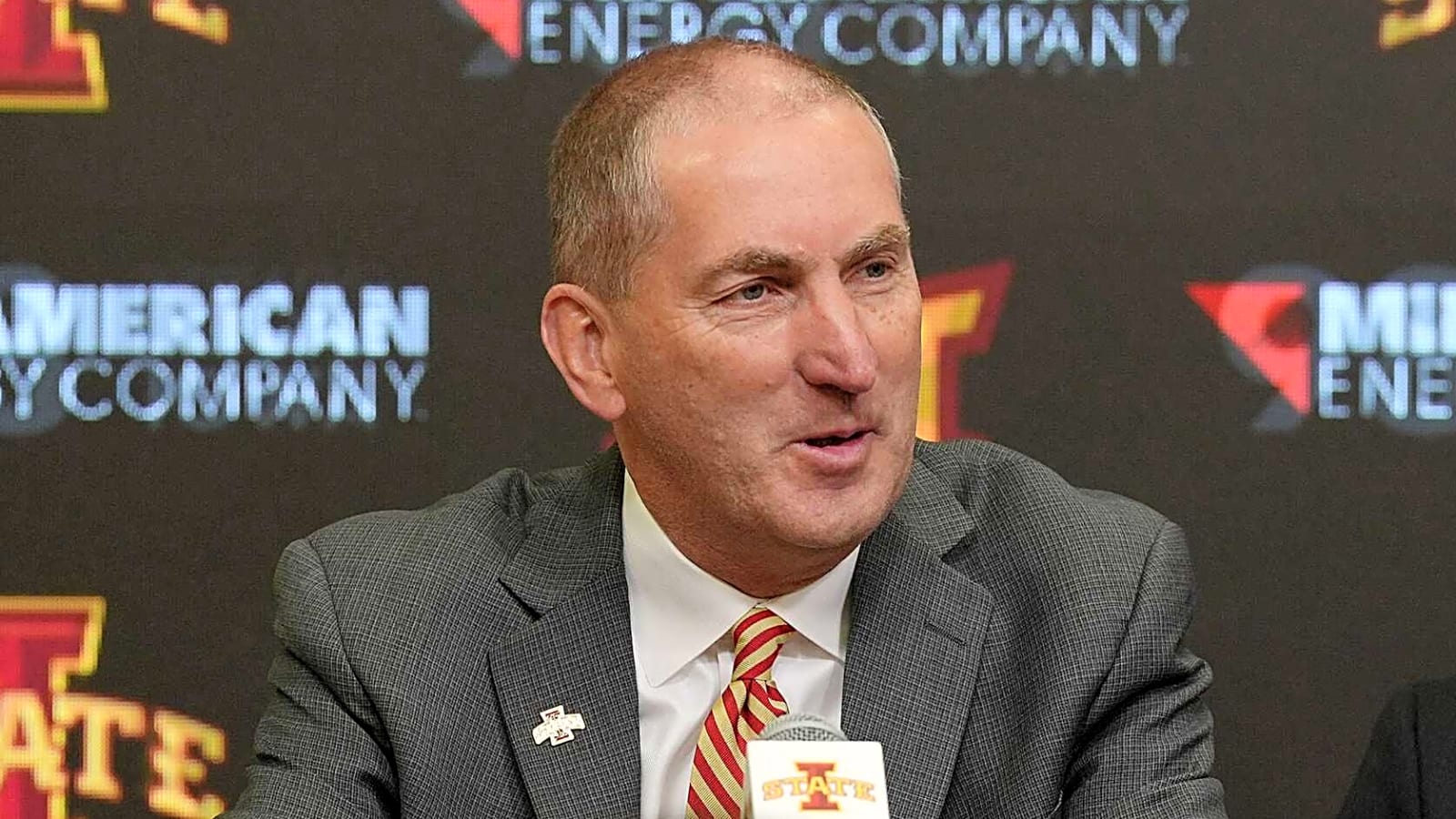
Former Iowa State athletic director Jamie Pollard made a haunting comparison about the state of college athletics and its ballooning NIL payouts on Tuesday at a seminar held by the Knight Commission, comparing it to a federal felony.
Pollard focused on what many schools are doing regarding these deals and the use of third parties to broker these contracts.
They are receiving many donations that would normally go to athletic departments, which are letting budgets easily surpass the growing revenue-sharing cap set by the House v. NCAA settlement in June 2025, as reported by Yahoo Sports' Ross Dellenger.
"I want to be honest: Our industry right now is laundering money. That’s what we’re doing," Pollard said.
At a Knight Commission meeting in Washington, D.C., former Iowa State AD Jamie Pollard flatly says, “I want to be honest: Our industry right now is laundering money. That’s what we’re doing.”
— Ross Dellenger (@RossDellenger) November 17, 2026
Pollard condemned college leaders for making short-term decisions that have "long term consequences" and believes that university presidents/boards are making "irrational and emotional" decisions in shifting campus funds to athletics where they are "no way going to be repaid." https://t.co/xlV9urwImj
— Ross Dellenger (@RossDellenger) November 17, 2026
Pollard says college leaders are taking out loans for athletics to be paid back with revenue from new television deals, but he does not believe some of those new TV deals - such as one in his former conference, the Big 12 - will be lucrative enough to pay back those loans.
— Ross Dellenger (@RossDellenger) November 17, 2026
NIL has spiraled out of control and is dragging college sports down with it
NIL was supposed to be a way for players to get a slice of the pie and be rewarded through endorsements, partnerships and other appearances.
It has turned into the Wild West with schools bidding on a season's worth of service, with it usually starting all over again next season. It has given athletes generational wealth before turning pro — which is not a bad thing — but is causing many players to not be ready professionally after shuffling around rosters and taking a pay cut with their rookie deals, especially in college football.
While that is a completely different story, Pollard has said the quiet part out loud when it comes to how schools are blowing all this money and how they're generating it.
They're not.
Schools are making short-term decisions using campus funds, loans or turning to private equity in order to keep rosters and staffs competitive and keeping facilities pristine. This short-sightedness, on top of being hopeful that a bailout will come, will ultimately pop the bubble and cause future problems that could ruin college sports forever.
Pollard predicted that this issue will be the “next savings-and-loan crisis." According to Eddie Pells of the Associated Press, who reported on the topic, "A combination of high interest rates and poor management led to the closure of more than 1,000 savings-and-loan institutions around the country in the late 1980s and early '90s."
Pells also cited a 2026 report from the U.S. Government Accountability Office, which stated that in 2023-24, 94% of Division I athletic programs spent more money than they generated, a number accelerated by NIL and travel costs.
What does this mean for your favorite school moving forward?
There's a small group that will always be at the top of the spending charts and get away with it. The Athletic published NIL estimates for 68 Power 4 schools in September, and the top 10 — which all fall between $38M-$54M — was far from surprising, all of whom spent significant time ranked this season.
A survey from Sports Illustrated in August revealed that most P4 schools spend at least $17M a year, with every team in the SEC at $20M or higher and top G6 teams reaching $10M, with star players practically making more than a professional rookie's salary.
And that's just for football.
Many SEC men's basketball teams are spending over $10M, and others aren't too far behind. Add up the totals for other sports and you can see why the revenue is vanishing and why schools want more cash and quickly.
That's why Pollard's claim could lead to a legitimate collapse in the future. That's why playoffs are expanding, why there are more ads and sponsorships and why private equity is entering the picture.
Teams are trying to find anyway possible to keep up with the Joneses without realizing, or caring, about their futures not only in athletics but for the school as a whole.
A legitimate solution needs to be found or future young athletes will have to deal with an impending collapse and hope a professional league is investing in a developmental stage for them to grow in.
More must-reads:
- Dabo Swinney believes in his consistency despite Clemson's struggle
- Clemson's Dabo Swinney predicts national championship victory by 2031
- The 'College football color teams' quiz
Breaking News
Trending News

Customize Your Newsletter
 +



Get the latest news and rumors, customized to your favorite sports and teams. Emailed daily. Always free!
PRIVACY POLICY COOKIE POLICY CONTACT US
ABOUT YARDBARKER TERMS OF SERVICE


By using this site, you agree to our Terms of Service and Privacy Policy.
This site is for entertainment purposes only.
There is no gambling offered on this site.
Gambling Problem? Call 1-800-Gambler.