
-


Follow Us

 On Facebook
 On Flipboard
 On Twitter

Thinking about taking skiing more seriously? Great call! We’re obviously biased, but we’re yet to find a better sport. Skiing combines adrenaline, community, and unrivaled views into one neat package.
However, as you can probably guess, skiing isn’t risk-free. It involves cruising downhill, sometimes at high speeds, with rocks, trees, and a host of other obstacles. To help you better navigate the mountains as a beginner, we’ve compiled a few safety tips that’ll take some of the edge off.
The 2026 POWDER Photo Annual is here! Look for a print copy on a newsstand near you, or click here to have a copy shipped directly to your front door.
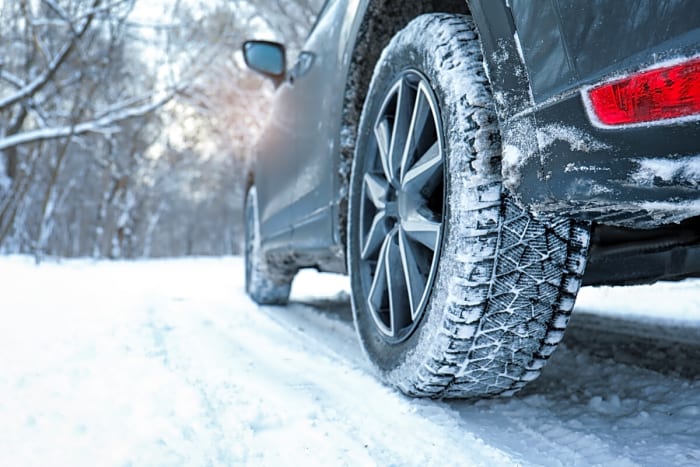
1. Use the Right Car and Tires
This tip is worth thinking about before you ever set foot on the slopes. In ski states like Colorado, major arterials that lead into the mountains often see spin-outs, pile-ups, and car wrecks. The cause? Unprepared drivers. If you’re not a regular skier, you may have never thought about buying snow tires or chains, but those are invaluable tools for staying safe on the road, particularly during severe storms. Just because the roads are fine at the airport or in the mountains doesn’t mean they’ll be dry near the ski resort you’re visiting.
2. Let the Ski Shop Handle Your Equipment
All you need to adjust your ski bindings is a screwdriver, right? How hard can it be? Technically, the answer is “not hard.” Making DIN adjustments—the setting that tweaks the amount of force required to release from a binding—is usually straightforward. At the same time, the risks associated with making mistakes are high. Bindings that are too tight can cause serious knee injuries. Bindings that are too loose may cause an unexpected, dangerous fall.
So, instead of making ad-hoc adjustments, take your equipment to the ski shop and consult the experts. They’ll be able to make sure everything looks right. Bindings are the big thing to worry about here, but ski shop expertise applies to boots and skis, too. Understanding how and when to tweak your gear will come with time. For now, direct your mental energy towards learning the basics.
3. Pay Attention to the Trail Map
It’s a classic ski trip gaffe that you have already experienced. You hop off the chairlift, make a wrong turn, and suddenly you’re standing on top of a nearly vertical mogul field. The only way down is through, so you take your skis off and start climbing, praying that you don’t slip.
This can be avoided, of course. Before setting off, spend some time studying the trail map with your limits in mind. Maybe you want to stick to the greens. Perhaps you’re starting to work on intermediate runs. Either way, knowing the path you plan to take before you get on the chairlift can make for a more relaxing day in the mountains. Nothing kills the fun like uncertainty. That applies to rope lines and signage that denote unsafe areas. See a sign that says “cliff”? It’s probably time to turn around—those signs exist for a reason.
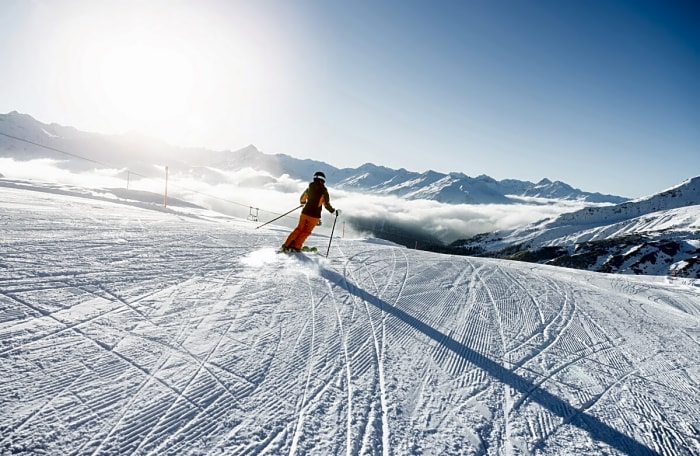
4. Take It Easy and Have Fun
This tip applies to everything we do in this modern, performance-oriented world, but it feels particularly relevant to skiing. Skiers and skiing-curious people are awash in content made by expert, lifelong skiers. They make jumping off cliffs and doing backflips look easy, even though those kinds of stunts aren’t.
So, here’s our advice. Go easy on yourself. Skiing has a steep learning curve. You have to manage two pieces of waxed plastic and wood while going downhill—sometimes very quickly—on a snowy slope. That’s not a simple equation. It’s natural not to find the right answer right away. Instead of comparing yourself to the experts who already know what they’re doing, focus on small wins, like making it down a tough run. The extracurriculars associated with skiing, like a warm cup of cocoa or the stellar views, are worth soaking in, too.
Remember, most people don’t (or shouldn’t) go skiing to worry too much about performing. They go skiing to enjoy themselves. That applies whether you’re a beginner, intermediate, or expert.

5. Consider Lessons
That said, there’s satisfaction to be found in reaching the next level. Instructors can help with that. They can also help beginners navigate all the parts of skiing that might result in a fall, like getting off the chairlift or controlling your speed. A good ski lesson can make chaotic moments in the mountains feel more manageable.
Lessons can be expensive, but resorts like Palisades Tahoe offer learning programs that are reasonably priced for beginners.

6. Wear a Helmet
This one’s non-negotiable. As a beginner, you’ll likely topple over more frequently than advanced skiers. Usually, these falls result in a memorable bruise—that’s it. Skiing can be a high-impact sport, though. Visiting a ski resort involves accepting some amount of inherent risk. Helmets are the best hedge against the falls you don’t see coming. They work at keeping your brain safe and have continued to improve over the years.
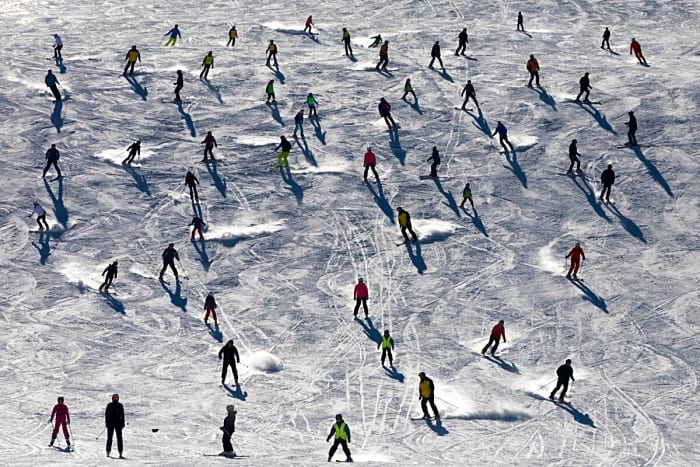
7. Stay Aware of Your Surroundings
Ski resorts buzz with activity. Other skiers, who may or may not be in control, careen past. Sometimes, vehicles like snowcats and snowmobiles share the slopes with those skiers. Peppered along the edge of runs are countless immovable objects, like trees, lift towers, and snow guns.
It doesn’t bear repeating that, ideally, you won’t collide with any of these objects while skiing. Doing so, though, requires some intentionality. Check uphill when you cross the slopes or merge with a new trail. Pay attention to things, like trees, that won’t get out of your way. While it can be hard at first to stay aware of your surroundings on the slopes, you’ll pick it up quickly.
8. Check the Forecast
It may sound obvious, but mountains are cold. Some days, they get really cold. And nothing’s worse than getting stuck in a blizzard unprepared. Before heading to the slopes, check the weather, regardless of the time of year. A day in January at any given mountain can be sunny, warm, frigid, sometimes within a span of a few hours. High altitude weather is famously mercurial. Be prepared and make sure you have the right clothing and outerwear on hand.
Read Up on the Skier Responsibility Code. The skier's responsibility code boils down many of the tips we touched on into a quick, easy-to-digest list. Above all, these rules are meant to keep you and others safe. You can find it on the National Ski Areas Association (NSAA) website.
More must-reads:
- CBB weekend winners, losers: Thankful for Feast Week
- Ohio State exorcises Michigan demons with blowout road win
- The 'Five game-winning-drives in a season' quiz
Breaking News
Trending News








Customize Your Newsletter
 +
+




Get the latest news and rumors, customized to your favorite sports and teams. Emailed daily. Always free!
PRIVACY POLICY EDITORIAL POLICY CONTACT US
ABOUT YARDBARKER TERMS OF SERVICE


Use of this website (including any and all parts and
components) constitutes your acceptance of these
Terms of Service and Privacy Policy.
This site is for entertainment purposes only.
There is no gambling offered on this site.
Gambling Problem? Call 1-800-Gambler.
