
-

-


Follow Us
-

 On Facebook
 On Flipboard

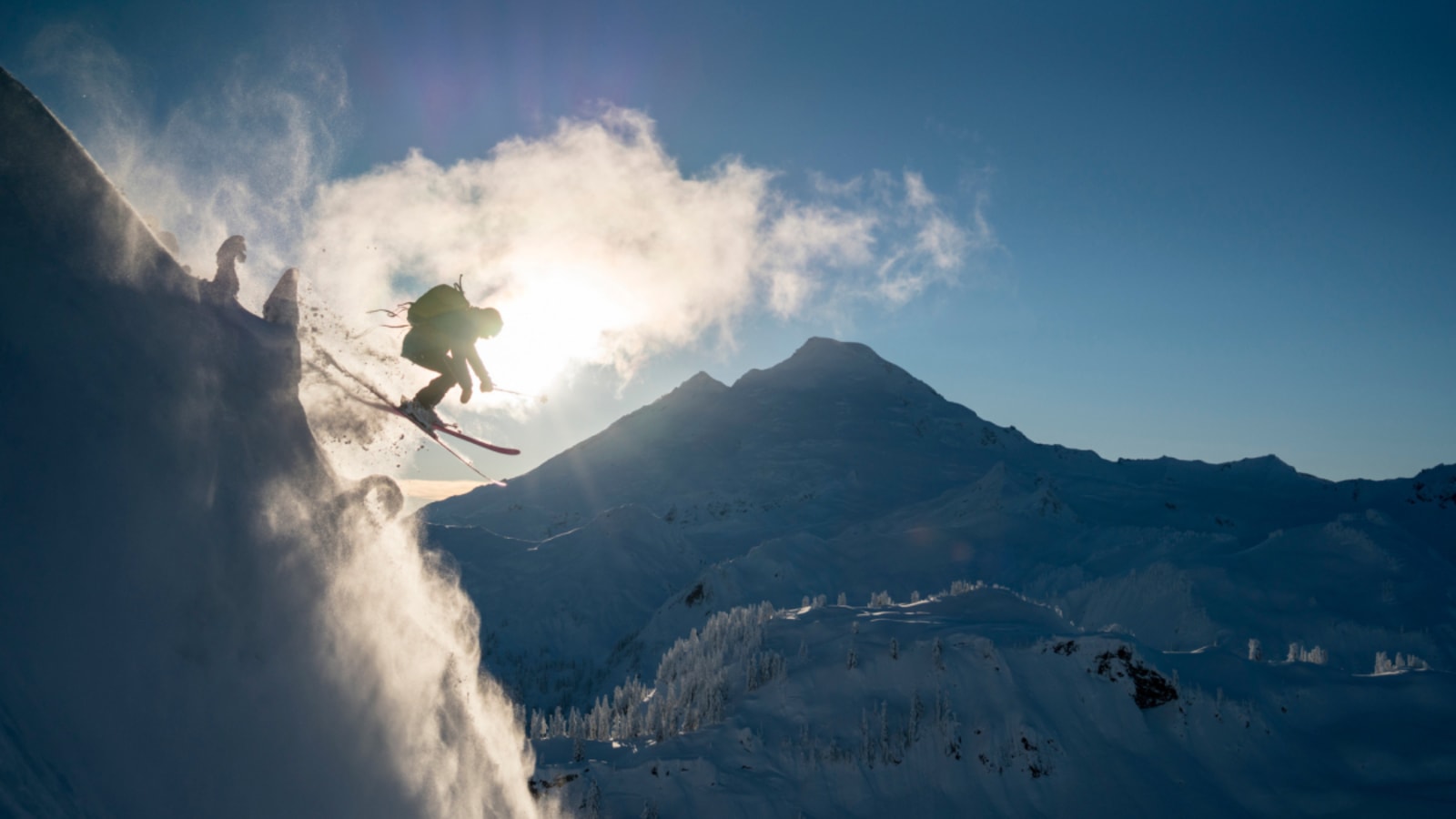
The term "no-fall zone" typically refers to portions of a ski slope where falling will likely result in a serious injury or, in some cases, death. This might involve a towering, hundred-foot drop. Or a narrow, prolonged chute flanked by rocks. Some steep glades could qualify as no-fall zones, too. What unifies these runs is a simple sentiment—whatever you do, you must stay on your feet.
Want to keep up with the best stories and photos in skiing? Subscribe to the new Powder To The People newsletter for weekly updates.

Common Traits of No-Fall Zones
No-fall zones, like the mountains themselves, aren’t uniform, nor are the types of risks they present. These are a few common factors that make these runs, slopes, and lines more dangerous than the rest:
Mandatory airtime: Some lines—usually those that involve tight chutes—have mandatory airs, meaning that, to get to the bottom, you have to jump off a cliff. This elevates the risk factor for obvious reasons. Should you fall before you get to the mandatory air, you might find yourself going airborne head-first.
High exposure: Many true no-fall zones are flanked by massive vertical drops that falling off of would result in, at the very least, a trip to the hospital. The slopes that surround these drops might not be challenging to ski, yet, because of the surrounding exposure, the pucker factor is considerably higher.
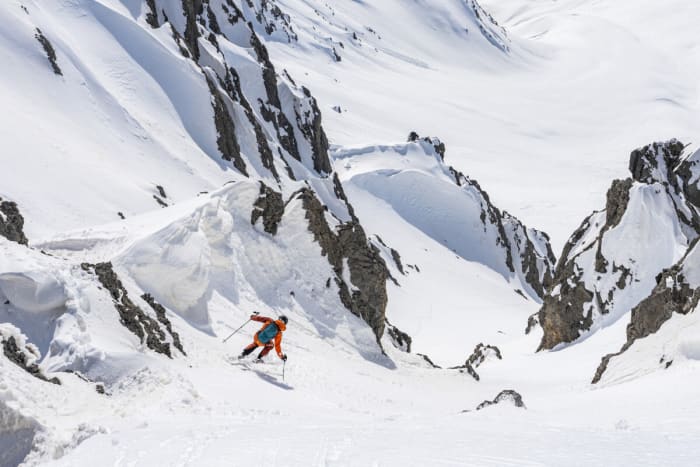
Tight chutes: Tight chutes where turning isn’t possible are dangerous for two reasons. First, falling before exiting the chute could result in a collision with a rock wall. Second, depending on the length of the chute, skiers will likely have reached extraordinarily high speeds by the time they make their exit, and maintaining control when you’re nearing the sound barrier is almost impossible.
What's the Appeal of No-Fall Zones?
You might be thinking—why would I want to ski something where, if I fell, I might die? It's a good question, and there's more than one answer—the reasons people squeeze above cliffs and speed down chutes differ.
For some, it's about the moment-to-moment thrill. Knowing that errors could end badly—or lethally—really gets the adrenal glands pumping and produces a unique high that's hard to find anywhere else.
The phrase "adrenaline junkie" exists for a reason. Others venture into no-fall zones in pursuit of the accomplishment they feel after making it to the bottom in one piece. Bragging rights, of course, can't be discounted, either.
Which Ski Resorts Have No-Fall Zones?
Most ski resorts don't have areas that qualify under the strictest definition of no-fall zone, which says that if you fall here, you'll die. Instead, areas that meet that watermark are mostly found by ski mountaineers on towering peaks—think skiing off the top of a 20,000-foot mountain or slinking down a rock face in Chamonix.
To account for the risk associated with descending these slopes, ski mountaineers wear harnesses, use climbing protection, and proceed slowly and carefully. In contrast, if you're spending the day riding chairlifts at Vail Mountain, it's probably okay to leave the harness at home.
However, with an expanded definition of no-fall zones—as in, falling here could go really badly—several zones at ski resorts qualify. These are a few high-consequence lines and areas found within or near the boundaries of major ski resorts:
Whistler Blackcomb, British Columbia—Peak Express Chair: There isn't one single no-fall zone on the Peak Express. Rather, intrepid freeriders have, over the years, identified a series of high-consequence lines tucked into the rock faces and cliffs that surround this famous lift. One among them—Air Jordan—is an enormous double-stager. On powder days, thrill-seeking skiers and snowboarders launch down this line, putting on a show for those waiting in line to ride the chair.
Big Sky Resort, Montana—The Big Couloir: Accessible from the Lone Peak Tram, the Big Couloir is a prolonged, triple black diamond that slices between two peppery rock faces. Given its steepness, the greatest risk with the Big is falling and being unable to stop. To access the run, skiers have to bring a buddy and sign out with ski patrol.
Palisades Tahoe, California—McConkey's: McConkey's is short, but it packs a serious punch. This line—visible from Palisades Tahoe's KT-22 lift—is a nearly sheer rock face that, perhaps miraculously, manages to hold snow. The steep grade means that skiing McConkey's is an exercise in controlled chaos. Stopping to collect your thoughts isn't an option. A mandatory air that follows the line will test the quads of even the steeliest skiers.
Verbier, Switzerland—Bec des Rosses: Steep, complicated, intimidating—all of these words are apt descriptors for the Bec des Rosses, which looms over Verbier. The 10,600-foot peak serves as the finale for the Freeride World Tour and, season after season, has seen both heroic victories and terrifying crashes. When a piece of terrain asks the very most of the talented men and women who compete on the FWT, you know it's serious business.

How Do You Avoid No-Fall Zones?
Ski resorts are quite good at demarcating hazardous sections of their pistes. Bright orange signs that read "cliff area"—or something to that effect—tend to indicate that turning back is a good idea. Gated portions of a ski area's piste can contain no fall zones, too. In other cases, risky slopes are impossible to miss. That huge, prominent cliff? I probably wouldn't stand on top of that if I were you.
Still, as we noted, don't live your life in fear of wandering into a no-fall zone at a ski resort—these uniquely dangerous areas, should they exist wherever you happen to be skiing, will, nine times out of ten, be surrounded by rope lines and proper signage. In short, pay attention to the trail map and applicable rules.
In the backcountry, outside the boundaries of ski resorts, a different set of rules apply. Unseen, massive drops can lurk below blind rollovers, and without careful terrain assessment, it's easy to put yourself in a risky situation. Avalanches, too, can fracture across gentle-seeming slopes. That's not to say you shouldn't get out and enjoy the backcountry, but proper equipment, preparation, and training are all mandatory.
More must-reads:
- Cardinals executive suspended indefinitely for violating NFL gambling policy
- LeBron James shares possible tease about next team, hints at timeline for decision
- The 'Rushing TD leaders by NFL team' quiz
Breaking News
Trending News





Customize Your Newsletter
 +
+




Get the latest news and rumors, customized to your favorite sports and teams. Emailed daily. Always free!
PRIVACY POLICY COOKIE POLICY CONTACT US
ABOUT YARDBARKER TERMS OF SERVICE


By using this site, you agree to our Terms of Service and Privacy Policy.
This site is for entertainment purposes only.
There is no gambling offered on this site.
Gambling Problem? Call 1-800-Gambler.
