
-

-


Follow Us
-

 On Facebook
 On Flipboard
 On Twitter

[Editor’s note: This article is from Athlon Sports’ 2025 “Year in Review” magazine, which celebrates the year’s champions and relives the biggest moments from across the world of sports. Order your copy online today, or pick one up at retail racks and newsstands nationwide.]
Paris Saint-Germain dominated Ligue 1, winning their domestic title in 11 of the 13 seasons leading into 2024–25. And yet, all that silverware felt strangely hollow. For a club that didn’t win its first championship until 1985, success had somehow become unfulfilling.
When Qatar Sports Investments bought PSG in 2011, they made their goal clear: Spend whatever it took to conquer Europe. Over the next decade, PSG poured billions into the world’s biggest names — Zlatan Ibrahimović, Edinson Cavani, Mauro Icardi, David Luiz, Thiago Silva, Neymar, Ángel Di María, Lionel Messi and Kylian Mbappé — to complete the mission.
They also hired the sport’s most prestigious managers: Carlo Ancelotti, Thomas Tuchel, Mauricio Pochettino. Somehow, every one of them fell short.
The heartbreaks piled up. The infamous remontada against Barcelona in 2017, when PSG blew a 4-0 lead in the Round of 16, seemed to live in the club’s collective psyche. Two years later, they blew another lead, this time to Manchester United, in the same round.
The 2020 Final was supposed to be a coronation, but it, too, ended in heartbreak as former PSG academy product Kingsley Coman scored the lone goal in a 1-0 win for Bayern Munich.
Perhaps the cruelest part of all that pain was that nobody felt sorry for them. PSG had become the villains — the richest club in the world, the team that distorted soccer’s economy by spending more than some nations’ GDPs on talent.
But the perception shifted — ever so slightly — in the summer of 2024. When Mbappé, the best player in the world, left Paris Saint-Germain for Real Madrid, he didn’t just vacate a locker; he left behind an identity crisis.
The football world expected PSG’s downfall. Instead, the departure of its superstar led to the unthinkable: Paris Saint-Germain became underdogs.
What followed was a season that redefined the club.
The Genius of Luis Enrique
Luis Enrique arrived as PSG’s manager in 2023 with a reputation — a Spanish tactician as brilliant as he was stubborn, a thinker who prized control over chaos. His teams were admired for their technical quality, but often accused of being all pattern, no punch.
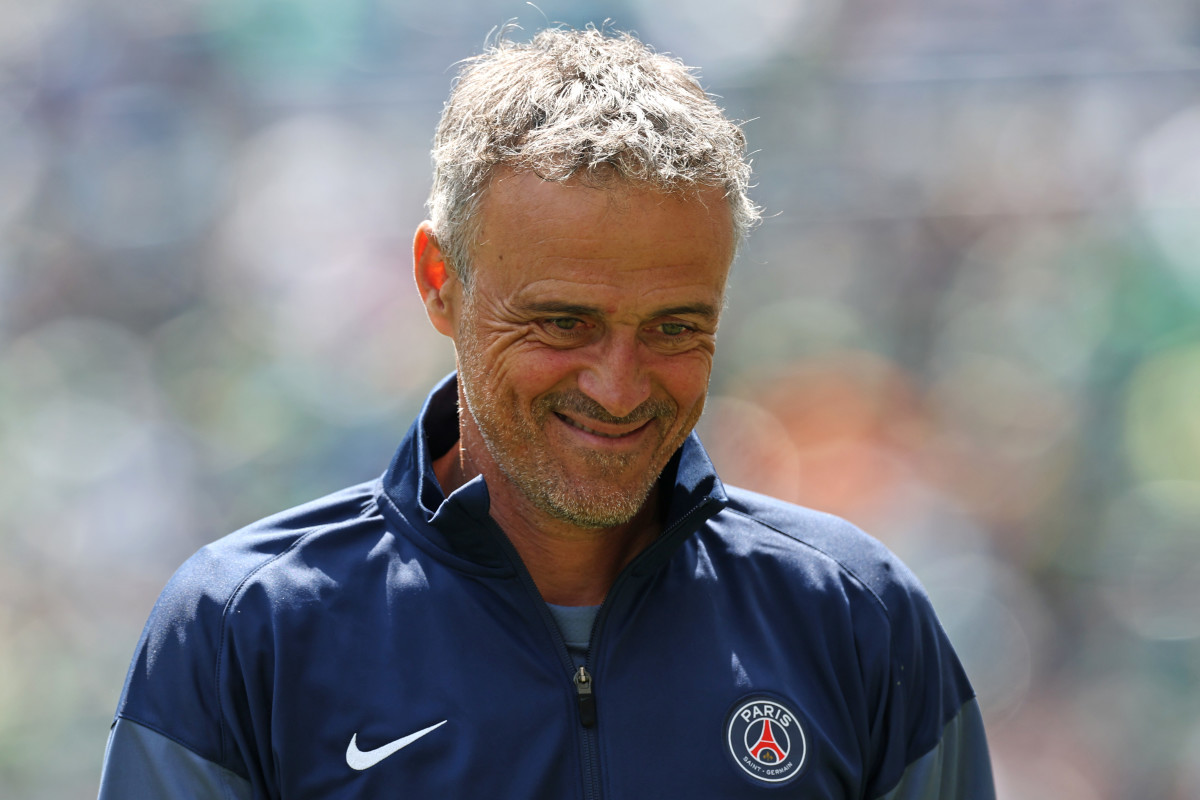
The hiring of Enrique was met with more raised eyebrows than praise, as the soccer world had written off PSG as a failed experiment. They’d continue to dominate Ligue 1, but no manager was going to be up to the task of marshaling the egos and contradictions of PSG.
But in 2024–25, Enrique introduced a new ethos. He dismantled the cult of the individual and rebuilt PSG as a collective. Where past managers tried to please stars, Enrique reversed the gravitational pull. And in doing so, he freed the team.
The player who thrived most under his vision was Ousmane Dembélé.
The world’s most surprising superstar
Dembélé, like PSG, was an enigma. At Borussia Dortmund, he was the good kind of chaos. He was ambidextrous, explosive, unpredictable.
At Barcelona, he became the opposite: fragile, inconsistent, a “moments” player who inspired and infuriated in equal measure.
So when PSG signed him, it was easy to dismiss the move as marketing — a soft landing for Mbappé’s looming exit. Nobody, except maybe Dembélé and Enrique, saw what was coming next.
In 2024–25, Dembélé evolved from a mercurial winger into a complete attacker. He scored 21 goals and added seven assists in Ligue 1, but it was in the Champions League where his transformation became legend.
The native of Vernon, France, scored eight goals in 15 games in Europe, but he also added seven assists, including two in the Champions League Final against Inter Milan, which was a perfect metaphor for Dembélé’s brilliance.
Inter Milan focused so obsessively on stopping Dembélé from scoring that he dismantled them another way — dragging defenders out of position, creating space, dictating tempo. PSG’s 5–0 victory was both ruthless and poetic.
A few months later, he became one of the most shocking Ballon d’Or winners in history.
Project redemption, fan vindication
Calling PSG’s triumph “overdue” is both true and unfair. The Champions League doesn’t reward inevitability, but it does reward resilience.
For the club’s Qatari owners, the victory was a chance to smile back at critics who claimed their project was artificial, excessive and even soulless.
But for the fans, it provided something much simpler – vindication.
The legacy
Most of the soccer world was hoping that PSG’s legacy, at least in this generation, would be defined by coming up short.
But even the most cynical observers had to admit that in 2024–25, PSG rediscovered something essential: that unmistakable Parisian romance.
Paris Saint-Germain are no longer the club of what-ifs and nearlys. They’re no longer the default villains in soccer.
With one win in May, they shifted the entire narrative. They completely changed their legacy, becoming not just the best team in Europe but one for the ages.
More must-reads:
- USMNT predictions: Where does the roster stand ahead of crucial March friendlies?
- Kenneth Walker was ‘irked’ with Seahawks before his departure
- The 'Most men's NCAA Tournaments' quiz


Customize Your Newsletter
 +
+




Get the latest news and rumors, customized to your favorite sports and teams. Emailed daily. Always free!
PRIVACY POLICY COOKIE POLICY CONTACT US
ABOUT YARDBARKER TERMS OF SERVICE


By using this site, you agree to our Terms of Service and Privacy Policy.
This site is for entertainment purposes only.
There is no gambling offered on this site.
Gambling Problem? Call 1-800-Gambler.
