
-

-


Follow Us
-

 On Facebook
 On Flipboard

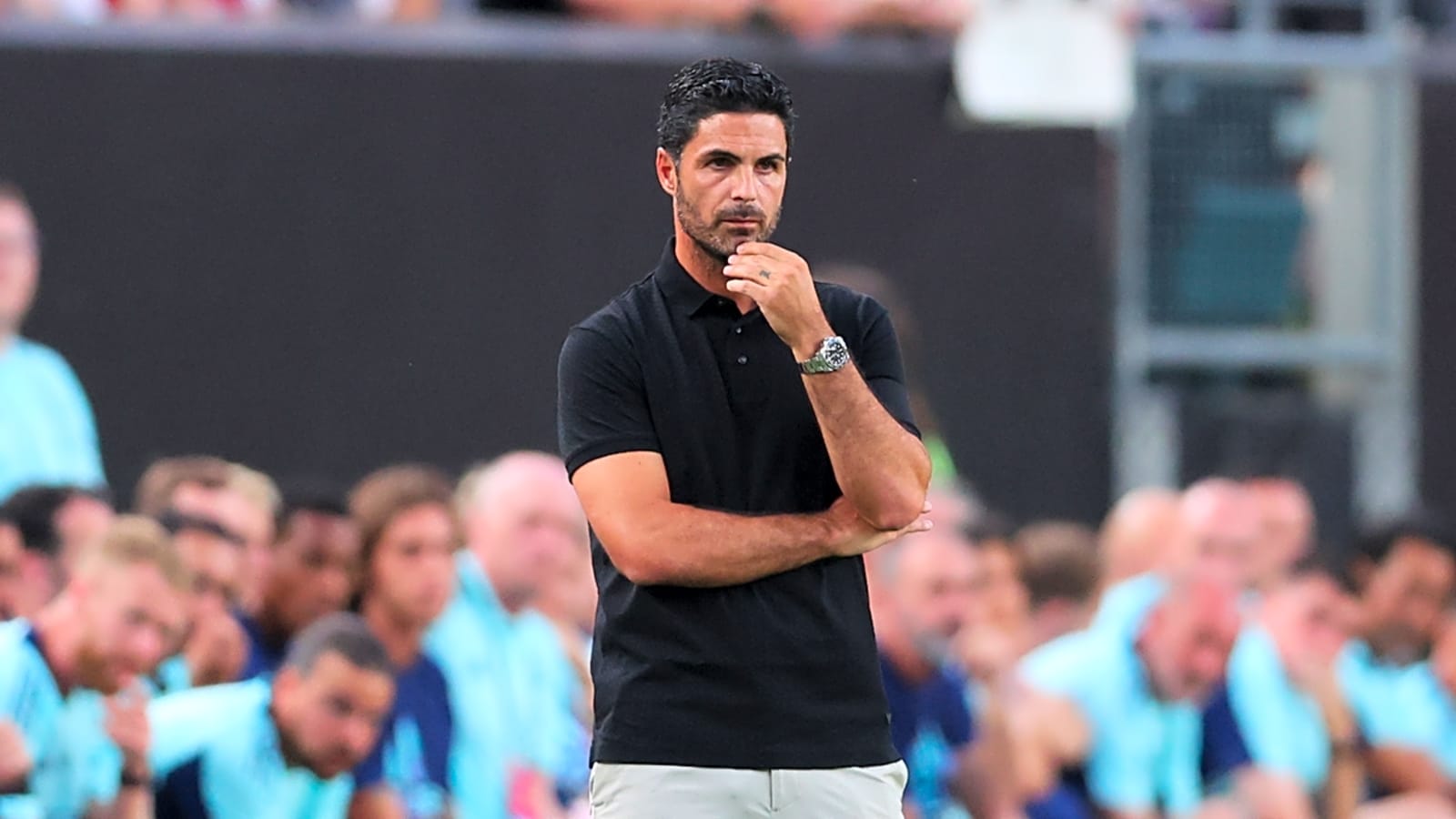
Toothless Arsenal falls 3-2 to resurgent Manchester United
There was a moment in the second half of Manchester United's visit to Arsenal when it looked like the Gunners were really going to go for it.
With the score 2-1 in United's favor and the clock ticking past 58 minutes, Arsenal made some audacious changes. Coach Mikel Arteta swapped out control-minded players like Piero Hincapie, Martin Zubimendi and Martin Odegaard for his strongest offensive creators. You could almost see United's eyes widening as Arsenal made the changes: for the final 30 minutes of the match, it would have to handle Leandro Trossard, Ebereche Eze, Mikel Merino, Viktor Gyokeres and Bukayo Saka, all at the same time.
Arteta rarely lays his offensive cards on the table quite like that. He knows his bench is deep and he prefers to keep it that way. If he can rest some of his attackers while still winning games, he will.
He couldn't Sunday. United was confident, brash and disrespectful in all the best ways, and it was coming for the win. Arteta knew he needed to get in United's head as much as he needed to get in United's goal. His mass attacking substitution at the 58th minute was intended as a rare show of Arsenal's force.
It didn't pan out. Trossard, Eze, Merino, Gyokeres and Saka never looked more threatening than the moment they all gathered together after those substitutions. When the final whistle blew 30 minutes later, ending the game 3-2 in United's favor, Arsenal's attacking quintet had managed an open-play expected goals tally of just .81.
That's not power. That's pointless. And so was Arsenal, on a night when it needed every point it could get.
Anxiety or apathy?
Arsenal entered this Manchester United match knowing that it needed a victory. Both Manchester City and Aston Villa had won in the preceding 24 hours, putting both level on 46 points—just four shy of Arsenal's tally of 50.
But from the opening kick, Arsenal didn't play like a team that wanted to win: it played like a team that didn't really want to lose, and would've taken any other result without complaint. Call it what you want—nervy, tense or just plain old indifference—but it clearly didn't work for the Gunners.
"We had a lot of giveaways, a lot of duels they won and let them run and attack us," Arsenal captain Odegaard said, via The Telegraph. "We never got into the rhythm of creating chances, creating attacks."
"We dropped the standards," Arteta agreed. "The game wasn’t in our control and then they had two magic moments. Credit to them."
Arsenal's lack of inspiration was clear throughout the second half, but it was never clearer than in the final minutes of extra time. With less than five minutes on the clock and a one-goal deficit keeping it from a draw, Arsenal still had a chance at nicking a point...but spent its time carefully playing out through its defense rather than lumping the ball into the opposition penalty area with intent. Arsenal seemed more keen on passing than pushing in the dying moments of the match.
Did Arsenal freeze up and revert to basics out of fear? Or did it genuinely have no other plan for a situation like this? Either way, it's hardly the instinct of a Premier League champion.
A tough road ahead
The club's next Premier League opponents are Leeds, Sunderland, Brentford, Spurs and Chelsea. Arsenal took 11 of a possible 15 points from those five in the first half of the season. If it isn't able to meet or better that tally, Arsenal's four-point lead at the top of the table could be gone by the end of February.
Arsenal's attack can stop the skid. If Arteta can get his deep bench of offensive playmakers working—and stop them from reverting to pointless passes in moments of need—his team will look far more like champions than they did against Manchester United.
More must-reads:
- Insider reveals what Michael Carrick did behind the scenes to outsmart Arsenal
- MEN: Man United could still allow 48-app first-teamer to leave before deadline after attracting European interest
- The 'NBA Playoff-3's leaders' quiz
Breaking News
Trending News





Customize Your Newsletter
 +
+




Get the latest news and rumors, customized to your favorite sports and teams. Emailed daily. Always free!
PRIVACY POLICY COOKIE POLICY CONTACT US
ABOUT YARDBARKER TERMS OF SERVICE


By using this site, you agree to our Terms of Service and Privacy Policy.
This site is for entertainment purposes only.
There is no gambling offered on this site.
Gambling Problem? Call 1-800-Gambler.
