
-


Follow Us

 On Facebook
 On Flipboard
 On Twitter
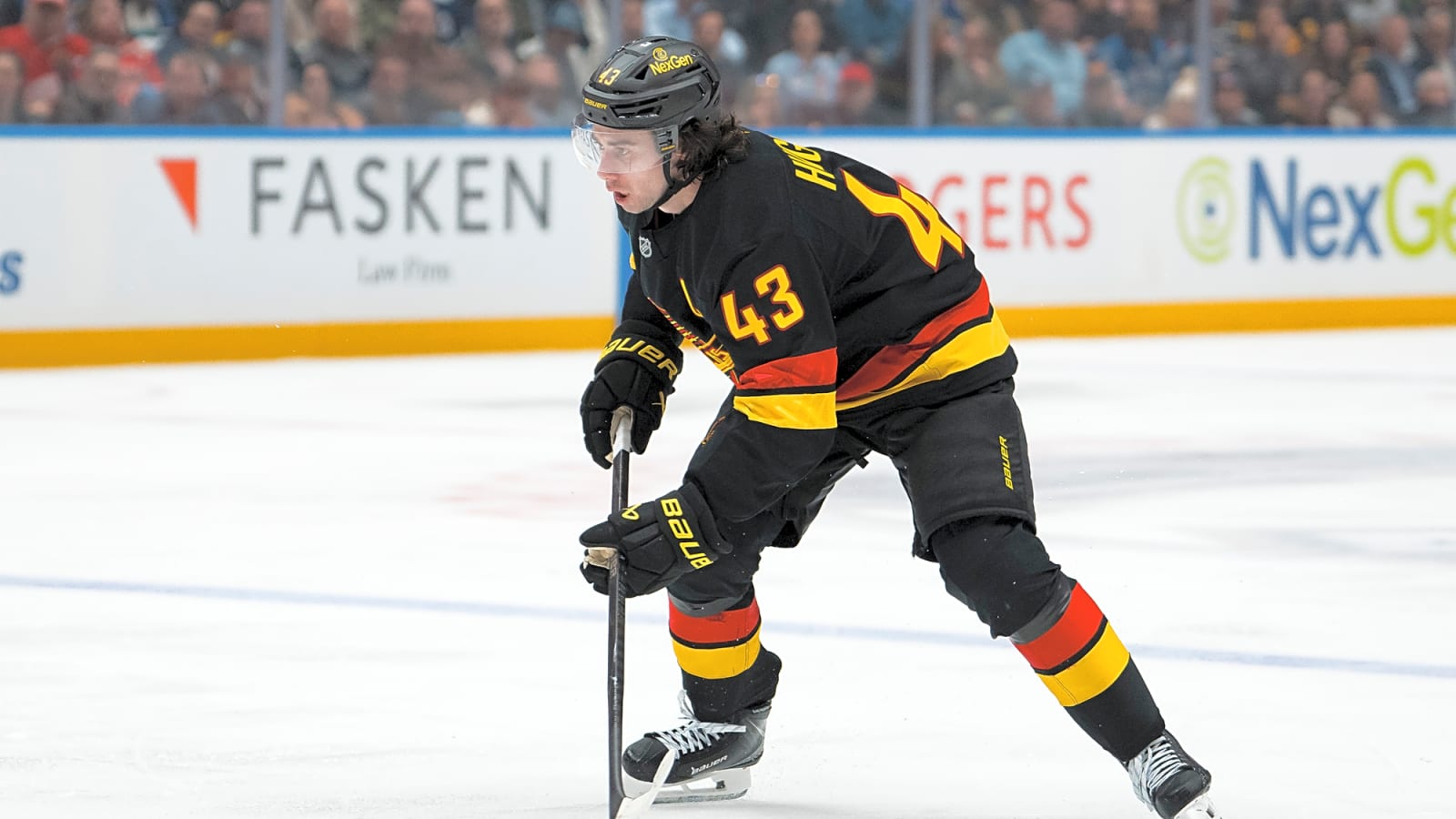
The Quinn Hughes trade between the Canucks and the Wild is one of those deals you can’t really judge from the headlines. It’ll take a few seasons—contracts settling, prospects growing, playoff games played—before we know who really got the better end of the deal. Both teams went bold, but the risks and rewards are very different, and even star players don’t always land in the perfect spot (just ask the Hurricanes and Mikko Rantanen last year).
Minnesota’s Gamble Comes This Season
For Minnesota, the gamble is immediate. Hughes steps onto a Wild defence already rich with talent, expected to stabilize the top four and fuel the power play. It cost the Wild Marco Rossi, Liam Ohgren, Zeev Buium, and a 2026 first-rounder. But if Hughes signs a long-term extension and the team goes deep into the playoffs, this trade could help the Wild for seasons to come. If he leaves after next season when his contract expires or struggles when it counts, though, Minnesota’s price will look brutal.
Integration will also be key. Hughes must not only excel individually but lift his teammates without creating lineup friction. Chemistry matters as much as skill, and a misstep here could temper the excitement of adding a blue-line superstar. Playoff performance will likely be the most precise yardstick: a deep run and Hughes’ imprint on high-pressure games could tilt this trade to a clear win for Minnesota.
Vancouver’s Gamble Is Found in the Long Game
Vancouver’s perspective is far more about the long game. Trading your captain is never simple, and the Canucks should be embracing the rebuild with open eyes. Rossi could be a top-line center, and Ohgren and Buium have upside and add depth. Toss in a 2026 first-round pick, and the team’s got some real pieces to work with. But potential alone doesn’t guarantee success. The development of these players will define whether the trade grades out as smart or questionable.
There’s also the intangibles. Hughes’ departure leaves a leadership vacuum. Vancouver must find new voices in the locker room and ensure the team culture remains strong. Fans may struggle in the short term as playoff hopes dim, but a patient, well-managed integration of the young players could validate the Canucks’ strategy within a few seasons.
The Risks for the Wild and the Canucks Are Different
The risks are stark for both sides, but in different ways. Minnesota risks a high-profile asset leaving in free agency and paying dearly if the playoff push stalls. Vancouver risks stagnation if the young players don’t meet their ceilings, or if the first-round pick doesn’t yield impact. Both teams face questions about timing, chemistry, and the unknowns of human nature.
Here are two of the questions: Will Hughes thrive in Minnesota? And, Will Rossi, Ohgren, and Buium rise to the challenge in Vancouver?
So when will we really know? Probably in the next two to four seasons, as contracts shake out, prospects either take off or hit a ceiling, and playoff games show what Hughes is really worth. In the end, Minnesota’s call comes down to his play and whether the Wild can turn all that talent into postseason wins. Vancouver’s will be written in the growth of its young core and whether the rebuild translates into wins and sustainable competitiveness.
Blockbuster Trades Like This Rarely Are Settled in an Instant
Trades like this rarely have instant clarity. The Wild are betting on immediate results with a superstar in the prime of his career. The Canucks are betting on patience, projection, and long-term upside. In both cases, performance, contracts, and development trajectories are the lenses through which we will eventually see who won—and who got caught in the gamble of timing, ambition, and circumstance.
More must-reads:
- Colts make decision on if Philip Rivers will start against Seahawks
- Steelers' Aaron Rodgers has hilarious reaction to Philip Rivers' return to NFL, Colts
- The 'Active NBA PPG leaders' quiz
Breaking News
Trending News







Customize Your Newsletter
 +
+




Get the latest news and rumors, customized to your favorite sports and teams. Emailed daily. Always free!
PRIVACY POLICY EDITORIAL POLICY CONTACT US
ABOUT YARDBARKER TERMS OF SERVICE


Use of this website (including any and all parts and
components) constitutes your acceptance of these
Terms of Service and Privacy Policy.
This site is for entertainment purposes only.
There is no gambling offered on this site.
Gambling Problem? Call 1-800-Gambler.
