
-

-


Follow Us
-

 On Facebook
 On Flipboard

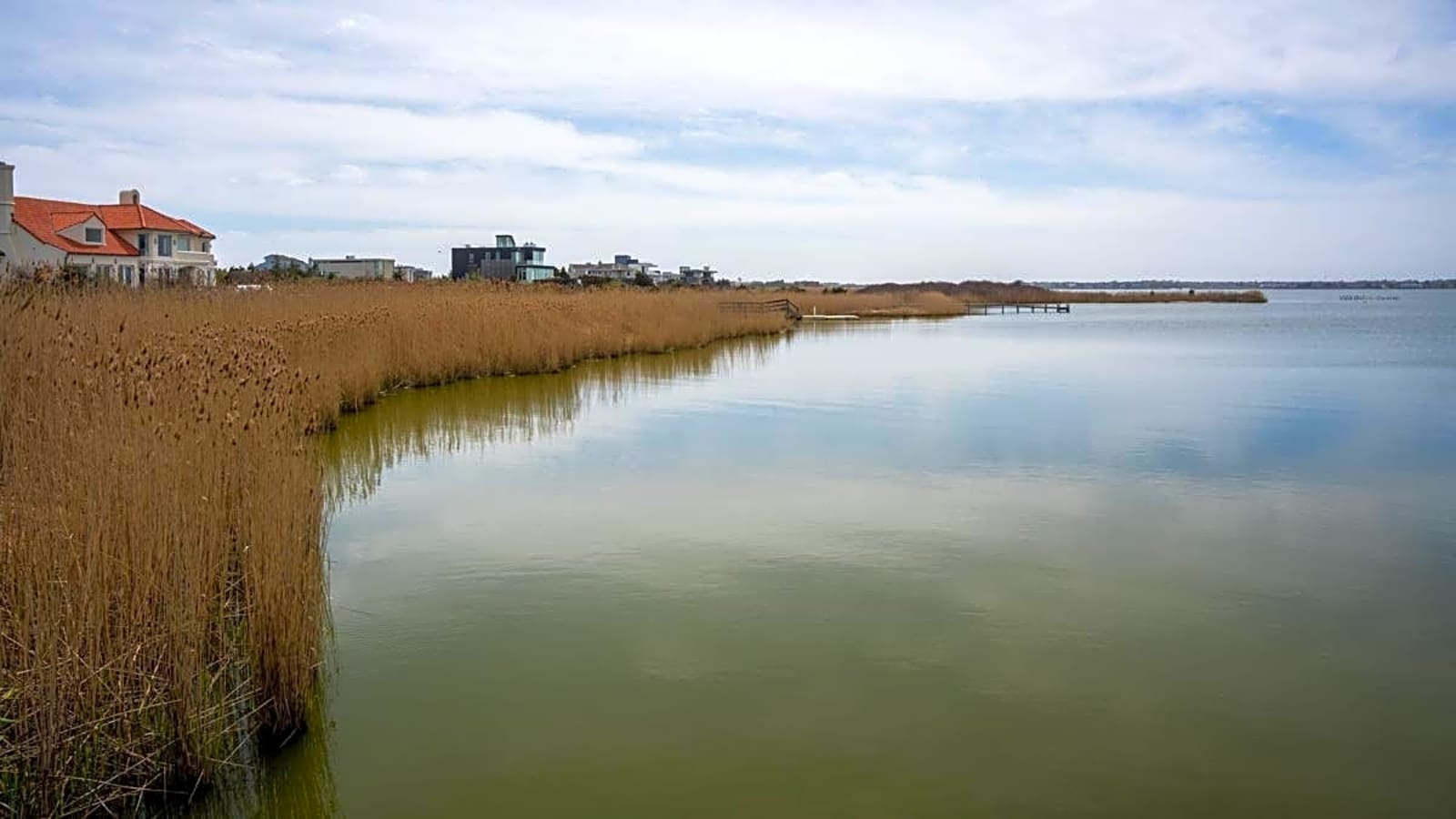
For no good reason at all, dilettante of all tabloid pubs the New York Post along with other local media issued “dire warnings about ‘flesh-eating bacteria’ making its way into [Long Island] waters,” per eastern Long Island’s East End Beacon, which admonished fellow local outlets for their craven participation in “A Viral Media Problem.”
So good on the East End Beacon for blowing the whistle on the rampant whistleblowing that ensued after another local news outlet, which may just as well go unnamed, for the editorials were all for naught. The outcry began, as usual, out of context.
In a letter to the editor of the East End Beacon and, presumably other outlets, Director of New York State Center for Clean Water Energy and SUNY Distinguished Professor (among other titles) Dr. Christopher Gobler attempted to remediate matters:
“Last week, during a thirty-minute press event covering a multitude of environmental topics, a 20-second sound bite regarding the bacterium Vibrio vulnificus was extracted without context. This led to a series of headlines and social media posts that, while technically accurate, understandably caused public concern.”
“Flesh-eating bacteria” is a colloquial, umbrella term for bacteria which do, indeed, feast on flesh, but such pernicious and primordial lifeforms are ubiquitous across this fair planet—hardly cause for a newsflash.
And yet, it is one of those phrases that, without much aid, tends to reach the cheap seats. So it happens, that particular “flesh-eating bacteria,” Vibrio vulnificus, is nothing particularly new up the eastern seaboard, though it has been gradually creeping northward from its endemic stagnant waterways bordering the Gulf of Mexico.
“While CDC statistics on infection mortality are indeed dire,” notes Dr. Gobler, who delivered the April 24st “State of the Bays” press conference himself, “using these facts without the context of statistical risk to the general public created an undue atmosphere of fear. Such sensationalism is harmful to our coastal communities and misrepresents the safety of our waters.”
“To put the risk in perspective,” expounds Dr. Gobler, “this organism is a natural resident of the entire Eastern Seaboard, being most prevalent in warmer southern states like Florida and Texas. For the average New York beachgoer, the chance of dying from a Vibrio vulnificus infection is less than one in 10 million.” Further perspective? “Statistically, a bather is 50 times more likely to drown than to succumb to this bacterium. Even in 2023—a year marked by extreme marine heatwaves and tropical deluges that created ideal conditions for the bacteria—there were only three fatalities across the combined populations of New York and Connecticut.”
Dr. Gobler did concede, though, that V. vulnificus is, to be sure, no laughing matter, only worsening in its northward proliferation, and that someone who contracts it has a 20% chance of heading off into the big sleep within just 48 hours.
The greatest takeaway, though, is that you’d likely have to dip yourself into some pretty pungent waters that don’t, generally, give humankind the desirable invitation to enter. Apart from heavy rains and ensuing heavy runoff, think backwater tidepools, creeks, and ponds. Man’s best friend, on the other hand, should be given special attention in the vicinity of such aqueous basins.
While the spread of V. vulnificus is an inevitability of upward-trending temperatures, better coastal water management and sewage treatment systems could go a long way to curbing the degradation of waterways, including this rare but very mortal threat.
Surfrider’s eastern Long Island chapter, too, jumped in to ameliorate the damage wrought by the recent procession of reckless fear mongering. “Vibrio is a naturally occurring group of bacteria found in coastal and estuarine environments…most abundant in warm, brackish waters and tend to peak in summer and early fall when temperatures are highest…particularly in low-circulation areas.”
In the end, we can generally avoid Vibrio and do our part (and consult the EPA’s Water Quality database) to help ensure a better, safer bathing experience for one and all, but you’ve got to yuck it up and learn to love the New York Post—for what it is. After all, what is life without humor?
And, in the spirit of humor and politics, New York lineups are more crowded than ever these days. What would be the consequences to us, the surfing public, regarding a few less boards in the water? Allowing the would-be surfing public to make their own (un)informed decisions is, by all means, on them, and—let us assuage any guilt—can by no means be mistaken for gatekeeping.
More must-reads:
- Brewers' Jacob Misiorowski threw one of the most dominant innings in MLB history
- Lakers HC JJ Redick sends message after Game 3 loss to Thunder
- The 'Most 25-point NBA Playoff games' quiz
Breaking News
Trending News








Customize Your Newsletter
 +
+




Get the latest news and rumors, customized to your favorite sports and teams. Emailed daily. Always free!
PRIVACY POLICY COOKIE POLICY CONTACT US
ABOUT YARDBARKER TERMS OF SERVICE


By using this site, you agree to our Terms of Service and Privacy Policy.
This site is for entertainment purposes only.
There is no gambling offered on this site.
Gambling Problem? Call 1-800-Gambler.
