
-

-


Follow Us
-

 On Facebook
 On Flipboard
 On Twitter
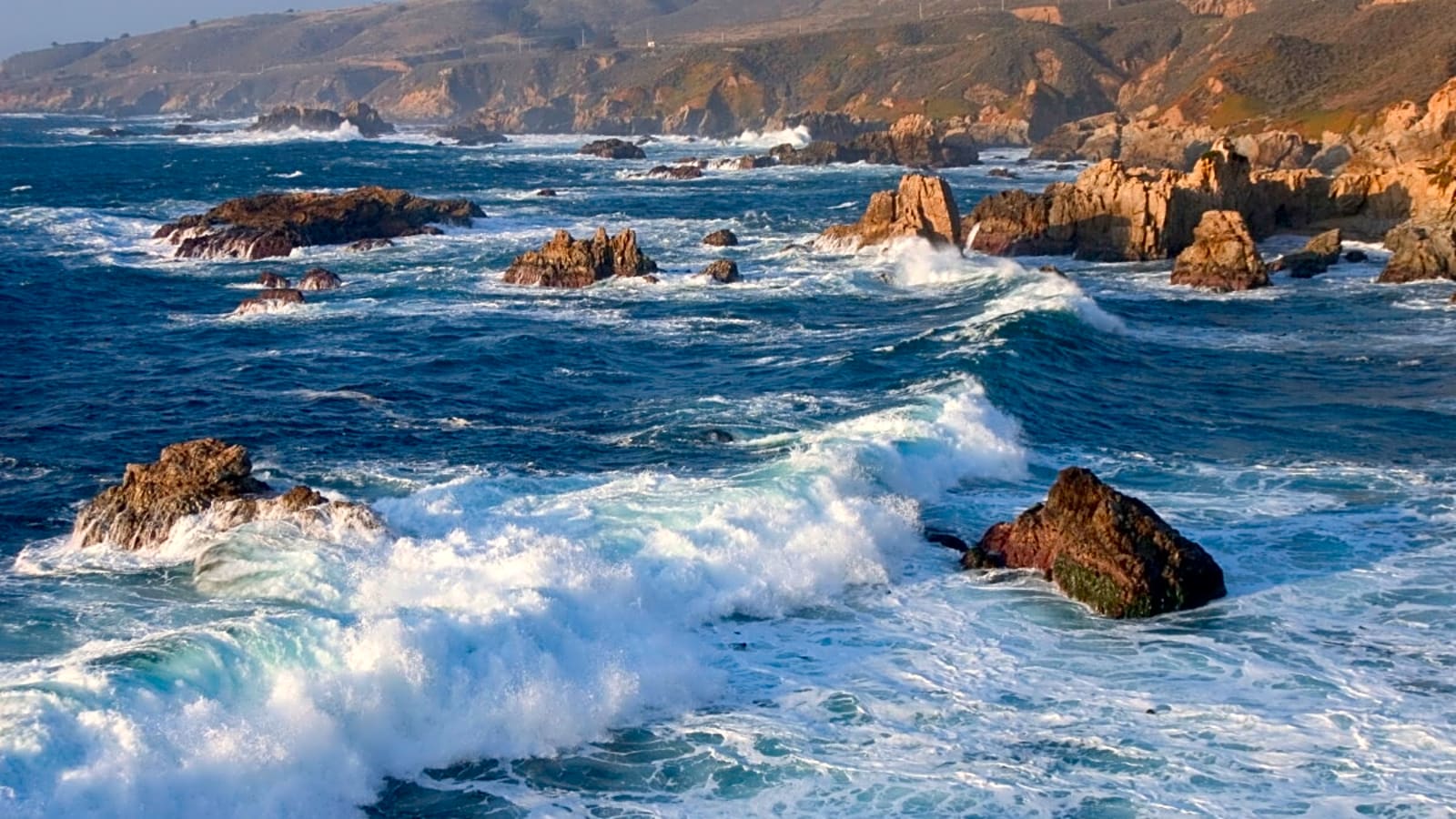
Modern science more or less agrees that the oceans, whatever acidic troubles they may be facing, bear their own reactionary armor in the form of calcium carbonate—the very stuff we chew up and send down the hatch when we humans have overdone it with the acids, too.
But while we’ve all known for quite some time that Tums works wonders on our bouts of heartburn within a proverbial heartbeat, it’s only in light of a new study by climate research conducted off the southeast coast of New Zealand (Aotearoa) that mineral-based calcium carbonate molecules might be doing the exact same thing for the oceans.
The findings, published in the journal AGU (American Geophysical Union) Advances, discovered that while it was previously understood that most calcium carbonate was found along the deep-sea floor, there is plenty of CO2 absorption taking place in the shallows, too—at least off New Zealand.
The study concluded a 25-year sample, eliciting fairly certain findings, according to the peer-reviewed article, titled “Anthropogenically Stimulated Carbonate Dissolution in the Global Shelf Seafloor Is Potentially an Important and Fast Climate Feedback.”
This is happening, as AGU’s science-news magazine, EOS reports, "in orders of magnitude faster than in the deep ocean.” And it appears to be a direct response “resulting from anthropogenic carbon dioxide emissions.” That’s us, folks.
Can we humanoids pat ourselves on the backs? Does this mean salvation of the world’s oceans is already underway? Who knows. But more research is certainly in order across all oceans. But the paper’s authors (van de Velde et al.) do point out that there is a significant natural climate feedback taking place beneath our beloved waves “that is not considered in global carbon models.” They also noted that the “inclusion of the fast carbonate dissolution feedback in models could partially close the current model-data gap in ocean carbon budgets.
But the important question is: Is this happening elsewhere—or even everywhere? Again, and as the paper states, more research is needed. What the paper also suggests is that shelf carbonate dissolution may have jumpstarted right when we started puffing black smoke up into the ether back in the 19th century. “Furthermore, EOS adds, “the researchers calculated that this process could account for up to 10% of the current discrepancy between state-of-the-art model predictions of ocean carbon dioxide uptake and real-world measurements.”
Here’s hoping this most recent stroke of grace from the sea doesn’t get snatched up in an industrial-complex free-for-all as a mulligan, offsetting what is already being offset. Because that’s not already happening.
More must-reads:
- Pirates' Konnor Griffin makes immediate impact in MLB debut
- Trump's executive order could have big impact on current college sports landscape
- The 'NBA two's leaders by season' quiz
Breaking News
Trending News








Customize Your Newsletter
 +
+




Get the latest news and rumors, customized to your favorite sports and teams. Emailed daily. Always free!
PRIVACY POLICY COOKIE POLICY CONTACT US
ABOUT YARDBARKER TERMS OF SERVICE


By using this site, you agree to our Terms of Service and Privacy Policy.
This site is for entertainment purposes only.
There is no gambling offered on this site.
Gambling Problem? Call 1-800-Gambler.
