
-

-


Follow Us
-

 On Facebook
 On Flipboard
 On Twitter
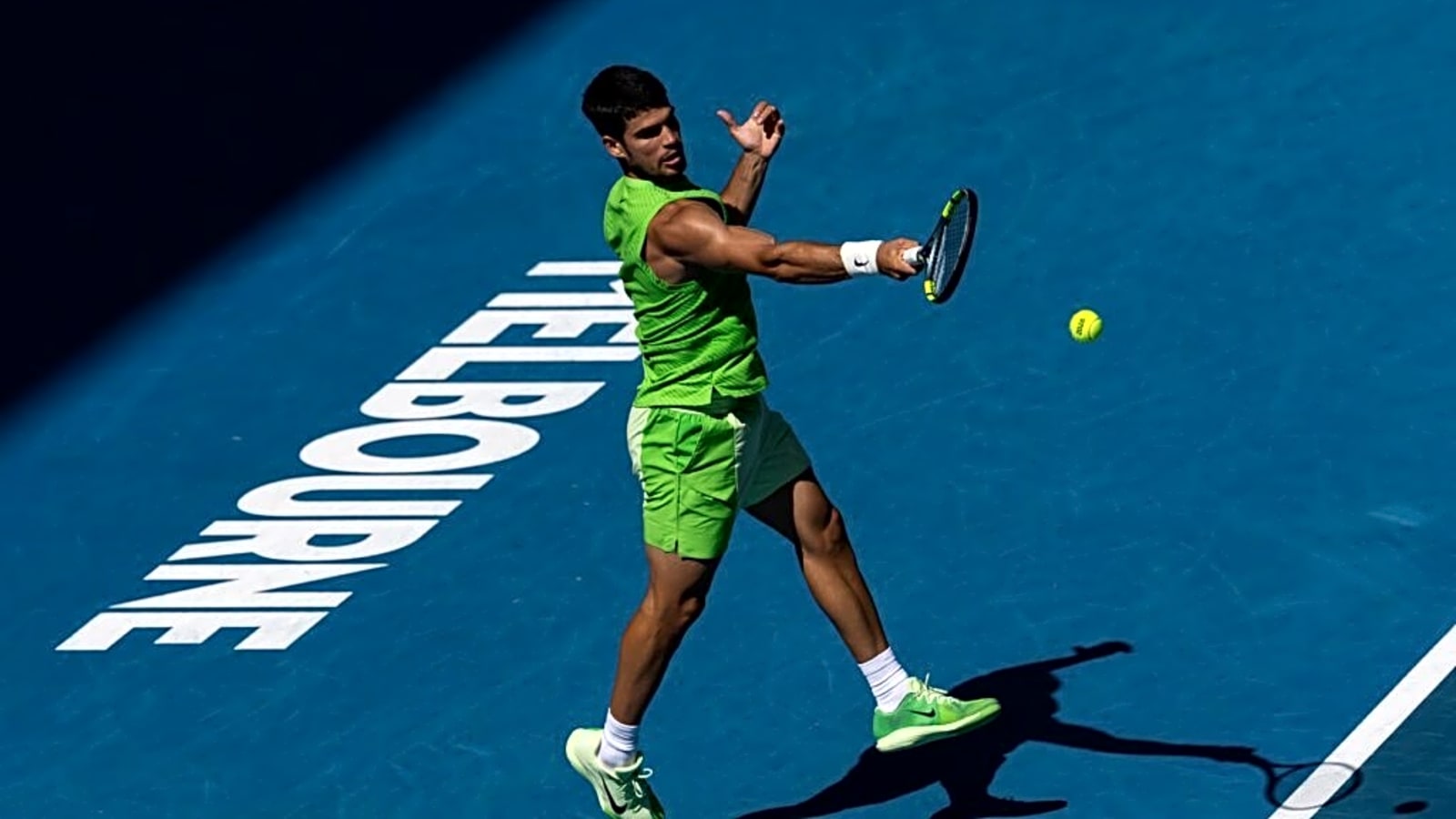
There is a specific problem that comes with being so good that your opponents play the best tennis of their lives against you, and Carlos Alcaraz has it. He described it after beating Arthur Rinderknech in three sets, coming from a set down, working through a tightly contested match in which Rinderknech applied early pressure behind a strong first serve and aggressive net approaches.
“I just sometimes get tired of playing Roger Federer every round,” he said. “Sometimes it just feels like they’re playing an insane level. I feel like I have a target on my back. If they play that level every match, they should be higher in the ranking.”
He is 14-0 and won the Australian Open. He is the undisputed world number one, and his primary complaint, delivered jokingly with a smile in a California press room, is that his opponents try too hard against him.
The Ghost of Federer’s Excellence
The quote has spread everywhere on tennis social media, partly because it is funny, partly because it is delivered with such honesty, and partly because of the Federer comparison. The player Alcaraz idolised growing up and never got to face professionally, now apparently haunting every third-round match at Indian Wells in the form of a French qualifier with a big serve. There is something both funny and poignant about that. Alcaraz inherited Federer’s aesthetic throne, the one the sport needed someone to occupy once the Swiss retired, and now the ghost of Federer’s excellence lives in every opponent who peaks against him.
But strip the humour away, and what Alcaraz is describing is sporting dominance. When you become the standard by which everything is measured, you become the event. Opponents don’t just prepare for a match against Alcaraz. They prepare for the most important match of their season. They serve bigger than usual. They return more aggressively. They swing freer because they have nothing to lose and everything to gain. The 14th-ranked player beats a top-10 seed, and nobody remembers. A qualifier takes a set off the world number one, and the clip plays on loop for two days.
The Target on His Back
Rinderknech relied heavily on his serve and aggressive net play, much like players do when they decide that conventional baseline tennis against Alcaraz is a losing proposition before it starts. He took a set. He made Alcaraz work for three. And now Alcaraz, 14-0, holder of a career Grand Slam at 22, plays Casper Ruud in the fourth round, a player he has handled comfortably throughout their career, carrying a twisted ankle that he quietly nursed through training the next day.
The ankle is the other detail worth watching. Alcaraz is 14-0 and managing a physical problem that he has downplayed publicly. A target on his back, and he used that phrase, and it is exactly right, meaning that even when he is not at his best, opponents arrive at their absolute peak. The matches that should be recovery matches become survival exercises.
The Desert Collision
If Alcaraz and Djokovic both advance, they would meet in the semifinals. A rematch of the Australian Open final, which Alcaraz won in four sets, played out in the desert sunshine. That is the match the tournament has been building toward all week. The 22-year-old with a target on his back and a sore ankle. The 38-year-old who isn’t enjoying himself but won’t stop.
Every Round Is Someone’s Final
Alcaraz’s Federer comment will be quoted, shared and turned into memes for weeks. But the observation underneath it is genuinely interesting. The price of being the best player in the world is that you never get an easy match again. Every opponent is playing the most important match of their week, their month, possibly their year. Every round is a final for someone. The target is permanently fixed.
He is 14-0. He is tired of playing Federer every round. And next up is someone who will come out serving the biggest of his life, swinging from his heels, with absolutely nothing to lose.
He will win anyway. That is what world number one means.
More must-reads:
- Insider shares notable update on Shedeur Sanders' status with Browns
- Trump's executive order could have big impact on current college sports landscape
- The 'NBA two's leaders by season' quiz
Breaking News
Trending News







Customize Your Newsletter
 +
+




Get the latest news and rumors, customized to your favorite sports and teams. Emailed daily. Always free!
PRIVACY POLICY COOKIE POLICY CONTACT US
ABOUT YARDBARKER TERMS OF SERVICE


By using this site, you agree to our Terms of Service and Privacy Policy.
This site is for entertainment purposes only.
There is no gambling offered on this site.
Gambling Problem? Call 1-800-Gambler.
