
-

-


Follow Us
-

 On Facebook
 On Flipboard

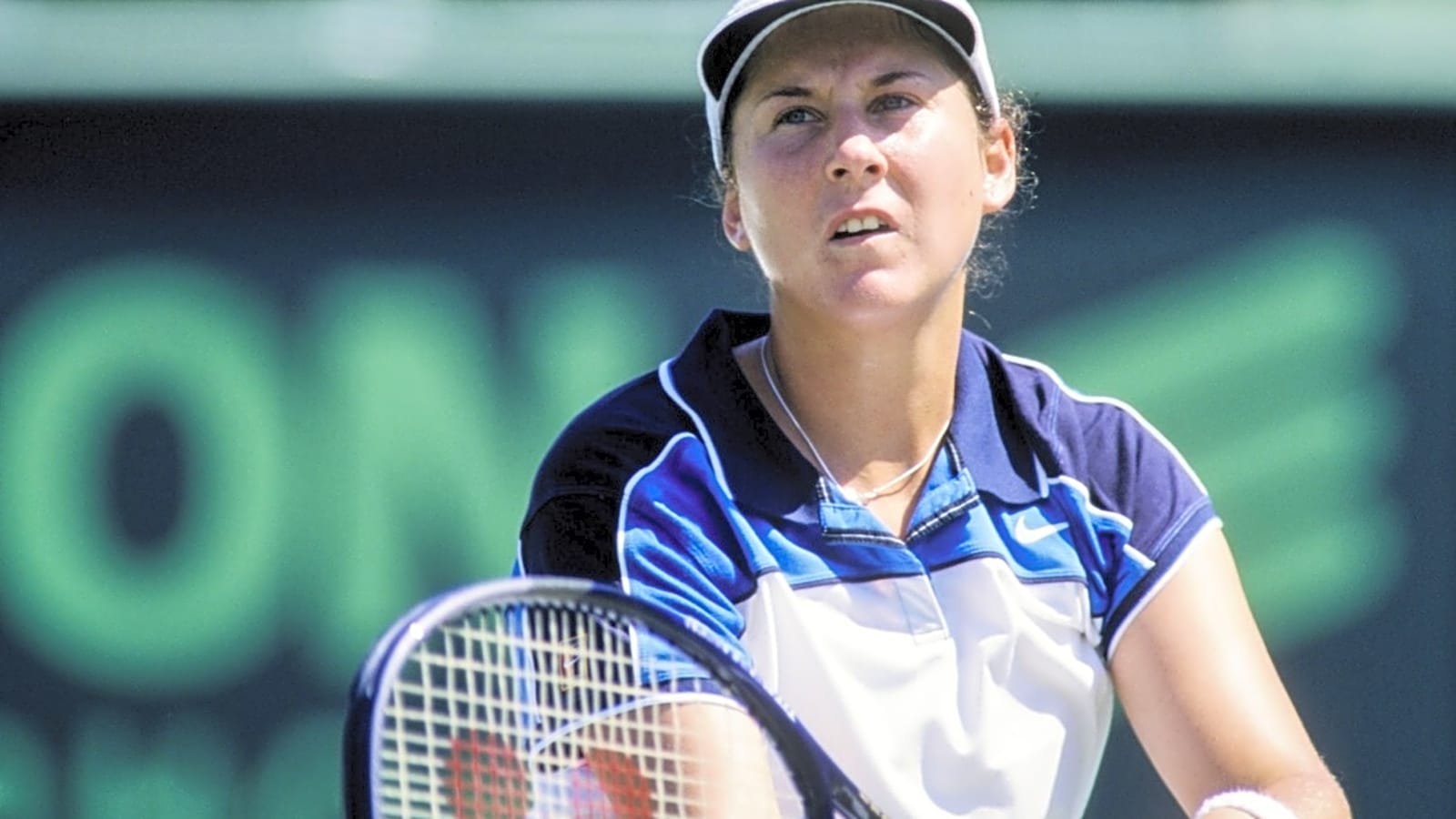
[Editor’s note: This article is from The Spun’s “Then and Now” magazine, featuring interviews with more than 50 sports stars of yesteryear. Order your copy online today, or pick one up at retail racks and newsstands nationwide.]
There was a wondrous stretch between 1991 and 1993 in which Monica Seles was as automatic on a tennis court as automatic gets.
In that prolific window, the Yugoslav-born baseliner — known for her punishing, two-hands-off-both-wings groundstrokes and seemingly unrelenting competitive drive — won seven of eight Grand Slam singles finals. In all, she reached the final in 33 of 34 tournaments, winning 22 titles, including the year-end WTA Finals in 1991 and 1992. Her rivalry with Germany’s Steffi Graf emerged as the most compelling in the sport as the two jockeyed for the top ranking.
All that historic dominance, all that promise, was stolen on April 30, 1993, when a deranged Graf fan named Günter Parche stabbed Seles in the back during a tournament in Hamburg, Germany. Just 19 at the time, Seles would step away from competition for more than two years. The attack curtailed a career that many believe could have become the greatest of all time. But the cost would go beyond titles.
“I was plunged into a fog of darkness and depression that I couldn’t see my way out of,” wrote Seles in her 2009 bestseller Getting a Grip On My Body, My Mind, My Self. “I retreated into my own head and numbed myself with self-sabotage behavior.”
Though she would eventually return to the court — winning her ninth and final major at the 1996 Australian Open and reclaiming the No. 1 ranking — Seles, now a U.S. citizen, was never the same. She battled trauma and internal conflicts for years, including a prolonged struggle with an eating disorder.
Today, it’s common for professional athletes to speak openly about mental health (e.g., Naomi Osaka, Simone Biles, Kevin Love). For some athletes — Polish tennis star Iga Świątek among them — a psychologist is as essential a traveling companion as a coach, physical therapist, or trainer. Seles, who still holds the Open Era mark for most major singles titles won as a teen, didn’t have that kind of support in the ’90s.
“It’s terrific how much more open players are to speak about their mental health struggles both on and off the court,” said Seles, now 51 and living in Sarasota, Florida. “Because in my generation, I know when I tried to even speak a little bit about what I was going through, it was kind of like — oh, my gosh, it was cut down very fast.”
Seles, who is married to American businessman Tom Golisano, added: “It’s a different era now, different times. It’s the same issues though. They affect players maybe in a different way but, essentially, it’s the same because tennis is such an individual sport. The pressure is truly on you to perform. You are, in a way, your own corporation.
“Yes, you have your support team, your coach, trainers, agents. But, essentially, you’re the captain of that team. You have to figure that out on your own. I don’t think there’s really a manual for it, but it’s fantastic that there’s talk of mental health, and there’s no stigma attached to it anymore compared to my generation. I just hope that keeps going further and further.”
Seles’ fellow lefty and multi-Slam winner Petra Kvitová can relate to the scarring, both mentally and physically. The 2011 and 2014 Wimbledon champion was attacked in her home in Czechia in December 2016 by a knife-wielding intruder, suffering career-threatening injuries to her playing hand.
Kvitová recalled meeting Seles for the first time in London in 2018.
“We talked about what we’ve been through,” she said. “It was so nice to meet someone who had been through something very similar in life. I’m not sure if I’m going to be 100% one day. I’m not sure if she is. Hopefully, she’s happy and she can enjoy her life as much as she can.”
Seles had largely stayed out of the tennis spotlight following her 2008 retirement. But in recent years, she’s become a more visible presence — appearing in the President’s Box at the US Open, or in the stands at the BNP Paribas Open in Indian Wells, Calif. The pull? Her undying passion for a sport she was first introduced to at age 5 by her late father and coach, Karolj Seles.
“When I started as a young girl in my former country, when I moved to the U.S. with all the dreams I had — some that I realized, some that I didn’t — it was always the love of the game,” she said. “I’m forever thankful, truly, to both my dad and my mom, who always nurtured that, and made sure that that never got lost. Now when I mentor young girls, it’s very important for me to pass that on because in tennis you still have a life outside of the sport. I think with today’s social media continuously having to be on, and everything is magnified, it’s even more important to have a balance.”
Does Seles miss the competition? “Probably not,” confessed the International Tennis Hall of Famer. “I really loved my playing career, and I’m really enjoying my ‘after career.’”
That “after career” includes serving as an ambassador for Laureus Sport for Good, the Nelson Mandela–inspired foundation that uses sports to bring communities together, promote leadership, and improve both physical and mental health. It’s a fitting role for a transformative figure who understands what it takes to overcome — and is generous enough to share what she’s learned.
That now includes educating others about myasthenia gravis, a chronic neuromuscular disease that Seles recently announced she was diagnosed with. She is helping others advocate for themselves and learn more about the symptoms.
“Sports has the power to make amazing changes in the world,” she said.
More must-reads:
- Elena Rybakina cements status as best player on WTA Tour with U.S. Open win
- SEC hypocrisy on full display with Texas silence
- The 'Women's U.S. Open champions' quiz
Breaking News
Trending News







Customize Your Newsletter
 +
+




Get the latest news and rumors, customized to your favorite sports and teams. Emailed daily. Always free!
PRIVACY POLICY COOKIE POLICY CONTACT US
ABOUT YARDBARKER TERMS OF SERVICE


By using this site, you agree to our Terms of Service and Privacy Policy.
This site is for entertainment purposes only.
There is no gambling offered on this site.
Gambling Problem? Call 1-800-Gambler.
