
-

-


Follow Us
-

 On Facebook
 On Flipboard
 On Twitter
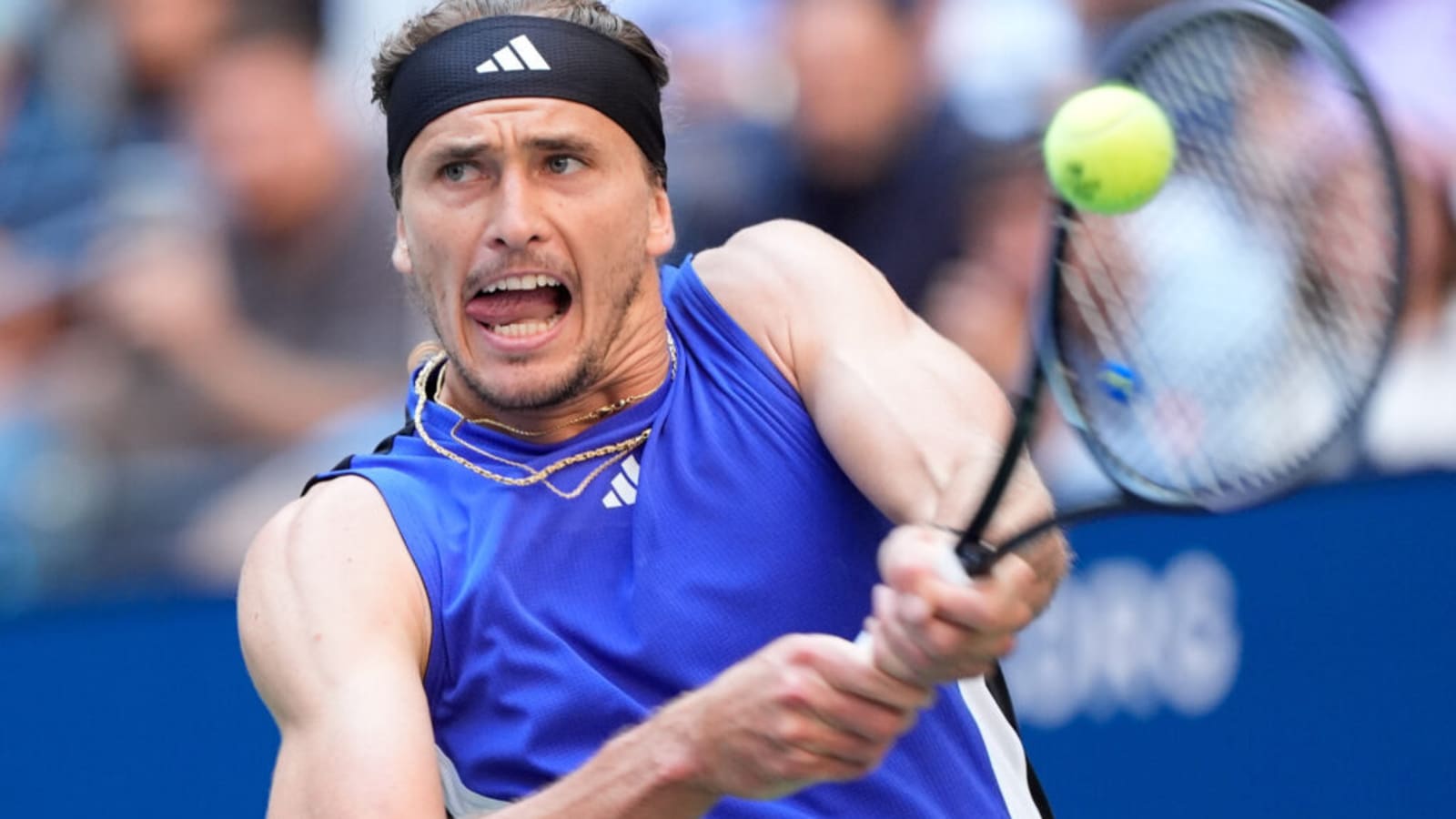
For most of his career, Alexander Zverev seemed immune to the pressures of time. He was young, talented, and destined for greatness. The German was supposed to be the one who inherited the throne once the Big Three finally stepped aside. The ceiling? Nobody could really see it. He was that good.
But projections have a nasty habit of ignoring reality. Nobody accounted for the emergence of players like Carlos Alcaraz and Jannik Sinner, who didn’t just meet expectations but shattered them entirely. What once looked like Zverev’s inevitable coronation now feels like a window rapidly closing.
Heading into the 2026 Australian Open, Zverev sits at world No. 3. Impressive on paper, sure. But the number masks a more urgent question: can he elevate his game to the level required to win a Grand Slam?
Alexander Zverev’s Race Against Time
When Zverev Was Living Up to the Hype
Let’s rewind. There was a time when Zverev genuinely looked like the future of tennis. He was winning Masters titles. He was beating the Big Three. He was ranked in the top five and looked comfortable there.
Remember Tokyo 2021? Zverev absolutely demolished Novak Djokovic to win Olympic gold, one of the most dominant performances anyone had produced against Djokovic in years. Remember Roland Garros 2022? He pushed Rafael Nadal to the brink in a semifinal before a horrific ankle injury ended the match. Those weren’t flukes. That was Zverev playing the tennis everyone believed he was capable of.
He came within one set of winning his first Grand Slam at the 2020 US Open, only to collapse against Dominic Thiem in a final he should have won. He was right there within touching distance of his dream. And something didn’t click.
That phrase has become the defining narrative of his career. Something doesn’t click.
The Fundamental Problem
Here’s the uncomfortable truth: a player with Zverev’s physical tools shouldn’t be playing the kind of tennis he plays. He’s overly cautious. He’s not aggressive enough. His serve remains elite, one of the best in the game, but everything else feels tentative.
That approach might have worked a decade ago. But in an era dominated by clean, fearless ball-strikers like Alcaraz and Sinner, caution is a death sentence. They don’t give you time to settle into a rhythm. They attack relentlessly, and if you’re not willing to go toe-to-toe with them, you lose.
The forehand is the most glaring weakness. On good days, it can fire, but more often than not, it’s the shot that betrays him. It’s inconsistent. It’s vulnerable under pressure. And it’s probably why he’s so hesitant to play aggressively. He simply doesn’t trust it enough to take risks.
That may change at this year’s Australian Open. But the clock is ticking.
What’s at Stake
Zverev is approaching thirty. Yes, it’s just a number. But it’s also a significant number in tennis. Very few players hit their peak after thirty. Most start to decline, their bodies no longer able to sustain the grueling demands of the tour.
Meanwhile, younger players keep emerging. The field isn’t getting easier. It’s getting harder. Alcaraz and Sinner are still in their early twenties with years of dominance ahead of them. The next generation is already knocking on the door.
This season needs to be the one where Zverev proves he’s ready to take the next step. The Australian Open, where he made the final last year, should be his statement event. We need to see something different from him. Something more. Otherwise, he risks becoming another tragic “what could have been” story in tennis history.
What We Expect
We believe Zverev has a genuine passion for the sport. His ambitions are real. But given how his career has trended, we seriously doubt he has what it takes to challenge for Grand Slams consistently in the coming years.
Will he be in the mix? Absolutely. Will he win some big matches? Of course. He’s too talented not to. But barring a fundamental change in his approach or some breakthrough in his mental game, Zverev will likely remain exactly what he’s been: extremely good, but not quite good enough.
That’s the tragedy of it. He’s good enough to beat almost anyone on a given day. Just not good enough to do it seven times in a row when it matters most.
The Australian Open will give us another data point. Maybe this is the year everything clicks. Perhaps the final he made last year was the breakthrough moment he needed. Maybe he’ll prove the doubters wrong.
But history suggests otherwise. And time waits for no one.
More must-reads:
- Body cam footage from Tiger Woods' arrest has been released
- Hornets' Kon Knueppel, Suns' Collin Gillespie make history in Charlotte's win
- The 'Active 2K-point NBA seasons' quiz
Breaking News
Trending News








Customize Your Newsletter
 +
+




Get the latest news and rumors, customized to your favorite sports and teams. Emailed daily. Always free!
PRIVACY POLICY COOKIE POLICY CONTACT US
ABOUT YARDBARKER TERMS OF SERVICE


By using this site, you agree to our Terms of Service and Privacy Policy.
This site is for entertainment purposes only.
There is no gambling offered on this site.
Gambling Problem? Call 1-800-Gambler.
