
-

-


Follow Us
-

 On Facebook
 On Flipboard
 On Twitter
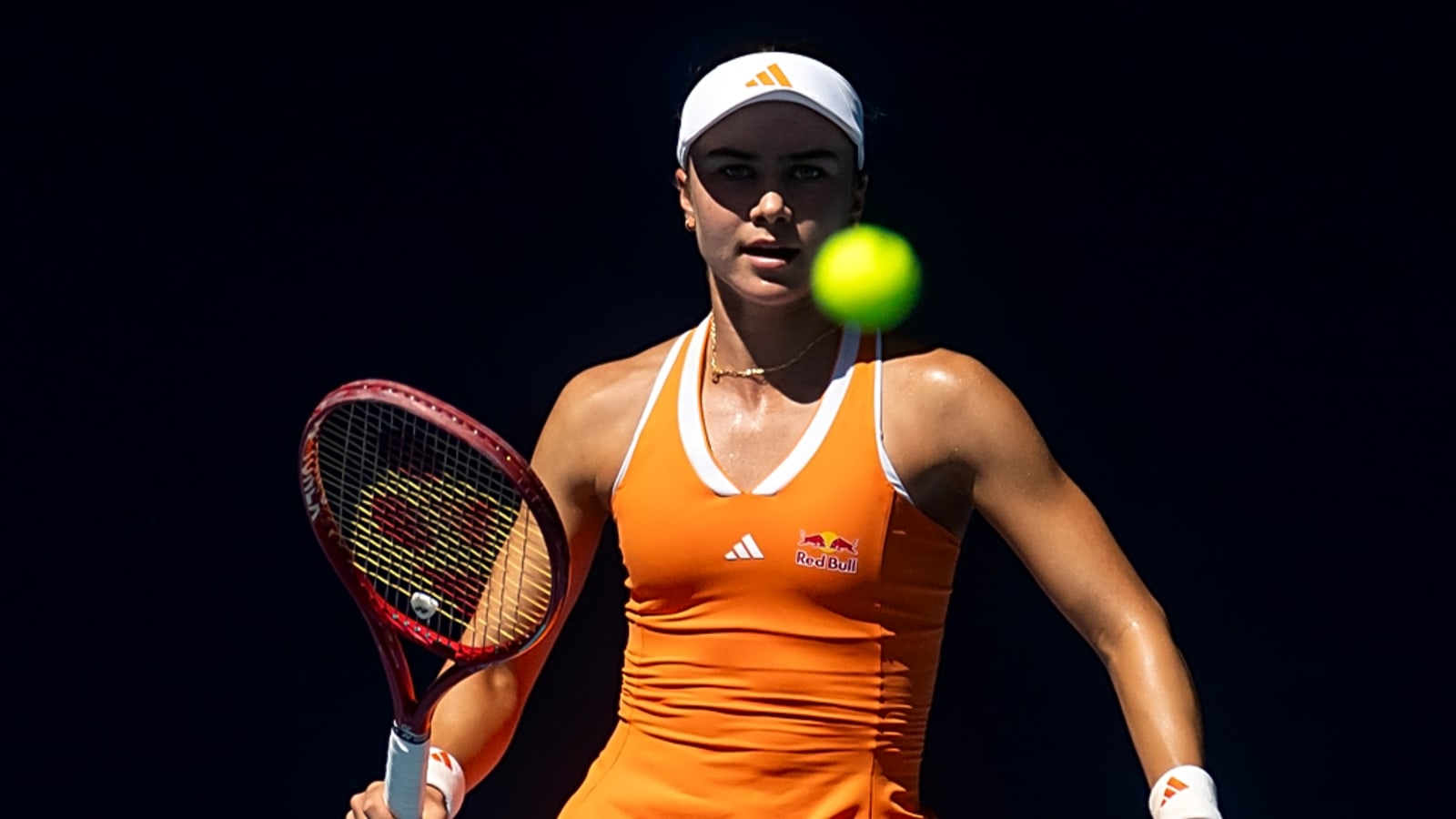
Iva Jovic delivered a controlled performance to open her Miami Open campaign, defeating Paula Badosa 6-2, 6-1 in a match that reflected both current form and contrasting trajectories. The 18-year-old capitalised on faster conditions in Miami, focusing on what she described as “taking care of the basics” to dictate play early and secure a straightforward progression into the next round.
The result marked a response to a recent setback at Indian Wells, where Jovic suffered a three-set defeat to Camila Osorio in a match lasting over three hours. That loss highlighted areas of adjustment for the young player, particularly in managing physical and mental demands across consecutive tournaments.
By contrast, Badosa continues to navigate her return from a long-term lower back injury that disrupted much of her 2025 season. Having only resumed competition at the start of the year following an extended absence, the Spaniard has struggled to regain rhythm, with her ranking projected to fall further outside the top 100 to around No. 113 following her Miami exit.
Jovic, meanwhile, continues to accumulate ranking points with minimal pressure in Miami, as she is not defending results from the previous year. The American is projected to rise to No. 16 in the live rankings, carrying a 15-6 record in 2026, and will next face qualifier Talia Gibson, who arrives in strong form after nine wins in her last ten matches, including a victory over Naomi Osaka.
Managing growth and adapting to the tour
Jovic acknowledged that her performance in Miami was shaped by an emphasis on fundamentals, particularly given the shift in conditions from Indian Wells. She noted that the surface played significantly faster, requiring adjustments in timing and decision-making, while also highlighting the importance of seizing key moments within matches.
Beyond the immediate match, Jovic pointed to broader lessons learned over recent weeks, particularly regarding the depth and physical demands of the WTA Tour. She emphasised that performance is not solely determined by technical level, but also by the ability to manage external factors such as travel, minor injuries, and changing environments.
“I think that I’ve just learned about the depth of the women’s game. It’s these little details — you’re a little sick, something is hurting — and things like this can make a big difference. So I think it’s not just your level and how you can play on the court. It’s how can you maintain your body and your mind and everything through the travel, the different weeks, the different conditions.”
Jovic indicated that these challenges affected her during the previous stretch of tournaments, but framed them as part of a natural adjustment process. Her performance in Miami suggested progress in this area, with improved control and decision-making across both sets against Badosa.
Emotional management and practice habits
A recurring theme in Jovic’s reflections was her approach to handling emotions, both after wins and losses. She described a tendency to channel emotional responses directly into practice sessions, often returning to the court immediately after matches to address specific areas of concern.
This approach, she explained, is not limited to defeats. Even after victories, Jovic seeks to maintain rhythm and reinforce patterns, particularly when matches are shorter and physical energy remains available. The emphasis is on continuous improvement rather than short-term satisfaction. “But I think I always have a lot of emotions, especially after I lose, but even after I win. So now I’m just channeling it right into the practice court instead of channeling it into anger or frustration after something happens.”
She also noted that positive emotions do not present a barrier to productivity, suggesting that training in a positive state can be equally effective. The balance, in her view, lies in maintaining consistency regardless of emotional context, ensuring that both wins and losses contribute constructively to development.
‘Trauma bonding’ and relationships on tour
Jovic also addressed the interpersonal dynamics within the WTA Tour, describing what she referred to as “trauma bonding” among players. While competition remains central, she highlighted a shared understanding that emerges from common experiences, particularly in high-pressure or uncertain situations.
She explained that fellow players are often the only individuals who fully grasp the emotional and physical realities of the sport. This creates moments of connection, whether following difficult losses or during interruptions such as weather delays, where players collectively navigate the same circumstances.
“I think it’s complex. Because, obviously, we’re all competitors," the world No. 17 said. "But we’re truly the ones that know what we’re going through. Your competitors are the only ones that have kind of been in your shoes and know what you’re going through. So, you know, lose a match with match points — we’ve all kind of been there, done that.”
“And when it’s raining like this, we’re all just huddled in the locker room trying to figure out what to do, what’s happening. So there’s just a lot of moments where we’re all kind of like banding together and we’re in the same wavelength. We understand each other. We don’t have to speak. We just know.”
More must-reads:
- Pirates' Konnor Griffin makes immediate impact in MLB debut
- Travon Walker's contract extension could be long-term steal for Jaguars
- The 'NBA two's leaders by season' quiz
Breaking News
Trending News








Customize Your Newsletter
 +
+




Get the latest news and rumors, customized to your favorite sports and teams. Emailed daily. Always free!
PRIVACY POLICY COOKIE POLICY CONTACT US
ABOUT YARDBARKER TERMS OF SERVICE


By using this site, you agree to our Terms of Service and Privacy Policy.
This site is for entertainment purposes only.
There is no gambling offered on this site.
Gambling Problem? Call 1-800-Gambler.
