
-

-


Follow Us
-

 On Facebook
 On Flipboard
 On Twitter
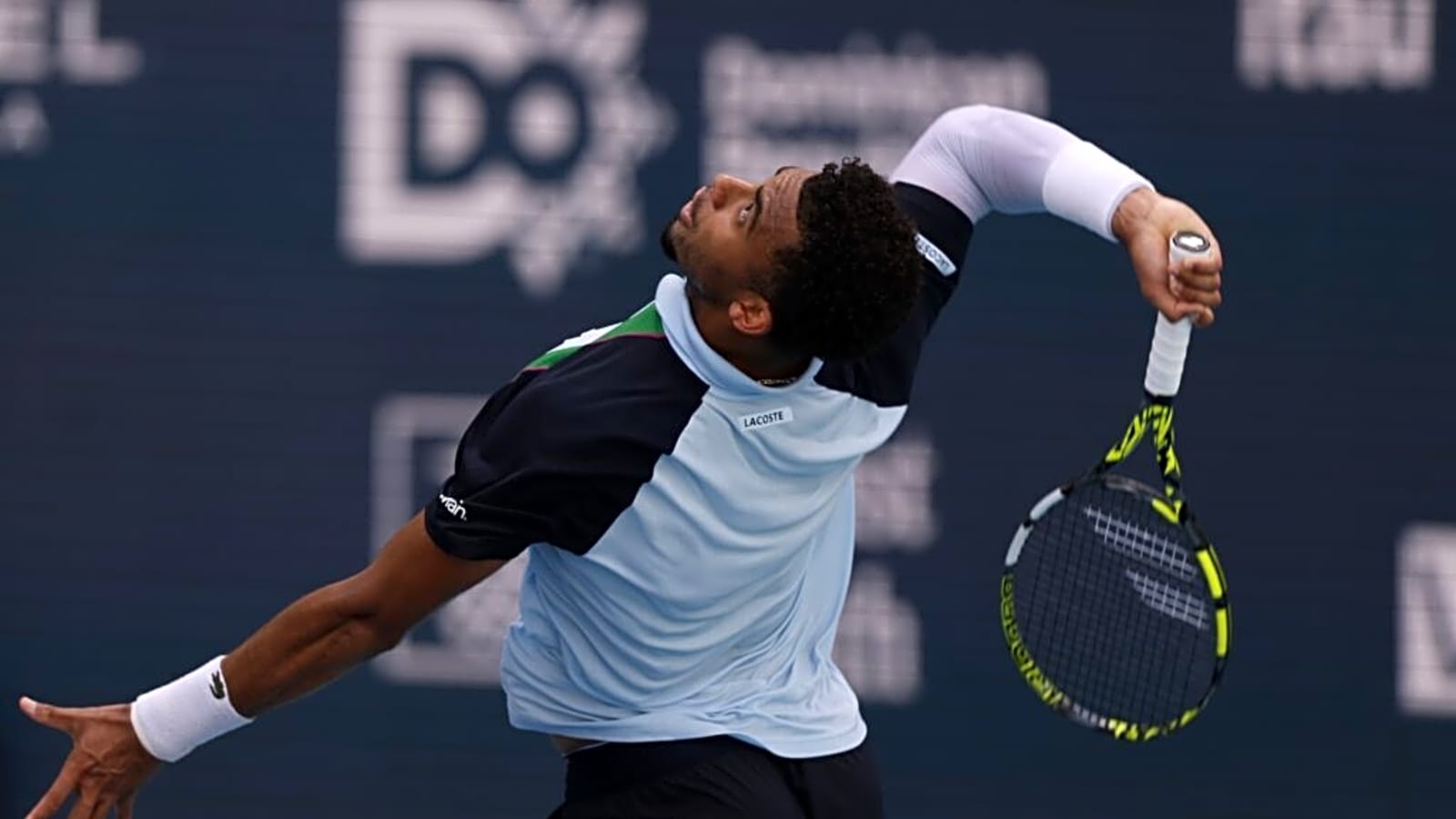
Arthur Fils has never had a problem with talent. When everything is working for him, he is one of the more dangerous players on the tour. The issue has never been tennis, either. It has been staying healthy long enough to play it consistently. Doha suggested, perhaps more clearly than anything in recent memory, that the injury troubles may finally be behind him.
The evidence was hard to ignore. Fils tore through the draw and reached the final, where he ran into Carlos Alcaraz playing at what Fils himself accurately described as a “joke” level. The Spaniard needed 50 minutes to close it out, but that scoreline said everything about where Alcaraz is right now and very little about Fils. Getting to a final and losing it to the best player in the world is not a failure. It is a data point, and a very encouraging one.
So what do the numbers actually tell us about what happened in Doha? Was this a genuine return to form, or just a fortunate week catching the right draw at the right moment?
Understanding Fils as a Player
To properly read the Doha statistics, it helps to understand what kind of player Fils is and what his best tennis actually looks like. The most obvious thing about his game is the power. He generates serious pace from the baseline, which compresses time for opponents and makes neutral rallies feel like anything but.
What makes him more than just a ball-striker, though, is the variety sitting underneath that power. He is comfortable at the net, capable of genuine finesse when the situation calls for it, and his serve gives him a reliable platform to build points from rather than having to construct everything from scratch on every rally.
His career numbers flesh that picture out further.
In both 2024 and 2025, he held serve around 81 percent of the time, which is a solid mark that reflects how effective his service games tend to be when he is fit and in rhythm. His best aces rate came in 2024 when eight percent of his serves went unreturned, and that same year he won 75 percent of first-serve points, which is the best mark of his career to date.
The one serving weakness in 2024 was consistency in getting the first serve in, landing it only 60 percent of the time. He improved that to 63 percent in 2025. On the return side, 2025 was his best season, with 38 percent of return points won. Taking the peak of each of those categories, regardless of which year it came from, gives us the fairest possible benchmark for measuring Doha against the best tennis he has produced so far.
What the Doha Numbers Say
The raw numbers from Doha are not uniformly at the level of his career bests, and the picture they paint is more nuanced than a simple comparison suggests.
His first-serve points won across the week came in at 67 percent, which sits noticeably below the 75 percent he managed across the whole of 2024. That gap looks less alarming once you take out the final, however. Without the Alcaraz match, that number rises to 72 percent, still short of his peak but well within the range of his best. The final was an outlier after all, and treating it as representative of the week would be misleading.
Where the Doha numbers genuinely improve on anything in his career so far is first-serve percentage. He landed his first serve 68 percent of the time across the tournament, meaningfully higher than his previous best of 63 percent. For a player whose first serve is one of his primary weapons, that improvement matters more than it might initially appear.
Getting more first serves in does not just help individual service games in isolation. It compounds across a match, reducing the number of second-serve situations he faces, making his hold games shorter and less taxing.
The remaining statistics from Doha generally track slightly below his career highs, which is entirely expected. He has missed substantial time with injuries and is only now rebuilding the match fitness and timing that comes from playing regularly. Doha was not peak Fils. It was, more accurately, a very promising sign that peak Fils is somewhere close on the horizon.
Where This Leads
The future has always looked bright for Fils on paper, even during the stretches when injuries made that brightness feel theoretical. Doha gave it some substance.
Beyond reaching the final itself, the quality of opponents he defeated along the way is worth noting. Jakub Mensik and Jiri Lehecka are both strong players, neither of them a name you simply get past on a mediocre week.
Alcaraz was a different matter, but Alcaraz is a different matter for everyone right now. Losing in 50 minutes to the world’s best player playing at a historic level is not something to dwell on. The rest of the week is.
The task ahead is straightforward in principle, if not always in practice: build on this, keep improving, and stay on the court. For a player whose career has spent too much time interrupted rather than accumulating, that last part matters most of all.
If Doha is the beginning of a healthy run rather than an isolated bright spot, the tour is about to be reminded of just how good Arthur Fils can be.
More must-reads:
- Insider shares notable update on Shedeur Sanders' status with Browns
- Trump's executive order could have big impact on current college sports landscape
- The 'NBA two's leaders by season' quiz
Breaking News
Trending News








Customize Your Newsletter
 +
+




Get the latest news and rumors, customized to your favorite sports and teams. Emailed daily. Always free!
PRIVACY POLICY COOKIE POLICY CONTACT US
ABOUT YARDBARKER TERMS OF SERVICE


By using this site, you agree to our Terms of Service and Privacy Policy.
This site is for entertainment purposes only.
There is no gambling offered on this site.
Gambling Problem? Call 1-800-Gambler.
