
-

-


Follow Us
-

 On Facebook
 On Flipboard
 On Twitter
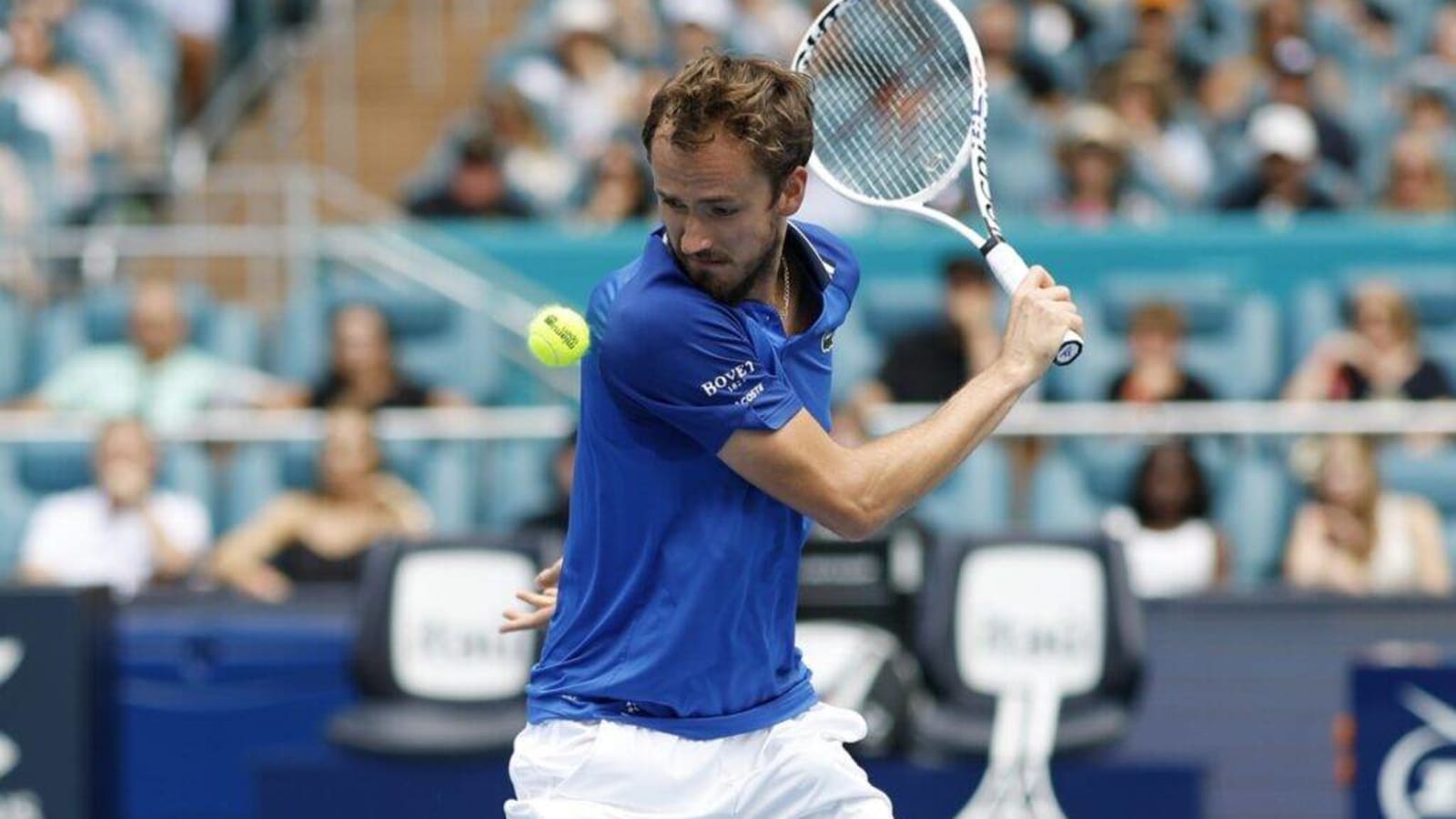
The ongoing debate over money, politics, and ethics in professional tennis shifts to a new stage this month, as the latest St. Petersburg exhibition in Russia prepares to welcome several top-100 ATP and WTA players. Sponsored by Gazprom—the Russian state-controlled gas giant currently under international sanctions—the event continues to raise questions about where tennis draws its financial and moral boundaries. The marquee name this year is Russian No. 1 Daniil Medvedev, appearing for the first time in this exhibition format, a decision that has drawn scrutiny from some corners of the tennis world.
Russia’s Isolation From International Sport
In February 2022, Russian President Vladimir Putin launched a full-scale invasion of Ukraine. Since then, Russia has been systematically isolated from much of international sport. The country is banned from the 2026 FIFA World Cup—an event it hosted in 2018—barred from UEFA competitions including the Champions League and European Championships, and sharply limited at the Olympics due to both the war and long-standing doping violations. Russian athletes have also been sidelined in many major winter sports that are popular in the country, such as figure skating, speed skating, and ice hockey.
Tennis authorities also moved to sanction Russia and Belarus over the war. Russian and Belarusian players are still permitted to compete on the ATP and WTA Tours, but only under a neutral flag. They cannot display national colors or anthems, and they are barred from team competitions such as the Davis Cup and Billie Jean King Cup. Official ATP and WTA tournaments in Russia and Belarus like the Kremlin Cup remain suspended indefinitely. These restrictions have fundamentally changed how Russian tennis operates and how its players navigate their careers.
The NPT Exhibition
With sanctioned tournaments prohibited, elite Russian players now face limited options for competing at home. Some have considered switching nationalities to regain access to team competitions and certain exemptions, while others remain committed to representing Russia, even in a neutral capacity. These decisions are often influenced by family, identity, and personal history.
Before 2022, Russia hosted several notable events, including ATP tournaments in St. Petersburg and the Kremlin Cup in Moscow. Today, the country is limited to holding unsanctioned, invitation-only exhibitions during rare gaps in the ATP/WTA calendar. On November 29, St. Petersburg will host the fourth edition of the Northern Palmyra Trophy (NPT). This year’s field features Daniil Medvedev, rising WTA player Diana Shnaider, one of the top performers of 2025, Alexander Bublik , and international competitors such as Tallon Griekspoor. Retired stars known for their exhibition flair—Mansour Bahrami, Janko Tipsarevic, and Mikhail Youzhny—round out the lineup.
The tournament is financed by Gazprom, widely regarded as a central pillar of the Russian state and directly tied to the country’s political leadership. Because the NPT is an unsanctioned exhibition, players have not faced ATP or WTA penalties for participating. Previous editions have drawn prominent names such as Roberto Bautista Agut, Adrian Mannarino, and former world No. 3 Nikolay Davydenko.
Comparisons to the Six Kings Slam and Other Global Events
Although this exhibition is controversial—especially in Europe—it is no longer unique in professional tennis. Saudi Arabia’s Six Kings Slam has become the sport’s most lucrative exhibition, offering multi-million-dollar payouts for single matches. Both the ATP and WTA have embraced deep partnerships with the Saudi government, including the newly announced ATP Masters 1000 and the WTA Finals in Riyadh. These moves have sparked debate similar to that surrounding Russia: questions about human rights, political influence, and the ethics of sportswashing.
At the same time, the WTA has resumed tournaments in China after suspending them following the Peng Shuai disappearance. Major events continue in Qatar and Dubai. Even the United States has faced criticism in past years for holding tournaments amid polarizing immigration and foreign-policy decisions under the Trump administration. Taken together, these examples show that the professional tours have long abandoned a consistent moral framework regarding host countries.
What’s Next for Russian Sport?
Russia’s exclusion from global competition is driven primarily by the United States, the European Union, and their closest allies. Much of the rest of the world maintains a neutral or ambiguous stance on the war, and in some cases, a pragmatic willingness to continue sporting ties. In 2025, Russia’s national football team played only one match abroad (in Qatar) but hosted friendly games against countries such as Nigeria and Chile. Domestic football continues to feature players from Brazil, Costa Rica, Argentina, and Colombia, though almost no one from EU nations remains.
Russia has the finances, talent, and infrastructure to sustain domestic sporting life, but without a resolution to the war, a peace deal, its presence on the global stage will remain limited. An expanded 2026 World Cup would ordinarily include Russia, yet the ban persists, even as other politically contentious nations—such as Iran—continue to participate.
For now, tennis remains one of Russia’s few remaining windows into elite global sport. Events like the St. Petersburg exhibition allow Russian fans to see top players up close, even as the rest of the world continues to debate the ethics of competing there and the broader implications for international athletics.
More must-reads:
- Cowboys' Jerry Jones sends clear message to players about 18-game regular season
- Cowboys' Jerry Jones leaves door open for Maxx Crosby trade, addresses Ravens-Raiders saga
- The 'Active 30-point NBA games leaders' quiz
Breaking News
Trending News







Customize Your Newsletter
 +
+




Get the latest news and rumors, customized to your favorite sports and teams. Emailed daily. Always free!
PRIVACY POLICY COOKIE POLICY CONTACT US
ABOUT YARDBARKER TERMS OF SERVICE


By using this site, you agree to our Terms of Service and Privacy Policy.
This site is for entertainment purposes only.
There is no gambling offered on this site.
Gambling Problem? Call 1-800-Gambler.
