
-

-


Follow Us
-

 On Facebook
 On Flipboard
 On Twitter
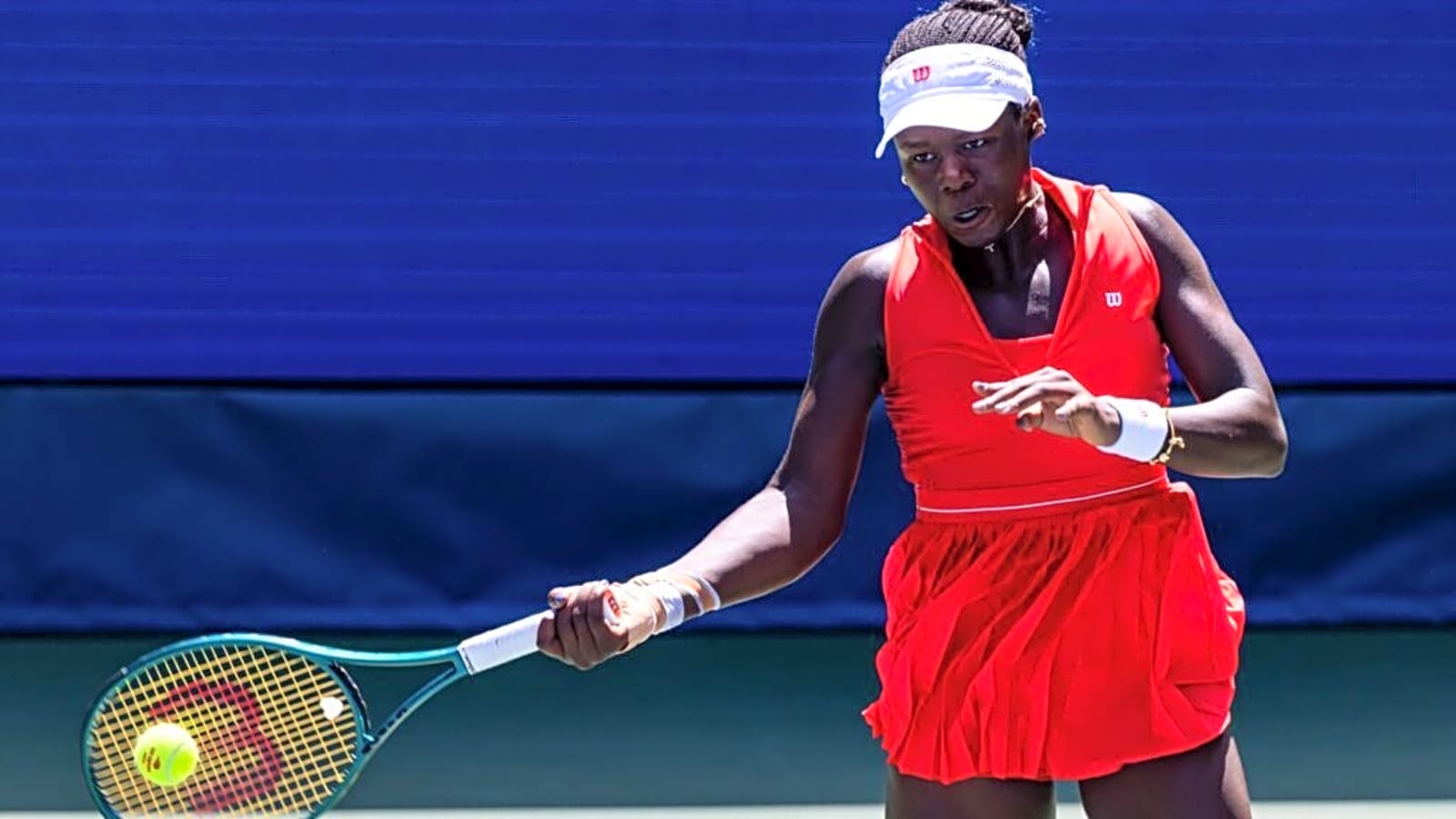
Victoria Mboko stands alone as women’s tennis’s most captivating young talent right now. Her recent run to the Doha final, where she fell to the crafty Karolina Muchova, only reinforced what the numbers have been telling us for months: this isn’t a flash in the pan.
Is Victoria Mboko already an elite level talent?
The Eye Test
Before diving into statistics, it’s worth noting what makes Mboko special beyond the spreadsheet. Her court coverage is superb and movement is perhaps the best trait any modern player can possess. Like Coco Gauff, Mboko turns defense into offense simply by tracking down balls that would be winners against lesser athletes. In an era where women’s tennis features more pace than ever, raw power alone rarely overwhelms. You need to land multiple crushing shots to finish points, and most players can’t sustain that level consistently. Mboko’s court coverage forces opponents into uncomfortable territory.
Her all-around game complements that movement beautifully. The serve works well, the groundstrokes hold up from both wings, and she rarely beats herself. Even when outplayed, she competes for every point with a tenacity that makes her dangerous in any match. Still, at just 19 years old, Mboko’s improvement comes down to details. The numbers reveal exactly how she’s transformed from promising prospect to top-10 threat.
The Foundation: 2024 to Early 2025
In 2024, Mboko spent most of her time on the ITF Tour, posting respectable but unspectacular results. She won 60% of sets and 54.5% of games which are solid numbers that suggested potential without dominance. Her 2-4 record in tiebreaks hinted at struggles in pressure moments.
When she returned to ITF competition in early 2025, something had clicked. She dominated with a 93% match win rate, taking 88% of sets and 66% of games. Her tiebreak record improved to 3-1. The underlying numbers told an even better story: 84% holds, 55% breaks, and a 65% first-serve percentage that ranks exceptionally high for women’s tennis.
The question became whether she could translate this ITF dominance to the WTA Tour.
The Transition: Mid-2025 on the WTA Tour
When Mboko stepped up to the main tour in the second half of 2025, she posted a 22-11 record across 33 matches. Her game percentage dropped to 55%, down from the ITF numbers but hardly a collapse. Her hold percentage settled at 70%, with breaks coming 37% of the time.
These figures tell an important story. Of course Mboko wasn’t going to steamroll WTA competition the way she had at the ITF level. The talent gap is enormous. What matters is that the dropoff remained modest.
Given the caliber of opposition, maintaining those percentages actually represented impressive consistency. It was in many ways a smooth transition, one that laid the groundwork for everything that followed.
Becoming Elite in 2026?
The more intriguing question is how Mboko evolved from solid WTA player to legitimate elite contender. The answer lies in marginal gains across every facet of her game.
Through 17 matches in 2026, she’s won 13, capturing 64% of sets which is a significant five percentage point improvement over her 2025 WTA numbers. She’s already won more tiebreaks this year than in all 33 WTA matches from last year combined, signaling crucial mental growth. Her hold percentage has remained steady at 71%, while her break percentage has climbed two points.
The service improvements run deeper. She’s cut her double fault rate by nearly three percentage points and increased her first-serve percentage. Most notably, her second serve has jumped six percentage points in effectiveness compared to 2025. She’s winning 2% more service points and 2% more return points.
In isolation, these gains sound modest. In tennis, a sport of razor-thin margins, they’re transformative. Small improvements compound, turning close losses into narrow victories and tight sets into comfortable ones.
Mboko won’t turn 20 until August. If her current trajectory holds, she could be firmly planted in the top 10 by then, possibly higher. The pattern is clear: she identifies weaknesses, makes incremental improvements, and raises her baseline performance. If she continues this progression, we’re watching a future Grand Slam champion develop before our eyes.
The sky isn’t just the limit for Victoria Mboko. At this rate, she’s building a ladder to reach it.
More must-reads:
- Buffalo Sabres clinch playoff spot, end longest postseason drought in NHL history
- Mets star Juan Soto to undergo MRI for possible calf injury
- The 'NCAA men's basketball champions' quiz
Breaking News
Trending News








Customize Your Newsletter
 +
+




Get the latest news and rumors, customized to your favorite sports and teams. Emailed daily. Always free!
PRIVACY POLICY COOKIE POLICY CONTACT US
ABOUT YARDBARKER TERMS OF SERVICE


By using this site, you agree to our Terms of Service and Privacy Policy.
This site is for entertainment purposes only.
There is no gambling offered on this site.
Gambling Problem? Call 1-800-Gambler.
