
-


Follow Us

 On Facebook
 On Flipboard
 On Twitter
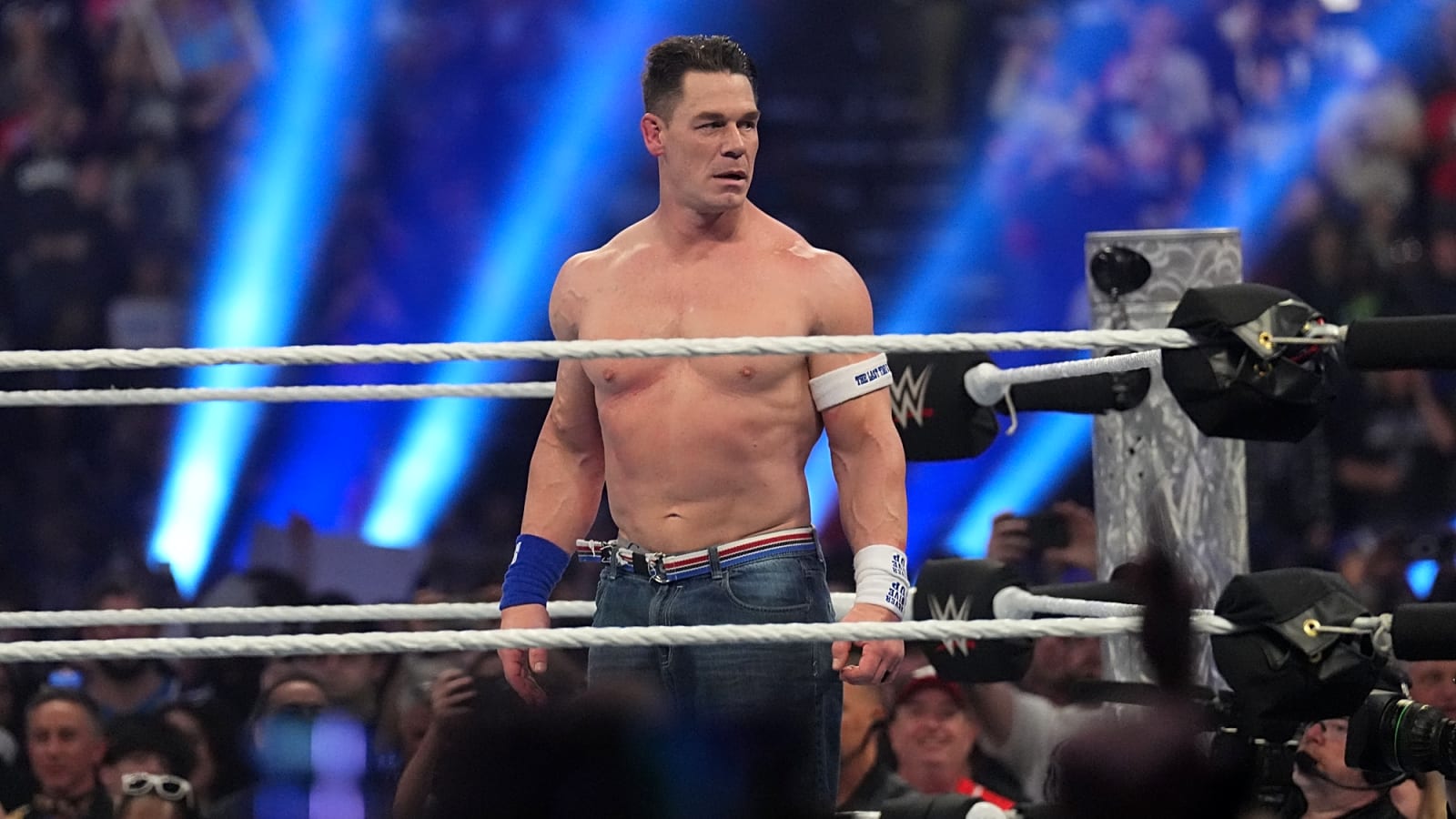
On the night that John Cena wrestled his final ever match at WWE’s Saturday Night’s Main Event, I paid tribute with a full circle moment in my fandom.
I attended AEW’s Collision Winter is Coming at Cardiff’s Utilita Arena. Over twenty years earlier, I went to the same venue (then the Cardiff International Arena) to watch the WrestleMania Revenge Tour. To my surprise, my partner had bought us seats (my birthday present) on the floor, near the ringside.
Over twenty years ago, I sat in a similar position with my dad. We watched John Cena defend his newly won WWE World Championship against JBL. It was my 2nd house show. Then, I wore a brand new “Ruck Fules” t-shirt. Saturday night, I wore my well-worn AEW All In London 2023 jersey.
I celebrated John Cena’s career by attending a show where I didn’t see him.
Many of my colleagues have written incredible, moving tributes to John Cena. I wish to provide an alternative voice. To pay homage to a wrestler and icon who changed my love of wrestling for the better. Like Mark Anthony, I don’t come to praise Cena. Yet beneath the veneer, my choice of title and this introduction don’t expect a burial. My relationship with Cena is nuanced.
I appreciate everything that The Face that Runs the Place has achieved and can recognize how directly and indirectly, his influence has impacted my and others’ fandom of wrestling, without feeling emotional investment in the wrestling character. This is an examination of how, for some of us, John Cena’s sucking helped us love wrestling more.
Artist or Businessman?
As fans, we’re products of that time when wrestling first bit us. I grew up knowing wrestling was fake and disliking it. Watching Nitro and/or Raw at friends’ houses on sleepovers put me to bed. However, aged eleven, Ruthless Aggression sank its teeth into me.
My personal SmackDown Six were Kurt Angle, Chris Benoit, Brock Lesnar, Rey Mysterio, Eddie Guerrero, and John Cena. All distinct characters and made wrestling, which I knew to be fake, feel real.
Cena, once he ascended to the role of champion, lost his edge. I grew older quickly while the character regressed. Cena captured younger fans while alienating others. I know moves don’t equal business success, but then, now and forever, that’s the dividing line for me that separates me from other types of fans.
This art form is a business, but the money metrics are for the management and wrestlers to worry about. I care more about the art. The creative details, execution, and the entire package of the stories told move me. I value the art for how it’s communicated and makes me emote.
Financial stuff is tertiary. I understand and don’t deny that moves don’t equal box office success. No one, more than John Cena, has, as I’ve discussed elsewhere, become a living embodiment of the WWE business. The story of John Cena feels like the story of WWE, its business and success, as if the initials were a central character.
Wrestling is an art. An art where wrestling’s dynamism and creativity saw wrestlers like Kurt Angle or Bryan Danielson create Jackson Pollock-like brilliance within the restraints of the WWE system. John Cena and his array of rainbow shirts reflect the businessman-like approach of Andy Warhol, with art produced as if in a factory with a commercial emphasis.
“You Can’t Wrestle” (My Preferred Sub-Genre)
Art is subjective and personal. What’s right for me doesn’t have to be right for someone else. Like any art form, there are perimeters and room for variation and experimentation. Frankly, not everyone is required to like everything. Contractions and nuances exist. I love horror films but hate gorno because it feels fake and lacks story, yet I’m an AEW sicko happy to indulge in Shakespearean levels of violent splendour.
The spaces between moves are important. However, those moments require the connective tissue of the physical dance and everything in between them. It requires strong, tangible characterization and emotive investment to connect. As a kid who loved stories, the physicality of the theatre is what attracted me and what I love.
My youth and lack of knowledge of WWE history meant I was unaware that, in some respects, SmackDown’s Ruthless Aggression Era was an anomaly—a period of identity crisis and not the norm for WWE.
The way WWE told stories, then informed me how it told stories that my friend Mark and I didn’t get and then moaned about, felt like an abusive relationship Cena described during his failed heel turn. Triple H set the fires, but Cena’s robotic indifference let the flames burn, making him a scapegoat. Naturally, some of us were going to be pushed away.
The spaces between moves are vital. So are the connective tissue of physical dance and those moments outside the ring. Understandable characterization and straightforward storytelling allow for emotive investment. As a kid who loved stories, the physicality of the theatre is what attracted me and what I love. With Cena, the stories told were Swiss chess, performed in a style that didn’t meet my mold of expectations.
Everyone Needs an Antithesis
We learn a lot from the things we don’t like as much as the things we do. John Cena became a needed antithesis that helped me understand better what I did like and then came to love about wrestling. Like an old high school friend whom you hang out with due to some earlier common ground that lessens in significance over time. You learn it’s time to move on. You or the person who leaves are neither superior nor inferior, just different.
With Cena as a foil, I discovered in WWE, online, and across the globe, wrestlers I still adore. I found heroes in the past devouring matches and storylines from the NWA, ECW and WCW. I regained excitement and passion for modern wrestling with TNA and ROH, before Bischoff/Hogan and Cornette threw wet blankets on each, respectively.
Yes, I started this while still a WWE fan, but often through the WWE-centric lens of history told by the winners. I learned to appreciate that there is a universe outside of WWE and that it, in fact, didn’t always revolve around Titan Towers.
Speaking of narratives, I don’t believe disgruntled fans merely complained but also voted with their money.
Rising Above Hate
Not everyone hung around in the WWE crowd to hijack shows. I gave up on WWE by the time fans started vocalizing their frustrations at the WWE product, and Cena, whose weekly nonchalant hosting style won him deserved respect in hindsight.
Fed up with Cena and Cena-like presentation of other top stars, like Roman Reigns and Seth Rollins, “hardcore” fans looked elsewhere. I don’t think it’s a coincidence that the indie boom evolved by the time John Cena’s legacy forever changed WWE.
Cena, as a character, wrestler, and personality who shaped WWE management’s expectations of their top stars, provided an antithesis that helped other promotions stand out when streaming improved availability.
Disenfranchised fans went elsewhere if, like me, it suited their subjective tastes. NJPW gained more attention from Western fans. ROH and PWG gained expanded notoriety. The trickle-down effect was that those who left WWE had places to turn to. It also resulted in a lasting stigma and prejudice against the “indy” style.
Ironically, the indies and alternatives, including NJPW and AEW, are, by some, guilty of the crime of doing wrestling wrong. The word “indy” is still used by some with connotations of unpolished, storyless, and inferior wrestling, supposedly focused on art and style over money and business. Ironically, Cena’s old mantra turned marketing slogan, Rise Above Hate”, is something the world universe outside of WWE experiences.
Thank You for Sucking
John Cena helped change the direction of many of our fandoms with his perseverance and best efforts. Yet like many significant figureheads in sports and history, the ripple effects impacted a wider demographic than history sometimes celebrates.
I know plenty of fans who have no care for Cena or his legacy, and those who believe he is the GOAT. Division is central to Cena’s legacy, and acknowledging both sides and those who fall in between is important to recognize the nuance of one of wrestling’s most influential men.
All that’s left to say is one more time with affection, John Cena sucks, and thank you for developing my love of wrestling.
More must-reads:
- Travis Kelce reacts to brutal Patrick Mahomes injury, Chiefs missing playoffs
- Cowboys' Jerry Jones sends message to Packers' Micah Parsons after brutal injury
- The 'Active NFL 5-passing-TD games' quiz
Breaking News
Trending News







Customize Your Newsletter
 +
+




Get the latest news and rumors, customized to your favorite sports and teams. Emailed daily. Always free!
PRIVACY POLICY EDITORIAL POLICY CONTACT US
ABOUT YARDBARKER TERMS OF SERVICE


Use of this website (including any and all parts and
components) constitutes your acceptance of these
Terms of Service and Privacy Policy.
This site is for entertainment purposes only.
There is no gambling offered on this site.
Gambling Problem? Call 1-800-Gambler.
