
-

-


Follow Us
-

 On Facebook
 On Flipboard
 On Twitter
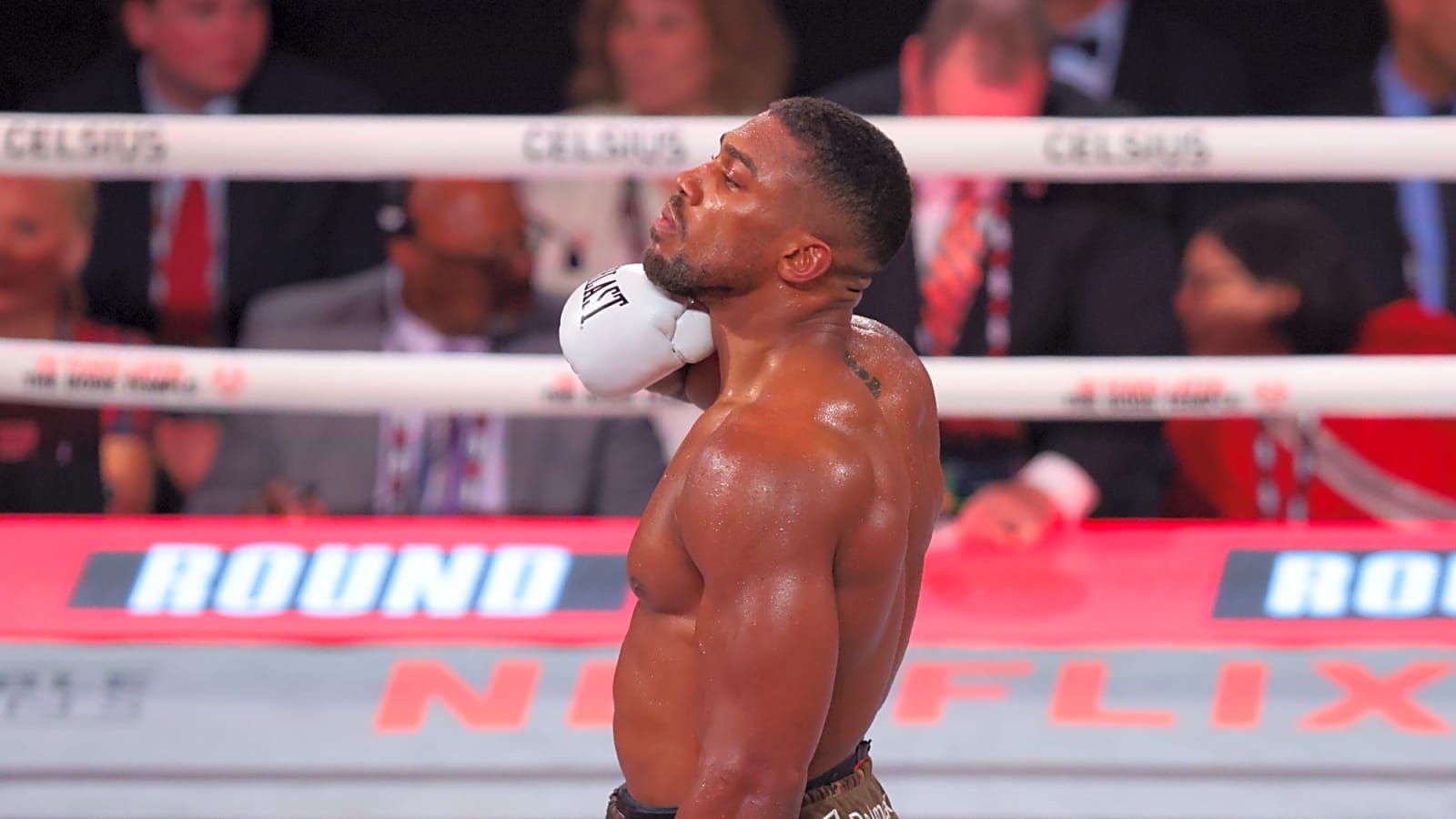
Anthony Joshua, the British former heavyweight champion, has returned to the boxing gym following a tragic car accident in Nigeria that claimed the lives of two close members of his team, signalling a delicate first step in his recovery. The training footage, shared recently by Joshua himself, shows him in motion again, working with pads and on conditioning exercises as he confronts both physical and emotional challenges in the weeks after the incident.
The crash occurred on December 29, 2025, on a major highway near Lagos. Joshua and his team were travelling when the vehicle collided with a stationary truck. Two of Joshua’s close associates — his strength and conditioning coach and his personal trainer — died in the collision. Joshua was taken to a local hospital and treated for injuries that were described as minor. He later left the facility and travelled back to the United Kingdom to be with family and begin the grieving process.
In the days following the crash, there was significant public and professional concern over how the accident would affect Joshua’s career. Prior to the incident, he had just recorded a high-profile victory in Miami, defeating YouTuber-turned-boxer Jake Paul in a fight that had generated enormous attention and was seen as a rebound performance. That success had sparked fresh discussion about potential future marquee bouts, including long-anticipated matchups with other elite heavyweights.
Since then, however, Joshua’s priorities have shifted sharply. Rather than focusing on future fights, his training efforts appear to be aimed at personal recovery and emotional processing. Videos circulating on social media and in training circles show him engaging in pad work with a trainer, using basic boxing movements and light conditioning drills. Gym insiders describe the sessions as part of his way of regaining routine and mental balance, not preparatory work for a scheduled bout.
Observers note that returning to training so soon after the crash is likely as much psychological as physical. For many athletes, the act of stepping back into familiar drills can help create a sense of normalcy after a traumatic event. In Joshua’s case, reconnecting with the fundamentals of the sport may offer a controlled environment where he can work through the emotional weight of the tragedy while staying physically engaged.
While the visuals of him in the gym have been welcomed by fans, his promoter has been careful to stress that there are no concrete plans for a comeback fight and no firm timeline for when Joshua might return to competition. Promoter statements emphasise that his health — encompassing physical, emotional and mental wellbeing — remains the priority before any conversation about future opponents or big-money events is entertained.
The road ahead is, by any measure, a difficult one. Losing two close friends in the same incident in which he was involved has been described by those close to him as a profound personal blow. Fellow athletes and members of his training community have expressed sympathy and support, underscoring that while boxers are often defined by their toughness inside the ring, the human experience outside it can be far more complex.
Public reaction has reflected a similar theme of empathy. At a fan gathering organised spontaneously outside a gym linked to one of the deceased trainers, one supporter remarked that Joshua’s willingness to work out again was inspirational, but that it was clear he was facing more than just physical recovery. “Seeing him back at the gym tells you he’s trying to cope, but there’s a lot more to healing than hitting pads,” the fan said, pointing to the emotional toll of the tragedy.
Authorities in Nigeria have charged the driver of the vehicle with offences related to dangerous and reckless driving. Legal proceedings are ongoing, with local police investigating the specifics of how and why the crash occurred. These legal developments run parallel to Joshua’s personal journey and have not been a focal point of his public statements, which have remained centred on remembrance and support for the families of those who died.
For the immediate future, Joshua’s team continues to urge patience. Conversations about possible future matches — including the much-talked-about “Battle of Britain” with Tyson Fury — have been postponed indefinitely. Promoters and trainers alike have reiterated that any decision about his future in boxing will come from Joshua himself and only once he has had adequate time to process what happened and feel ready to face the pressures of competition again.
The boxing world remains supportive but cautious. Analysts who follow the sport closely suggest that a period of reflection and gradual reintroduction to training is not unusual for elite athletes after significant life events. The mastery of boxing requires both physical sharpness and psychological resilience; returning to form often follows a slow, deliberate process rather than a sudden push toward competition.
Despite the uncertainty about his professional path, Joshua’s recent training has been interpreted as a positive sign. His boxing sessions have involved controlled movements, engagement with basic striking patterns and light conditioning exercises. They are not the kind of intense, fight-specific workouts normally seen in a full training camp, but they demonstrate his desire to remain connected to the sport as he navigates a complex healing period.
Longtime followers of Joshua’s career observe that his journey has been marked by challenges and comebacks before — from early defeats and setbacks to championship victories and high-profile rematches. But this moment is different; it touches on personal loss in a way that transcends sport. Fans and industry insiders understand that, while athletic resilience is admirable, it exists alongside the very human experience of grief.
As the weeks unfold, attention is likely to linger on Joshua’s progress in training, but with an added emphasis on the context of recovery rather than competitive preparation. Whether he eventually returns to the ring, scales back the intensity of his career or shifts his priorities entirely will depend on how he feels emotionally and physically in the months to come.
For now, the images of him training again — working through basic drills, moving his feet, and wrapping his hands — are a window into a man trying to find his footing after a devastating loss. They represent not a promise of future fights but a step in a broader journey of healing.
About the Author
Kiran Rai is a British political and sports journalist and former Daily Express reporter who has covered 65 major sporting events worldwide. His work has appeared in Forbes, GQ, Sports Illustrated, and TIME, and he is a regular contributor to Yahoo News, Yahoo Sport, and Yahoo Entertainment.
More must-reads:
- Body cam footage from Tiger Woods' arrest has been released
- Kon Knueppel, Collin Gillespie make franchise history in Hornets win
- The 'Active 2K-point NBA seasons' quiz
Breaking News
Trending News







Customize Your Newsletter
 +
+




Get the latest news and rumors, customized to your favorite sports and teams. Emailed daily. Always free!
PRIVACY POLICY COOKIE POLICY CONTACT US
ABOUT YARDBARKER TERMS OF SERVICE


By using this site, you agree to our Terms of Service and Privacy Policy.
This site is for entertainment purposes only.
There is no gambling offered on this site.
Gambling Problem? Call 1-800-Gambler.
