
-

-


Follow Us
-

 On Facebook
 On Flipboard
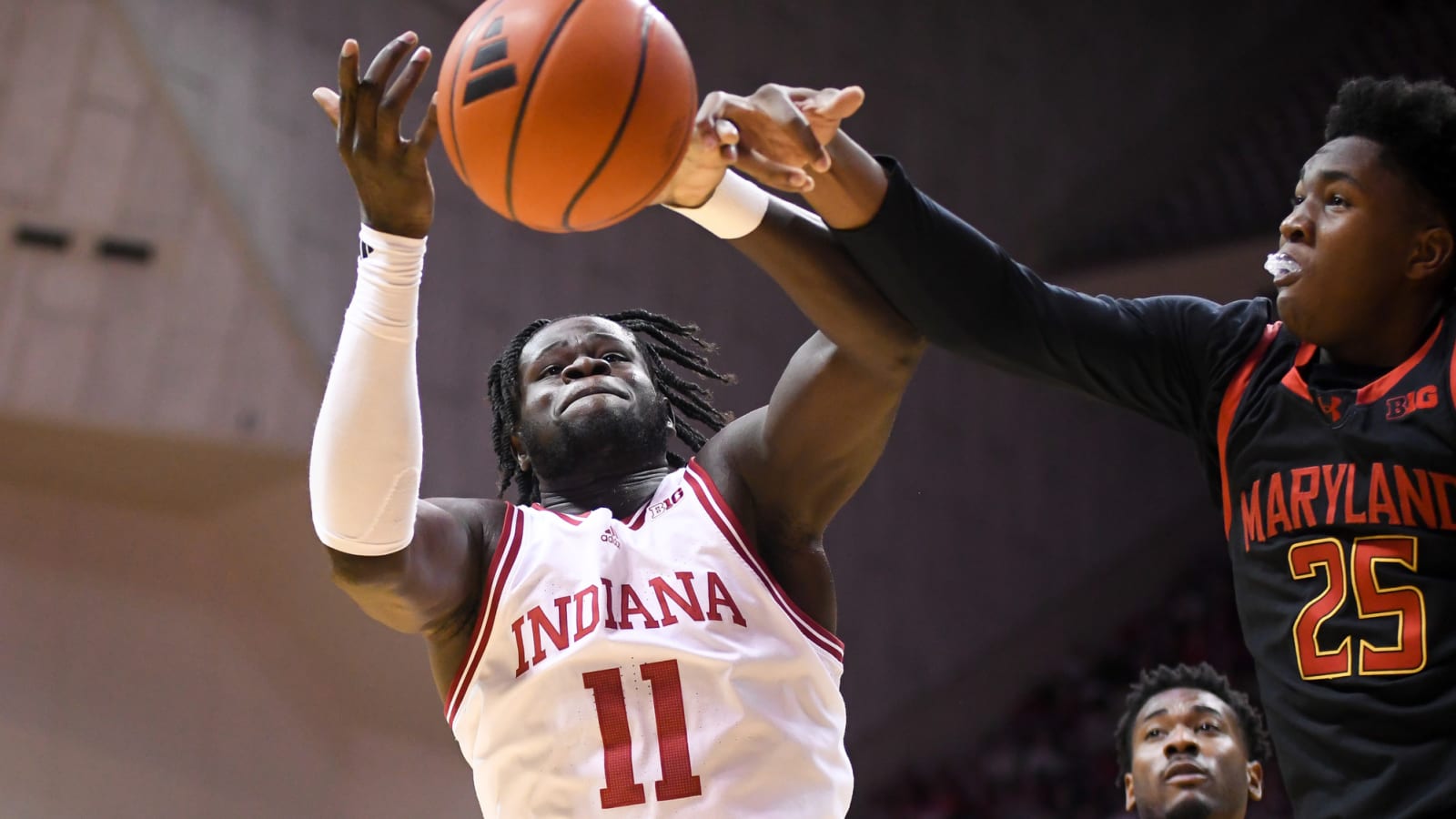
The 2025 Men's Big Ten Tournament kicks off at Gainbridge Fieldhouse in Indianapolis on March 12 with the first round of the tournament and finishes Sunday afternoon (March 16), right before Selection Sunday.
The new Big Ten Tournament layout only allows 15 of the 18 teams to make the conference tournament. This year, Nebraska, Penn State, and Washington were left out of the picture.
The top four seeds earned a two-day bye, while the 5-9 seeds will not await the winners of the first-round games from Wednesday.
The 2025 TIAA Big Ten Men’s Basketball Tournament bracket is set!
— Big Ten Men's Basketball (@B1GMBBall) March 9, 2025
Get your tickets: https://t.co/3mChgjOFhF pic.twitter.com/9Hqis2LMzL
Iowa Hawkeyes (15-seed)
The Hawkeyes squeezed their way into the tournament field on Sunday night. It has been a down year for them. Yes, they still have a top-25 KenPom offense, but their defense is the worst in the conference.
Part of their issues started in early February with leading scorer, Owen Freeman, undergoing finger surgery. Payton Sandfort still remains as the offensive leader on the court.
Positive takeaway: the Hawks can shoot the three around 38% as a unit and do not turn the ball over. If they get hot, they can make a run, but their defensive gaps may cause their demise.
USC Trojans (14-seed)
In Head Coach, Eric Musselman’s first year with the Trojans, they have not looked the sharpest at times. Like Iowa, this team boasts a top-40 KenPom offense, while ranking outside the top-100 in defense.
Desmond Claude leads the way on offense, averaging almost 16 points-per-game (PPG) with Wesley Yates III and Chibuzo Agbo shortly behind.
Positive Takeaway: USC has the length to match up with anyone. Although they have been on a slide, they have taken down both Michigan State and Illinois this year, so they could cause some matchup issues with most opponents throughout the field.
Northwestern Wildcats (13-seed)
Northwestern had a litany of key injuries, which now has them on the outside looking in for the NCAA Tournament for the first time in three seasons. Jalen Leeach and Brooks Barnhizer are both sidelined, so Nick Martinelli and Ty Berry must pick up the slack.
Positive Takeaway: Northwestern is pretty well-rounded, but they do boast a top-45 KenPom defense. They have a high defensive turnover rate, even though they play a slow game. That said, Martinelli will have to find a way around being the main target on offense to guard.
Minnesota Golden Gophers (12-seed)
The Gophers have been hit-and-miss this season. They have defeated Michigan, Oregon, and UCLA, but they have lost to Washington and Rutgers. Dawson Garcia is the rock of this team, averaging over seven rebounds with 19.1 PPG. If he can manage to remain at the top of his game, like Martinelli, he could help propel this team through the field.
Positive Takeaway: the Gophers have the slowest Adjusted Tempo in the conference. Fewer possessions could lead to a much smaller margin, even against the best of teams. If they can play their pace, the Gophers could make some teams uncomfortable down the stretch.
Rutgers Scarlet Knights (11-seed)
Rutgers is a true sleeper in this tournament because of Dylan Harper and Ace Bailey, who will both surely be lottery picks in the upcoming NBA Draft. This team played much better in conference play than earlier on. However, their last three wins were against the lower echelon of the Big Ten conference.
Positive Takeaway: Harper and Bailey could go on a run basically by themselves. Both average more than 17 PPG. These two need to run on all cylinders because this team is just not deep enough to contend with the likes of the top of the conference.
Ohio State Buckeyes (10-seed)
OSU is in the “Last Four In” according to Joe Lunardi’s latest bracketology. They desperately need a W in order to secure a March Madness birth. They do have a top-50 KenPom offense and defense, so this is pretty solid for the 10th-best team in the conference. They should have the motivation to take down Iowa in the first round, especially with being exponentially better on the defensive end of the floor.
Positive Takeaway: OSU can shoot over 37% from downtown, while holding opponents to just 30%. They do not turn the ball over and can distribute the ball evenly, so the offense is not top-heavy.
Indiana Hoosiers (9-seed)
Much like OSU, Indiana is barely on the inside of the tournament field, looking out, according to Joe Lunardi. This team has the size to contend with anyone in the Big Ten. That said, not being able to shoot and playing like it is 1990 has left them with little offensive wiggle room. The Hoosiers need a W over their first opponent (Oregon) to secure both a quality win and a likely spot in the NCAA Tournament.
Positive Takeaway: Indiana can score with Oumar Ballo, Malik Reneau, and Mackenzie Mgbako. All three could be a matchup nightmare. If they can get going inside, they could open up the three-point arc for more offensive opportunities.
Oregon Ducks (8-seed)
Oregon is pretty safely in the field, but they will be playing the Big Ten Tournament for NCAA seeding. They have a great resume with wins over Alabama, Maryland, and Wisconsin. They also have a top-40 offense and defense.
Positive Takeaway: Kwame Evans has been a boost to the front court. When this Ducks team gets its bigs going, they are hard to stop. Nate Bittle and Evans can play off of the attention centered around Jackson Shelstad. This is why Indiana has such a tough test on the interior in round two.
Illinois Fighting Illini (7-seed)
The Illini have finally started to look healthy. Morez Johnson, Jr. will be returning to the lineup, which would put them at 100%. Even still, the Illini have a bit of Jekyll and Hyde in them. They can beat Oregon on the road by 30-plus points, or they can lay an egg in primetime at Madison Square Garden for the biggest loss in program history.
Positive Takeaway: They might have the best depth in the conference, which could lead them to success in the Tournament. If they are launching and missing too many threes, they will be eliminated, but if they drive and kick, look out for them making another Big Ten Tournament run. If Johnson returns, the latter might be more possible.
Purdue Boilermakers (6-seed)
Purdue has the best player in the conference in Braden Smith. The junior guard is averaging 8.8 assists-per-game, while shooting about 40% from deep with 16.3 PPG. Trey Kaufman-Renn is no slouch, either.
Positive Takeaway: they have a top-10 offense. They can shoot the three and let Trey Kaufman-Renn handle the work in the post. The Boilermakers did go on a bit of a slide, losing five of their last seven, but do not dismiss this team when it is at its best.
Wisconsin Badgers (5-seed)
The Badgers are an old team…in a good way. Much like the 2024 Illini going on a run with an older roster, this team can do the same. They are disciplined on both ends of the floor. Do not have recency bias in their final loss to Penn State. Greg Gard will have this team poised for a run.
Positive takeaway: Their experience will carry them through the rest of the season. These guys have been there before and have multiple scoring options if one of their leaders is shut down.
UCLA Bruins (4-seed)
The Bruins are the first team with a bye and will not play until Friday. Yes, they could have a tough matchup if they see Illinois, but this team has one of the best defenses in the country. They are gritty and could give teams plenty of issues.
Positive takeaway: After losing four straight in early January, Mick Cronin got them back on track, where they only lost three games the remainder of the season thereafter. The Bruins have the defensive wherewithal to lock down any team in this field.
Michigan Wolverines (3-seed)
Dusty May propelled this team out of the gutter in his first season as head coach. The Wolverines also have a great defense, but their game excels with their two bigs: Vlad Goldin and Danny Wolf.
They did lose their last three games to Illinois, Michigan State, and Maryland (who they play on Friday), so the top of the conference might have their number at the moment.
Positive takeaway: Very few teams have been able to defend the two-man game with Danny Wolf and Vlad Goldin. Maryland is not an easy matchup with a solid post game, but if the Wolverines get past them, the title could be within reach.
Maryland Terrapins (2-seed)
Maryland has a well-rounded roster and has the bigs to defend Michigan’s twin towers. Derik Queen and Julian Reese are awesome in the front court and could cause immense stress for other coaches.
Positive Takeaway: The Terps have taken care of business at home and on the road. They can shoot inside and out and force turnovers, while maintaining control over the ball offensively. They have what it takes to win this tournament.
Michigan State (1-seed)
The Spartans are back atop the league and have played exactly as every successful Tom Izzo team has: by playing great defense and getting out in the open court. They can rebound on both ends of the floor. Yes, their three-point shooting is lacking (30.2%), but that has not seemed to be a roadblock for them, oddly enough
Positive Takeaway: MSU has the best team (and defense) in the conference. Izzo finally has the roster and depth he needs to make an NCAA Tournament run, not just a Big Ten Tournament run.
This should be a fun tournament to watch. Oregon, Purdue, and Illinois are the sleepers to win it, but MSU and Maryland look to be at another level entering March Madness.
Prediction: Michigan State over Maryland
MVP: Jase Richardson
More must-reads:
- Michael Malone gets first major win as North Carolina HC
- NCAA men's basketball champions ranked: Where do 2025-26 Michigan Wolverines place among past five national champions?
- The 'Most games played by MLB team' quiz





Customize Your Newsletter
 +
+




Get the latest news and rumors, customized to your favorite sports and teams. Emailed daily. Always free!
PRIVACY POLICY COOKIE POLICY CONTACT US
ABOUT YARDBARKER TERMS OF SERVICE


By using this site, you agree to our Terms of Service and Privacy Policy.
This site is for entertainment purposes only.
There is no gambling offered on this site.
Gambling Problem? Call 1-800-Gambler.
