
-

-


Follow Us
-

 On Facebook
 On Flipboard
 On Twitter
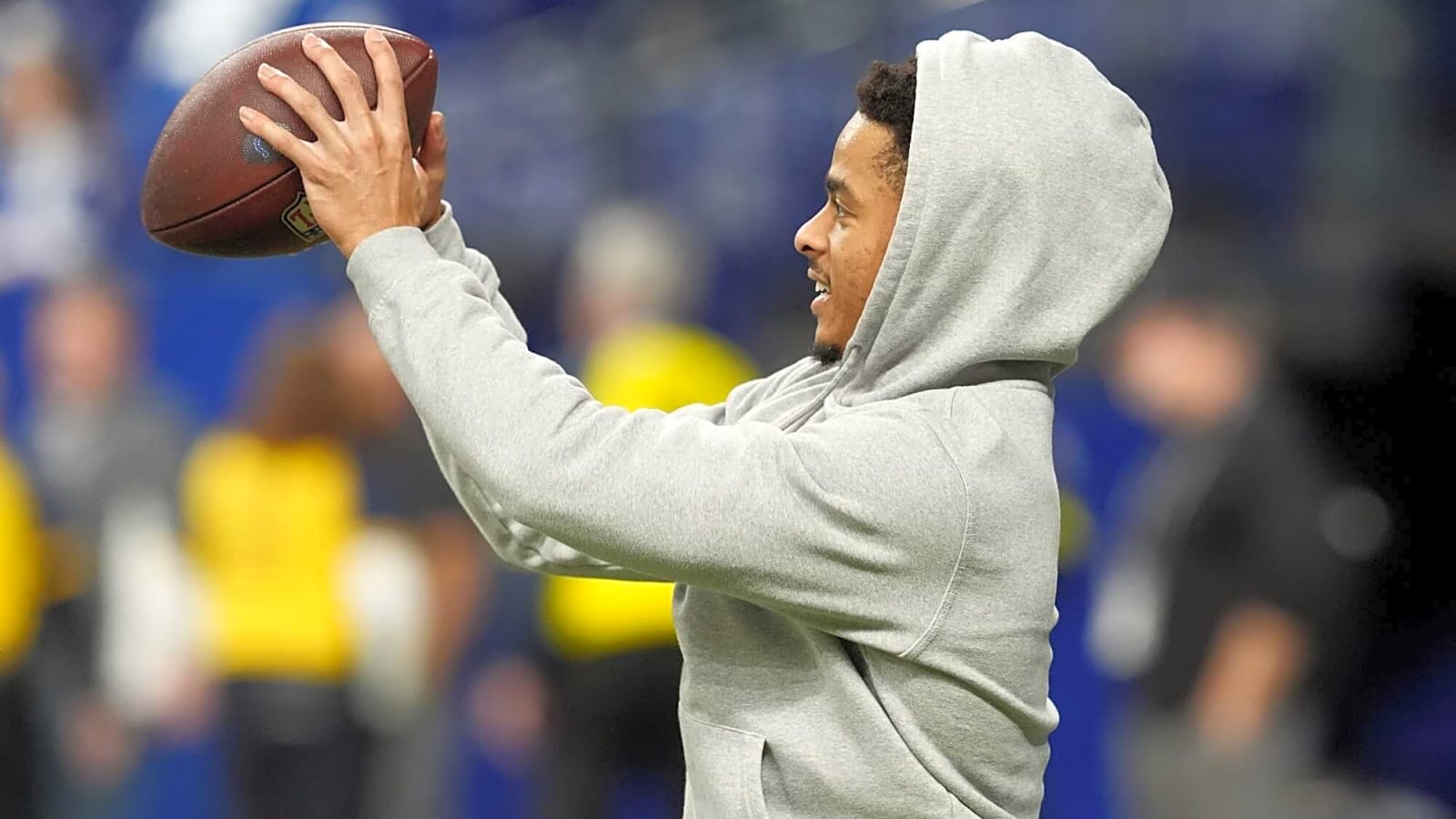
Just one college football game remains this season, and the NFL playoffs are in full swing. Most prospects have finished putting out tape in their college careers, so it’s time to officially unveil my updated position rankings for the 2026 NFL Draft.
Today I’m ranking my top 10 safeties, and this is a strong group. With a household name and blue-chip player at the top and tons of depth on Day 2, it’s one of the more loaded groups in this draft. Safeties traditionally don’t go very high relative to other positions, but at least one of these prospects will test that this year.
If you’d like to check out my other updated position rankings, you can do so below:
- Running Backs
- Wide Receivers
- Tight Ends
- Offensive Tackles
- Interior Offensive Linemen
- Edge Rushers
- Defensive Tackles
- Linebackers
- Cornerbacks
1: Caleb Downs, Ohio State
A consensus five-star recruit from Georgia and the younger brother of Colts WR Josh Downs, Caleb Downs began his collegiate career at Alabama. As a true freshman, he had 107 tackles, two interceptions, three passes defensed and a forced fumble, earning first-team All-SEC marks. After the season, he transferred to the Buckeyes where he had 81 tackles, two interceptions, six passes defensed and a sack as a sophomore, earning consensus first-team All-American and first-team All-Big Ten honors. As a junior in 2025, he once again garnered consensus first-team All-American recognition with 68 tackles, two interceptions, a pass defensed, a sack and two forced fumbles.
Checking in at 6-0, 205 pounds, Downs lines up all over the defense. He plays in the slot, in the box, and as a deep-field safety about equally, perfectly comfortable in all roles. His instincts are off the charts — he reads plays before they happen and as they develop as well as anyone, with an uncanny ability to blow up run plays before the concept is even fully realized. When he goes downhill, he explodes to the ball, arriving with a suddenness and violence that completely detonates the play design. Downs is a powerful, sure tackler who rarely whiffs and arrives to the ball under control despite his play speed.
In coverage, Downs has the fluidity and hip agility of a cornerback, capable of mirroring slot receivers in man coverage. He’s best deployed in zone, however, where he can put his plus awareness to best use. His range on the back end truly is sideline to sideline, and he has great ball skills to tip passes and force turnovers. At the catch point, he plays the ball well, rarely drawing flags but making the receiver feel his presence. Plus, Downs has the added benefit of being an electric kick returner, capable of housing punts and kickoffs.
As you often see with younger players, Downs has a tendency to be overaggressive, leading to some big plays the other way. There are times when he gambles and jumps routes, only to get bitten on a double move. He doesn’t do this often, but there are occasions when he goes for the highlight-reel hit and ends up missing the tackle, but this is a rare occurrence.
A true blue-chip prospect near the top of my board, Downs is as clean a prospect as you’ll find at any position. He’d be a surefire top-five pick if he didn’t play safety, but that’s the key to his draft stock. How high can a safety get drafted? Downs will test that question this year, both because of his talent and how weak a class this is at the top. There isn’t a ton of superstar talent in the top 15 of this class, and Downs could be one of the main beneficiaries of that. I’d be surprised if he drops out of the top 12.
2: Dillon Thieneman, Oregon
A three-star recruit from Westfield, Indiana, Thieneman has deep family connections to the Purdue program and committed there out of high school, the third of his brothers to play for the Boilermakers. He exploded onto the scene as a true freshman, racking up 106 tackles, six interceptions, two passes defensed and two forced fumbles, earning Big Ten Freshman of the Year and second-team All-Big Ten honors. As a sophomore, he followed that up with 104 tackles, six passes defensed and a sack, transferring to the Ducks after the season. As a junior in 2025, Thieneman had 92 tackles, two interceptions, five passes defensed and a sack, earning first-team All-Big Ten recognition for his efforts.
Standing at 6-0, 205 pounds, Thieneman is a plus athlete even by NFL standards. He can play as a deep safety in single-high schemes, down in the box, or in the slot, and both Purdue and Oregon used him as a defensive chess piece to create advantages. With the speed to run stride-for-stride with corners and receivers, he can close on the ball in an instant, erasing plays on the back end with incredible swiftness and decisiveness. Thieneman will get to his spot in an instant from anywhere on the field, slamming throwing windows shut and snuffing out screens and runs with consistency. He clearly puts the work in in the film room, diagnosing plays as they develop and always being in the right position.
As a tackler, Thieneman is both sure-handed and thunderous. He brings the boom in run support and in the secondary without sacrificing his fundamentals, with one of the lowest missed tackle rates in this safety class. With the ability to cover one-on-one in the slot or blanket huge swaths of open space deeper down the field, he’s a defensive coordinator’s dream. At the catch point, he plays with good instincts and natural hands, disrupting the receiver and playing the ball to create takeaways.
Thieneman does have a few limitations in man coverage, as he can get beaten underneath by smaller, twitchier athletes who can turn on a dime a little faster than he can. When playing closer to the line of scrimmage, he has a bad habit of overrunning run plays, failing to maintain gap integrity and allowing cutback lanes. As I said with Downs, he can be overaggressive at times going for big plays, but I’d expect a lot of that to get cleaned up as he gains more experience.
I’m going to be the high man on Thieneman. As a freshman, he was every bit as good as Downs — though with less of the spotlight on him in West Lafayette. He’s only gotten better since then and I think he can have a Nick Emmanwori-esque impact with his new team. There’s room to pack another five or 10 pounds on him without compromising his speed, and he can be a real weapon at the next level. I have a late-first-round grade on Thieneman and he’s firmly in my top 50.
3: Kamari Ramsey, USC
A four-star recruit from California, Ramsey committed to UCLA and redshirted in 2022 before becoming an impact starter as a redshirt freshman. He had 40 tackles, an interception and four passes defensed in 2023 and transferred to USC after the season. As a redshirt sophomore, Ramsey broke out with 60 tackles, an interception, five passes defensed, two sacks and two forced fumbles, earning significant draft buzz but choosing instead to return to school. In 2025, Ramsey had 27 tackles and two passes defensed in an injury-shortened season.
At 6-0, 205 pounds, Ramsey is a versatile defensive back who can play in the slot or at free safety. He’s cleaned up his tackling a lot as a redshirt junior, sacrificing flashy hits for sure plays and bailing out his teammates’ mistakes at times. In run support, he can fire downhill and make plays near the line of scrimmage, unafraid of the physicality in traffic and arriving to the ball with purpose. Ramsey plays with a level of aggression in his run fits that will endear him to drafting teams.
But coverage is where Ramsey will make his money, because he’s just so versatile and skilled. He has the man coverage abilities of a cornerback, able to mirror tight ends and slot receivers with fluidity and quickness. His short-area agility is top-notch and it lets him stay sticky in man coverage against even the shiftiest receivers the Trojans faced. When he gets to play from depth, he showcases advanced zone reading capabilities, comfortably playing soft coverage and triggering downhill in an instant to erase underneath routes and yards after the catch. At the catch point, he plays physical through the receiver without drawing flags, disrupting the timing and making plays on the ball himself.
At times, Ramsey can be a bit over-aggressive in his pursuit angles, taking himself out of plays as a result. His missed tackle percentage dropped significantly in 2025, but that was a smaller sample size, and he had issues with that earlier in his college career. Ramsey has also exclusively played in two-high schemes, and hasn’t shown the ability to be a true center-field safety that some NFL teams covet.
As a second-round pick, Ramsey has a lot to offer the league. He’s excellent in both man and zone coverages, capable of playing slot corner or safety in a two-high shell. He adds value in run support and won’t be overwhelmed physically against tight ends or bigger running backs. Ramsey’s reliability will be a big selling point for him as a prospect, as will his playmaking abilities on the back end.
4: Emmanuel McNeil-Warren, Toledo
A three-star recruit from Tampa, McNeil-Warren mostly played special teams as a true freshman for the Rockets before breaking out as a sophomore. In 2023, he had 68 tackles, two interceptions, three passes defensed and four forced fumbles. As a junior, he had 61 tackles, an interception, four passes defensed and a forced fumble. In his senior season this past fall, McNeil-Warren had 77 tackles, two interceptions, six passes defensed, three forced fumbles and a sack, earning first-team All-MAC honors.
At 6-2, 202 pounds, McNeil-Warren has plus length and athleticism in the secondary. He’s very fluid in space, with sharp change of direction skills and rapid acceleration that allows him to break on underneath passes and quick cuts to disrupt routes. He doesn’t give up a ton of separation over the middle of the field, baiting quarterbacks into dangerous throws before slamming those throwing windows shut. With his size, he can physically match up in man coverage with tight ends, matching their height and being disruptive through the route. He’s not afraid to mix it up in run support, flying downhill with thunderous physicality to deliver big hits.
McNeil-Warren’s best traits are his ball skills and ability to create turnovers. He has a knack for being in the right spot at the right time, and that’s a skill he’s clearly worked on. At the catch point, his long arms give him the reach advantage even against tight ends and taller receivers, and he times his jumps well to pick off passes. With eight career forced fumbles at Toledo, McNeil-Warren loves to punch out the football. When he sees a ball carrier with a loose grip, he seizes his opportunities.
Though he has the size to match up physically with bigger receivers and tight ends, McNeil-Warren can get exploited by smaller, shiftier slot receivers in man coverage. Though he plays a lot in the box, he struggles to get off blocks, lacking the strength to disengage and make tackles. His run fits are inconsistent and often poor, leaving wide-open cutback lanes when he overpursues.
I have a second-round grade on McNeil-Warren. He played in the box a lot at Toledo, but his best fit in the NFL may be as a deeper free safety. With great range and plus ball skills, he can be a turnover machine, especially when given the runway to keep his eyes on the quarterback and play downhill. The Rockets have been churning out NFL talent recently, and McNeil-Warren is another great prospect.
5: Zakee Wheatley, Penn State
A four-star recruit from Maryland, Wheatley redshirted in 2021 before spending the next two seasons in a reserve role for the Nittany Lions. When Kevin Winston Jr. went down with a season-ending injury early in 2024, Wheatley stepped into the starting lineup and never looked back. As a redshirt junior, he had 95 tackles, three interceptions, four passes defensed, a forced fumble and a sack. As a fifth-year senior in 2025, he had 74 tackles, an interception and a pass defensed.
Standing at 6-2, 200 pounds, Wheatley is a speedster at the safety position. He has true sideline-to-sideline range as a single-high safety, covering both sidelines and flying around the back end of the defense. His speed lets him trigger downhill on underneath routes with precision and excellent timing, blowing up passing lanes and making contact at the catch point without drawing flags. In zone coverage, Wheatley has excellent eyes, watching the quarterback without losing track of routes and always maintaining great positioning. When he has his opportunities, he will look to jump routes, with a knack for getting his hands on the ball.
Wheatley can play deep or in the box, and even has some reps as a slot corner. He has the fluidity and lateral quickness to play solid man coverage against tight ends, running backs, and even slot receivers. He has good ball skills and the body control to make tough catches, even in traffic. In run support, Wheatley delivers big hits routinely, never afraid to mix it up around the line of scrimmage and playing with the strength to bounce off of blocks and make tackles.
Though he’s good when mixing it up in run support, he tends to be overaggressive and can take himself out of plays. He’s a sure tackler when he gets his hands on someone, but he has a dangerous tendency to take poor angles in the secondary, leading to big plays when he fails to keep contain. In general, he can be a step slow reacting to plays as they develop, something that should hopefully improve as he gains more confidence.
I have a third-round grade on Wheatley. He’s a plus athlete with ball skills who can play deep or in the box, in multiple defensive schemes. That type of player has a ton of value, and he projects as a potential NFL starter, maybe even as a rookie. There will surely be ups and downs with him early in his career, but I like Wheatley as a potential value pick late on Day 2.
6: Bishop Fitzgerald, USC
A high school quarterback from Virginia, Fitzgerald began his college career at Coffeyville Community College in Kansas, transitioning to safety and starring at the junior college level, becoming the top JUCO safety transfer after just one season. From there, he transferred to N.C. State, racking up 42 tackles, two interceptions and three passes defensed in his first season with the Wolfpack. As a junior, Fitzgerald had 55 tackles, three interceptions, eight passes defensed and a forced fumble, earning honorable mention All-ACC recognition. He transferred to the Trojans as a senior in 2025, totaling 51 tackles, five interceptions, three passes defensed and a sack, being named consensus first-team All-Big Ten, though he missed the last few games of the season with an undisclosed injury.
Measuring in at 5-11, 205 pounds, Fitzgerald mostly plays at true free safety depth. He has the range to play in true single-high schemes, covering sideline to sideline with ease and speed. With the quick-twitch athleticism to mirror receivers in man coverage and the footwork to match receivers through their routes without false steps or wasted movement, he can blanket people man-to-man. At the catch point, he has incredible ball skills, timing his jumps perfectly and with the soft hands to haul in passes for interceptions that other safeties would simply knock down.
In zone coverage, Fitzgerald has keen instincts and an uncanny awareness of where receivers are and where the quarterback wants to go with the football. He’s a film junkie and diagnoses plays quickly, and he loves to bait quarterbacks into throws he knows he can get. When receivers enter his area, he crowds them out without making contact, disrupting timing and maintaining his positioning without committing penalties. Fitzgerald is a reliable tackler who won’t make mistakes and is comfortable playing as the sole last line of defense.
Fitzgerald is on the smaller side at just 5-11 and that shows up sometimes, particularly against tight ends. He can get crowded out at the catch point and loses a lot of leverage battles in those situations. Against the run, he routinely overruns plays and takes himself out of them, getting caught up in the wash of the blocking scheme without making an impact. He’s just not comfortable in traffic and is much better out in space.
I have a third-round grade on Fitzgerald. Teams that run a lot of single-high will love him, and he can moonlight at slot corner as well. His ball skills and penchant for creating turnovers are real, and he made a huge impact at every stop throughout college. Teammates and coaches rave about his mentality and preparation, something that NFL coaches will love to see. Fitzgerald has a great chance to go on Day 2 and be a starter early in his professional career.
7: A.J. Haulcy, LSU
A three-star recruit from Houston, Haulcy started at New Mexico, earning second-team All-Mountain West as a true freshman with 86 tackles, two interceptions, three passes defensed and two forced fumbles. He transferred to his hometown Houston Cougars for his sophomore season, totaling 97 tackles, three passes defensed and a forced fumble. As a junior, he had 74 tackles, five interceptions and seven passes defensed, earning consensus first-team All-Big 12 honors. Before his senior season, Haulcy transferred to the Tigers. Eighty-nine tackles, three interceptions, four passes defensed, and a forced fumble later, he earned consensus first-team All-SEC recognition.
Checking in at 6-0, 222 pounds, Haulcy is almost built more like a linebacker than a true safety. Even though he can play all over the defense, he logged most of his snaps at LSU last season as a deep safety, letting him play to his natural advantages and keep his eyes on the quarterback. He’s most comfortable in zone coverage, with natural instincts and the ability to fire downhill in an instant. Haulcy thrives breaking on underneath routes, putting his foot in the ground and blowing up the receiver when the ball arrives. He can track multiple routes through his area and knows how to play off route combinations while maintaining his leverage.
In run support, he consistently takes smart angles to the ball carrier, using the sideline to his advantage when he can and closing off space before bringing the ball carrier down. At the catch point, Haulcy uses his size to his advantage, creating turnovers and disrupting the receiver with consistency and timing. He can play in the box or from depth, making him a defensive coordinator’s best friend.
In man coverage, Haulcy struggles a lot more. He doesn’t have the flexibility or the twitchiness necessary to mirror receivers through their routes or break on the ball quickly. At times, you can see his lack of long speed come back to bite him, and he can’t really play as a single-high safety. Additionally, he misses a lot of tackles, a concerning trend for a player who has the size to be much more effective than he is.
Haulcy won’t be everyone’s cup of tea, but he has a lot to offer teams that run a lot of two-high looks. I have a third-round grade on him and in the right scheme, he could easily outplay that draft position. His feel in zone coverage is genuinely great and he’s a playmaker on defense who creates a lot of high-leverage plays. While I wouldn’t trust him in single-high looks and he could get exploited in man coverage, if his drafting team leans into his strengths, he can be a starter in this league.
8: Genesis Smith, Arizona
A three-star recruit who stayed in his home state, Smith played a limited role on defense during his true freshman season in 2023 before stepping up as a full-time starter as a sophomore. That year, he had 64 tackles, three interceptions, six passes defensed and two forced fumbles. As a true junior in 2025, Smith had 77 tackles, an interception, eight passes defensed and two forced fumbles, being named third-team All-Big 12.
At 6-2, 202 pounds, Smith is an incredibly versatile coverage piece on the back end. With a freakishly long wingspan and smooth transition abilities, he almost looks more like a corner out there, seamlessly matching receivers through their routes in man coverage. He has some twitchiness to his game that’s rare for taller safeties and it lets him break on passes with a quickness that catches quarterbacks by surprise. When firing downhill, he plays through the receiver’s hands with great timing to break up passes without drawing flags. Smith’s length at the catch point is a real asset and it gives him the leverage advantage against tight ends and wide receivers alike.
In zone coverage, Smith plays with good instincts and a natural feel for the game, recognizing route combos and making plays on the ball. His plus wingspan lets him hunt the middle of the field, threatening multiple routes at once and covering like a hawk. He has experience deep, in the box, and in the slot, adding to his versatility. But his best fit might be as a single-high deep safety, where his range and recognition abilities are put to best use.
Smith has two main weaknesses in his game: tackling and run support. He misses a lot of tackles, taking poor angles to the ball and failing to wrap up with proper technique. When faced with blockers in space, he does little to avoid them or beat their blocks, frequently getting washed out of the play with little resistance. Bigger backs can run through him despite his size, and Smith struggles to play with proper run fits, especially when he’s lined up closer to the line of scrimmage.
Even though Smith only has two notable weaknesses in his game, they’re pretty big ones. He’s largely a negative against the run and even playing from a deep single-high assignment, is a risk to blow a tackle and give up a long touchdown. I genuinely love his coverage tape, but I’m not sure how often he’ll get to put it to use if he doesn’t clean up the other half of his game. For now, I have a third-round grade on Smith, because I do think he’s that special in coverage.
9: Bray Hubbard, Alabama
A four-star high school quarterback in Mississippi, Hubbard committed to the Crimson Tide and immediately switched to defensive back. He mostly played special teams as a true freshman in 2023, but he stepped into a starting role midway through the 2024 season, putting up 57 tackles, three interceptions, two passes defensed and a forced fumble. As a junior in 2025, he had 74 tackles, four interceptions, eight passes defensed, three forced fumbles and two sacks, earning consensus first-team All-SEC honors.
Checking in at 6-2, 213 pounds, Hubbard is a great run defender from the safety position. He charges downhill to fill gaps, maintaining discipline and sticking to his assignment in the face of misdirection. He’s a strong tackler with good form and consistently delivers punishing hits, dealing damage in the hole and making ball carriers feel him. Hubbard can play in the box, at free safety, or as a slot corner, and has plenty of college experience at all three positions.
In zone coverage, Hubbard has good instincts and great route awareness. He knows how to play off multiple routes and is comfortable reading the quarterback while feeling routes entering his zone. With good closing speed, Hubbard fires downhill with authority, connecting with receivers as the ball arrives to deliver big hits and break up passes. At the catch point, he has great hands and consistently creates interceptions out of tougher catches.
With limited long speed, Hubbard really isn’t a fit as a single-high safety, and he can be exploited down the seams when matched up against faster slot receivers. His man coverage skills are lacking compared to what he can do in zone, and he has some hip stiffness and slow reaction speed that hampers his ability to be effective.
I have a mid-round grade on Hubbard. At worst, he can be a valuable special teamer, but I also think he can play as a box safety or even in a two-high shell. He’s a young player and new to the position, so he should continue to develop with more experience. Though he has his athletic limitations, there’s a lot to like about his game.
10: Michael Taaffe, Texas
A walk-on from Austin who turned down FCS offers to try out with his hometown program, Taaffe redshirted in 2021 and then played a depth role in 2022, earning a scholarship after the season. As a redshirt sophomore in 2023, he had 48 tackles, three interceptions and two passes defensed, earning honorable mention All-Big 12 recognition. In 2024, he upped that production with 78 tackles, two interceptions, 10 passes defensed, a forced fumble and two sacks. Choosing to return for his fifth-year senior season, Taaffe had 70 tackles, two interceptions, a pass defensed and a sack, being named first-team All-SEC.
Measuring in at 6-0, 189 pounds, Taaffe is a great zone defender. He reads and reacts quickly, diagnosing plays as they develop and triggering downhill to make stops. With plus acceleration and deceleration abilities, he can rapidly recover to the catch point or fire down from a deeper alignment to make plays on the ball. Taaffe is great at recognizing route concepts and baiting quarterbacks into bad throws to create turnovers, and he’s great at the catch point, playing bigger than his size and causing havoc.
In man coverage, Taaffe has some ability to mirror backs and tight ends and be competitive throughout the route. He’s a sure tackler who doesn’t whiff on the ball carrier often, and he’s a reliable deep safety as the last line of defense. He knows how to disrupt receivers throughout their routes without drawing flags and can pinch multiple routes in zone without losing track.
Taaffe is a pretty limited lateral athlete. He struggles mightily in man coverage against slot receivers and gives up a lot of separation off quick breaks — even in zone coverage. Against the run, he has the tendency to get washed out by the blocking scheme and doesn’t have the size or strength to be competitive against pulling offensive linemen. In fact, he’s sometimes boxed out at the catch point because of his limited frame and reach, giving up plays that bigger safeties would disrupt.
I have a late-round grade on Taaffe. Early in his career, he can be a plus special teamer and quality secondary depth with room to grow into a starter down the line. He won’t wow anyone with his athleticism or his physicality, but he’s a cerebral player with good instincts who has a nose for the football. That can play in the NFL, and Taaffe could find a key starting role at some point in his career.
More must-reads:
- Virginia women’s team makes NCAA Tournament history
- Randy Bennett is a great hire for Arizona State Sun Devils
- The 'Most 5-three-pointer NBA games' quiz
Breaking News
Trending News





Customize Your Newsletter
 +
+




Get the latest news and rumors, customized to your favorite sports and teams. Emailed daily. Always free!
PRIVACY POLICY COOKIE POLICY CONTACT US
ABOUT YARDBARKER TERMS OF SERVICE


By using this site, you agree to our Terms of Service and Privacy Policy.
This site is for entertainment purposes only.
There is no gambling offered on this site.
Gambling Problem? Call 1-800-Gambler.
