x
20 classic movies they show you in film school
The Criterion Collection

20 classic movies they show you in film school

I'm going to just start by saying it: you don't need to attend film school to be a film connoisseur. In the digital age, you have film school at your fingertips, with every imaginable movie available to stream or rent and every source of movie information practically online. Why go to class when you can watch a classy movie from home? For those interested in cinema history, we've made a list of films they show you in film school so you can ditch the backpack, the dreary professor, and enjoy the same wonderful films without the terribly tedious slideshows.

 
1 of 20

City Lights (1931)

City Lights (1931)
United Artists

The greatest rom-com ever made. Charlie Chaplin's tale of a tramp and a blind girl is eye-opening for its romance, empathy, and endearing use of slapstick comedy. Without doing the most visually, this silent comedy speaks volumes to the power of a great screenplay, in which the central characters are so powerfully moving they make you weep tears of joy when the couple finally gets their flowers.

 
2 of 20

Breathless (1960)

Breathless (1960)
The Criterion Collectin

There would be no Instagram Reels without Breathless. You can thank this freewheeling film for our short attention spans, Scorsese montages, Nolan dream sequences, and pretty much every action film to follow. When Jean-Luc Godard set out to make his first film, he decided to reinvent the cinematic wheel with short-cut editing, since he found the blockbuster melodramas of the era to be staid and slow. The result is a reinvention of the noir gangster flick, with a bank robber and femme fatale setting the stage for a jazzy, spontaneous, eye-catching drama that does indeed leave you breathless.

 
3 of 20

The Godfather (1972)

The Godfather (1972)
Paramount Pictures

Watching The Godfather with a glass of wine at home, alone with the lights out, instead of at film school is an offer you can't refuse. It's so easy to be whisked away by Francis Ford Coppola's mafia epic, in which a family gets caught up in a mob war that leaves blood trickling down ripe oranges, horses beheaded in bed, and some of the most influential uses of lighting, editing, and storytelling to ever grace the screen. 

 
4 of 20

2001: A Space Odyssey (1968)

2001: A Space Odyssey (1968)
Warner Bros.

Stanley Kubrick's space odyssey exists in a whole 'nother universe than any other science fiction film. While we don't recommend film students try to reenact this film (not at first, at least), the operatic, opulent, mind-bending space waltz through the course of human history is a must-see for anyone serious about studying the space of film.

 
5 of 20

Rear Window (1954)

Rear Window (1954)
Paramount Pictures

It's often said you can learn everything you need to know about making movies just by watching Alfred Hitchcock. While that might be a stretch, the master of suspense does deliver a masterclass in masterfully taut horror films. In Rear Window, a man witnesses a murder from his window, catapulting potboiler tension as he tries to crack the case from his crackpot ideas. 

 
6 of 20

Notting Hill (1999)

Notting Hill (1999)
Universal Pictures

Yes, we put Notting Hill before Citizen Kane on this list. Anyone who has slander about Notting Hill  can fight me in the comments below! One of the great rom-coms, about a movie star falling in love with the awkward, foppish bookstore owner, this movie is bursting with romance, humor, meta commentary, and genuine cinematic poetry that's perhaps even more colorful than the neighborhood's pastel-hued buildings. Julia Roberts has never been better than this fractured-mirror version of herself, raw, gorgeous, damaged, beautiful, and glowing with a smile worthy of a Crest toothpaste commercial.

 
7 of 20

Citizen Kane (1941)

Citizen Kane (1941)
RKO

The first movie you think of when you think of film school, Citizen Kane, wrote the rules of the cinematic game while directors were still learning how to read. Orson Welles ' tale of a newspaper titan mogul and his pathetic life is the rosebud for many directors, citing what made them want to make movies. Inventing the deep-focus shot, expanding the possibilities of movie editing, storytelling, and cinematography, Citizen Kane is the poster child for film schools for a reason.

 
8 of 20

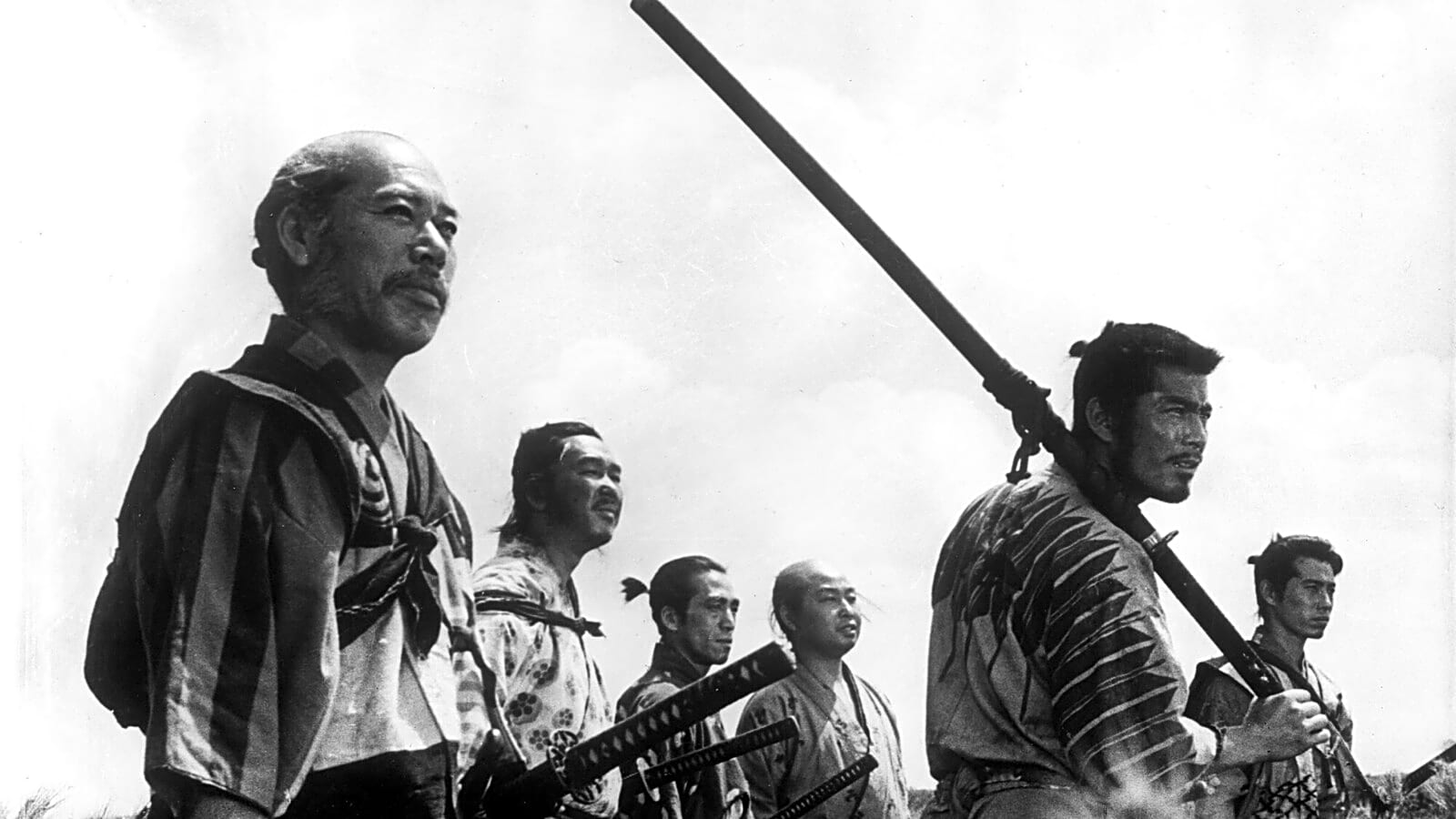
Seven Samurai (1954)

Seven Samurai (1954)
The Criterion Collection

Most of you who took a film class probably were introduced to Akira Kurosawa at some point. Any film professor who doesn't discuss Kurosawa is like a history teacher who doesn't discuss the Mayflower--how are people going to know how we got here? The samurai films of Kurosawa helped invent everything from the Western to Star Wars, creating intricate ensemble pieces inspired by Shakespeare that featured monumental action sequences, character arcs, screenplays, and, with this drama of seven samurai defending an innocent town, an incredible tonal balancing act that slices through monotonous cliches.

 
9 of 20

Moonrise Kingdom (2012)

Moonrise Kingdom (2012)
Focus Features

Film studies professors are fans of auteurs, as is anyone who is tired of watching the same monotonous drivel in movie theaters. In the films of auteurs, you get a unique style personal to the director, as seen in Wes Anderson's films. While his style has gone a little overboard of late, Wes Anderson's movie about a tween couple on the run showcases the director's quirky aesthetic, color palette, costumes, symmetrical framing, and dry delivery at their best.

 
10 of 20

Metropolis (1927)

Metropolis (1927)
The Criterion Collection

I know what you're thinking--who wants to watch a silent black-and-white movie made 100 years ago today? It's a valid question, but once you watch this Orwellian dystopia of a movie, you can understand how the science fiction movie got its start. It's incredible how well Fritz Lang's tragedy holds up, centering on a future where humans are literal cogs in a machine keeping the bustling metropolis alive. 

 
11 of 20

The 400 Blows (1959)

The 400 Blows (1959)
The Criterion Collection

The French New Wave exploded onto the scene with this spontaneous slice-of-life about a tween boy growing up in Paris, ditching school and fighting with his divorced parents. A stunningly realistic yet miraculously joyous production, Francois Truffaut reinvented cinema with this autobiographical tale that ditched blockbuster opulence in favor of what we now call indie aesthetics. The final close-up, in which Truffaut's muse stares directly at the camera, is one of those movie moments that sticks with you from childhood to your elderly years.

 
12 of 20

Amarcord (1973)

Amarcord (1973)
The Criterion Collection

There simply cannot be a Film Studies 101 class without Federico Fellini; it just wouldn't be an official class, if you ask me. There may be no greater influence on modern directors (Scorsese, Coppola, Spielberg, Wes Anderson) than Fellini, who brought almost impossible fantasy, energy, creativity, and meta magic to the screen. While you are likely to watch 8 1/2 or La Strada as a movie in film school, I recommend my desert island film, Amarcord, a whimsical childhood reminisce that could not have been made by anyone else.

 
13 of 20

Taxi Driver (1976)

Taxi Driver (1976)
Columbia Pictures

I don't envy the film professor who has to pick just one Scorsese movie to show the class. There are so many classic Scorsese movies to choose from. But the most common film shown in film schools by the director is Taxi Driver, a perilously bleak look into the mind of a bullied psychopath who eventually ditches his taxi gig for mass murder.

 
14 of 20

Hereditary (2018)

Hereditary (2018)
A24

A modern classic on our list, Hereditary exemplifies the best of modern horror. Centering on a troubled family even Tolstoy would be hesitant to write about, Hereditary's family tree has some rotting branches, to be sure, and Ari Aster directs their grief with pulse-pounding uses of noise, set design, cinematography, and folk horror that depicts a dollhouse collecting mold.

 
15 of 20

Bicycle Thieves (1948)

Bicycle Thieves (1948)
The Criterion Collection

Forget the tissues; bring a towel for the waterfall of tears that occurs while watching Bicycle Thieves. Arguably the most gut-wrenching film ever made, Bicycle Thieves is a drama made in the neo-realist style, which stemmed from post-war Italy when directors decided to make realistic films about everyday people trying to survive in a war-torn country. This example, about a boy and father putting up posters around Rome, is incredibly well made, yet the film's despairing ending might have the wheels spinning in your head long after the bicycle is gone.

 
16 of 20

Barbie (2023)

Barbie (2023)
Warner Bros.

Believe it or not, they are showing Barbie in film schools now. There are few modern blockbusters with this much auteur flair, rooted in the unique artistic vision of Greta Gerwig. This Barbie is anything but plastic, with some of the funniest comedic moments, coolest set designs, and, hands down, one of the most sublime comedic roles ever with Ryan Gosling as Ken.

 
17 of 20

Lawrence of Arabia (1962)

Lawrence of Arabia (1962)
Columbia Pictures

I'm not sure there are enough hours in a film class to cram this four-hour film, but film professors still find a way. David Lean's magnificent blockbuster about a warlord in Arabia driven by greed is about as epic as movies get, bolstered by grand vistas and opulent cinematography, but the movie equally excels at being an intimate character study about a man lost in the sinking sands of his own ambition.

 
18 of 20

Jaws (1975)

Jaws (1975)
Universal Studios

Steven Spielberg invented the blockbuster not with mundane superheroes in tights or action stars shooting up bad guys, but with a confined thriller about a shark infesting tourist waters. Spielberg's taut direction drew on the theory that what isn't shown in horror movies is scarier than what is, and audiences showed up in droves. Jaws still opens wide at the sight of Spielberg's Jaws on the cinema screen.

 
19 of 20

The Searchers (1956)

The Searchers (1956)
The Criterion Collection

We just wouldn't be writing a film school movie list right without a Western, I reckon. John Ford turned Monument Valley into a cinematic landscape of monuments, his best film being this Western about a kidnapped girl and the man who sets out to find her. Caught between the doorway of civilization and the outskirts of heroism, the hero of The Searchers is a cinematic classic, backdropped by the sweeping vistas, swooning scores, and symphonic, melodramatic poetry that are characteristic of John Ford.

 
20 of 20

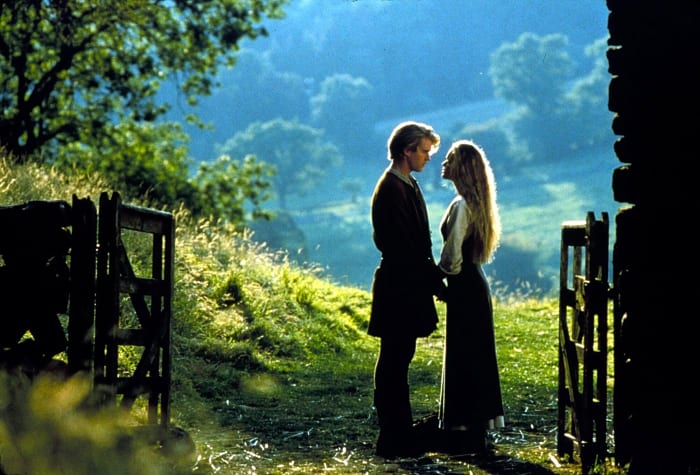
The Princess Bride (1987)

The Princess Bride (1987)
MGM

Is there a better fantasy movie out there? Inconceivable! The Princess Bride has action, romance, true love, and humor galore in one of the most wonderful romance movies out there. 

More must-reads:

Customize Your Newsletter

Yardbarker +

Get the latest news and rumors, customized to your favorite sports and teams. Emailed daily. Always free!