Breaking into the music industry is an artist's dream—but attaining success, or even just staying in it, often comes with strings attached. From predatory contracts and unpaid royalties to battles over masters and creative control, many artists quickly learn that success can come at a steep cost. While some play the long game, others choose to speak up, push back, and risk it all to reclaim their power. Let's take a look back at some memorable moments when artists took a stand against the music industry.
1 of 20
Raye's debut album delay
Jim Dyson/Redferns
In 2021, singer-songwriter Raye took to Twitter to call out her label Polyador Records for delaying the release of her debut album, even though she had been signed to them over the previous seven years. She started her tweets, saying “Imagine this pain. I have been signed to a major label since 2014... and I have had albums on albums of music sat in folders collecting dust, songs I am now giving away to A-list artists because I am still awaiting confirmation that I am good enough to release an album.” A few weeks later, Raye amicably split from the label, so she could finally focus on giving fans some music.
Nigel Wright/Mirrorpix/Getty Images
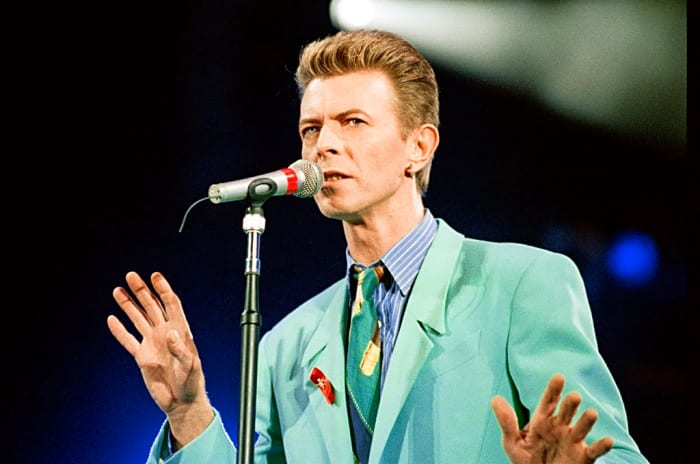
David Bowie was always the type of artist who would advocate for others, and he did just that in 1983 when he sat down for an interview with VJ Mark Goodman. He questioned why MTV wouldn’t play music videos by Black artists, and if they did, it was played in the middle of the night. He said, “It occurred to me, having watched MTV over the last few months, it's a solid enterprise, and it's going a lot going for it. I'm just floored by the fact that there are so few Black artists featured on it. Why is that?" Naturally, Goodman tried to explain how the network was attempting to be more diverse, but one could tell that Bowie wasn’t buying that explanation.
Dimitrios Kambouris/Getty Images
In 2025, pop singer Chappell Roan won the Grammy Award for Best New Artist. When she approached the stage for her speech, she used her time to call out the music industry’s unfair labor practices. She started her speech saying, “I told myself that if I ever won a Grammy and got to stand up here before the most powerful people in music, I would demand that labels in the industry profiting millions of dollars off of artists would offer a livable wage and health care, especially to developing artists.”
4 of 20
TLC exposes financial exploitation
Vinnie Zuffante/Getty Images
TLC is still the biggest-selling girl group in the U.S., but in 1996, they had nothing to show for it. Even with multiple Grammy Awards and selling over 10 million albums, the group filed for Chapter 11 bankruptcy. TLC said they were over $3.5 million in debt, and their contract indicated that they would only receive 56 cents per album sold (which had to be split three ways). After a couple years of legal battles with their management company Pebbitone and label LaFace Records, TLC finally renegotiated their contract.
Sean Gallup/Getty Images
In 1992, George Michael sued his record label Sony and alleged that the contract he signed a few years prior made him bound to them for 20 years and didn’t give him any control over the marketing. The judge ruled in favor of the label with claims that the contract was fair and Michael understood the terms upon signing it.
6 of 20
The Weeknd calls out the Grammys
Dimitrios Kambouris/Getty Images for REFORM Alliance
The Weeknd’s fourth album After Hours was one of the most successful albums of 2020. So imagine the superstar's surprise when he found out his album didn’t receive any nominations for the Grammy Awards. He called the organization “corrupt” and decided to boycott by not making any ceremony appearances and refusing to submit hit music for future nominations. However, in 2025 the feud between the parties was seemingly put aside when The Weeknd showed up for a surprise performance.
7 of 20
Metallica vs. Napster
Kevin Winter/Getty Images
An infamous legal battle that shook the music industry to its core unfolded in 2000 when heavy metal band Metallica decided to sue the file-sharing platform Napster for copyright infringement. A demo of one of the band’s songs appeared on the platform well before the song was to be released publicly, which caused the suit to be filed. The band and their representatives found out Napster had their entire catalog — as well as unreleased tracks, like the aforementioned demo — on the platform available to download for free, which in turn would result in musicians not being able to make a profit off their work. Metallica ended up winning the lawsuit, and a few years later, Napster stopped sharing free music and shut down.
Amy Sussman/Getty Images
In 2020, rapper Megan Thee Stallion sued her former record label 1501 Certified Entertainment for breach of contract, prevention of releasing new music, and insisted that her project Something For Thee Hotties didn’t meet their definition of an “album.” After a three-year legal battle, the parties settled and parted ways.
Scott Kowalchyk/CBS via Getty Images
In 2019, record executive Scooter Braun purchased the label Big Machine Records, Taylor Swift’s previous label. Due to the purchase, Braun owned the master recordings to Swift’s first six albums, music videos, and artwork that were copyrighted under the label. Although Swift attempted to buy the masters from Big Machine, the two parties could never come to an agreement, prompting the singer to re-record the albums, which in turn would allow her to own the new masters. When Braun sold the original masters to investment firm Shamrock Holdings, Swift ended up coming to an agreement with the new buyer, which allowed her to finally own her original recordings.
10 of 20
Oliva Dean vs. Ticketmaster
Michael Loccisano/Getty Images for iHeartRadio
In 2025, Olivia Dean announced she was going on tour, and by the time tickets were on sale (and promptly sold out), fans were furious about resellers and their astronomical prices. Dean heard her fans loud and clear, and called out Live Nation and Ticketmaster about her tickets being resold at inflated prices and called for the need for better regulation on the resell market. Ticketmaster responded to Dean’s comments and decided to cap resale prices at face value. If only other artists would do the same, the concert-buying process would be a lot better for fans everywhere.
11 of 20
Neil Young pulls music from Spotify
Emma McIntyre/Getty Images for SiriusXM
In 2022, Neil Young made headlines about protesting against Spotify and its distribution of podcaster Joe Rogan. The podcaster was widely criticized for spreading misinformation about COVID-19 vaccinations on his podcast, which prompted several artists including Young to take a stand against Spotify. Young ultimately decided to remove all of his recordings from the streaming giant.
THIERRY ORBAN/Sygma via Getty Images
In the early 2000s, Michael Jackson called out Tommy Mottola, the former CEO and Chairman of Sony Music, for racism, exploitation, and insignificant promotion of his final album, Invincible. Jackson also publicly accused the music industry of stealing from artists, particularly Black artists, but Mottola and his Sony team disputed the singer's claims.
13 of 20
Halsey calls out the Grammys
Axelle/Bauer-Griffin/FilmMagic
In 2020, Halsey called out the Recording Academy for not receiving any nominations for the 2021 Grammy Awards. Halsey claimed that the organization was corrupt, alleging that artists can only get nominations through tricks and secret cliques. In a series of social media posts, Halsey said, "The Grammys are an elusive process. It can often be about behind the scenes private performances, knowing the right people, campaigning through the grapevine, with the right handshakes and 'bribes' that can be just ambiguous enough to pass as 'not-bribes'. And if you get that far, it's about committing to exclusive TV performances and making sure you help the Academy make their millions in advertising on the night of the show."
14 of 20
Thom Yorke vs. Spotify
Elisabetta Villa/Getty Images for RFF
In 2013, Radiohead frontman Thom Yorke pulled his music from streaming giant Spotify. Yorke claimed the platform screws over new artists by not paying them fair profits, while at the same time giving huge pay cuts to major labels and shareholders. Spotify defended their model as being fair to artists and shareholders alike.
Simone Joyner/Getty Images for ABA
In early 2025, rapper Drake sued Universal Music Group for defamation and harassment, and claimed that the label promoted Kendrick Lamar’s diss track “Not Like Us,” which led to his reputation being damaged. In late 2025, a federal judge dismissed the case, but in early 2026, Drake decided to appeal the dismissal. As of January 2026, the appeal is ongoing.
Paul Bergen/Redferns
Pearl Jam is a band of the people and called out Ticketmaster for issuing unfair fees as far back as the 1990s. In 1994, Pearl Jam testified before Congress claiming Ticketmaster was using an illegal monopoly by taking down other ticketing platforms, which ultimately drove up ticket costs for fans by adding higher service fees. Pearl Jam wanted to keep their tickets affordable for customers, but Ticketmaster remained adamant about pricing and fees. In the end, the Department of Justice didn’t find an antitrust violation, and Pearl Jam had to continue using Ticketmaster for future tours.
17 of 20
Little Richard's “Tutti Frutti” case
Lester Cohen/ Getty Images
In 1955, Little Richard signed with Speciality Records and went on to profit $25,000 from the initial sales of his hit “Tutti Frutti.” Richard later found out that his contract only deemed him to receive half a cent for every record sold, prompting him to believe he missed out on millions of dollars with his hit songs. In 1984, Richard sued Specialty Records for unpaid royalties, and the two parties eventually settled out of court.
18 of 20
Salt-N-Pepa’s legal battles for their masters
Theo Wargo/Getty Images for RRHOF
In 2025, rap group Salt-N-Pepa was inducted into the Rock and Roll Hall of Fame. During their induction speech, they spoke on how the industry has prevented them from owning their masters. Earlier in the year, the group filed a lawsuit against Universal Music Group to reclaim the rights to their songs and claimed the music label pulled their music from streaming platforms as a retaliation ploy. In 2026, a federal judge dismissed the lawsuit, but Salt-N-Pepa stated they will be working to appeal.
Michael Ochs Archives/Getty Images
In 2017, Paul McCartney sued music publisher Sony/ATV over the rights to hundreds of The Beatles’ songs he penned alongside John Lennon. Instead of going through with a lengthy legal battle, the music publisher settled with McCartney to regain his U.S. copyright ownership of the songs.
20 of 20
Will Smith and Jazzy Jeff boycott the Grammys
John Phillips/Getty Images
In 1989, Will Smith and DJ Jazzy Jeff were nominated for Best Rap Performance at the Grammy Awards for their single "Parents Just Don't Understand." This was a brand new category for the Recording Academy, and Smith and Jeff were excited about the recognition. However, once they found out the category wasn't going to be televised, they decided to boycott the ceremony. Other artists such as LL Cool J and Salt-N-Pepa also joined them in the boycott. Jeff stated, "They said there wasn’t enough time to televise all of the categories. They televised 16 categories and, from record sales, from the Billboard charts, from the overall public’s view, there’s no way you can tell me that out of 16 categories, that rap isn’t in the top 16.”
Although they didn't attend the ceremony, they ended up winning the award.





 On Facebook
 On Flipboard








 +
+






