
-

-


Follow Us
-

 On Facebook
 On Flipboard
 On Twitter
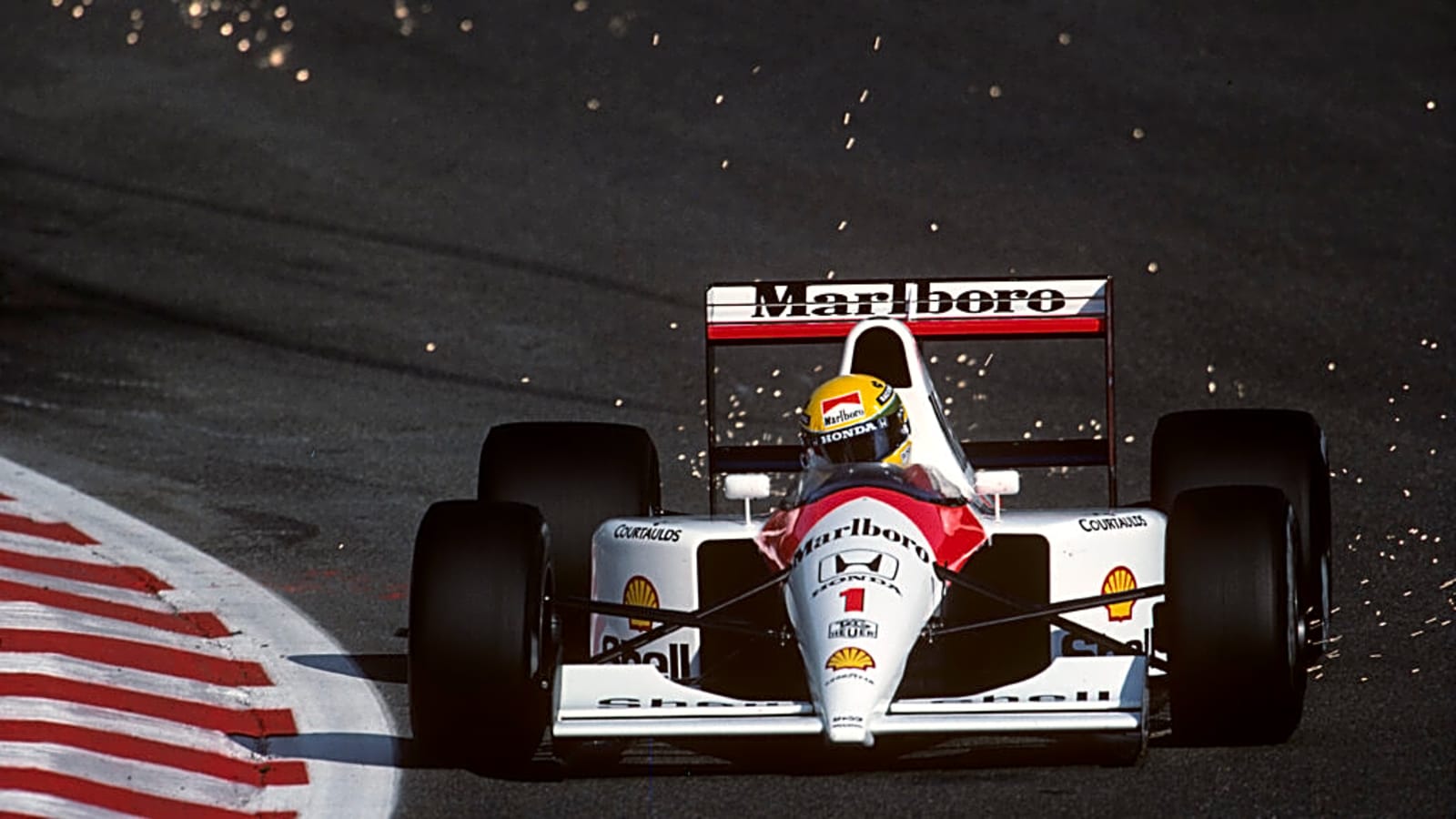
The McLaren MP4/6-1 that Ayrton Senna somehow wrestled to victory at the 1991 Brazilian Grand Prix, despite being stuck in sixth gear for the final laps, is heading to auction with an expected price tag between £9 million and £11.5 million.
This isn’t just any Senna car. This is chassis number one, the very first MP4/6 ever built, and it’s the machine that finally gave Senna his elusive home victory after seven crushing failures. RM Sotheby’s will run a sealed auction between December 8 and 11, and collectors are expected to fight hard for what might be the most emotionally significant race car of Senna’s career.
The dramatic race that made this car legendary
Senna was already a two-time world champion heading into the 1991 Brazilian Grand Prix, but victory at Interlagos had eluded him on seven previous attempts. The race looked like it might slip away again when his manual gearbox started failing, leaving him trapped in sixth gear while leading.
Somehow, Senna prevented the 3.5-litre V12 from stalling through the slower corners, managing throttle and clutch with precision that bordered on the supernatural. He held off Riccardo Patrese’s semi-automatic Williams FW14 to finally win at home, and the post-race footage of an exhausted, emotional Senna remains one of Formula 1’s most iconic moments.
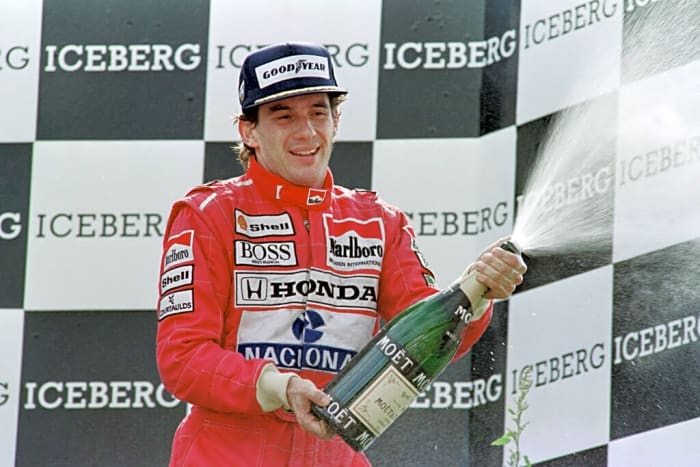
The car was tested at Estoril in February 1991 by both Senna and Gerhard Berger, but Brazil was its only race outing. After Senna and McLaren wrapped up the championship that season, chassis MP4/6-1 was retired and spent nearly 30 years at McLaren’s headquarters before being sold in 2020.
Fully race-ready and ready to drive
Here’s where things get interesting. Before its 2020 sale, McLaren Heritage fully recommissioned the car to race-ready condition, and it’s being delivered to Lanzante for inspection and startup before heading to its new owner. This isn’t a static display piece, it’s ready to run.
The listing includes all necessary starting equipment: external starter, water tower, remote dash, fuel primer, and engine pre-heater. It comes with a McLaren Certificate of Authenticity, and the fact that it’s genuinely drivable adds significant value in a market where most historic F1 cars are trailer queens.
This is also the last V12-engined, manual gearbox car to win an F1 World Championship, making it historically significant beyond just the Senna connection. That combination of factors, the drama of the race, the technical specifications, and the proven provenance, explains the eye-watering price estimate.
How it compares to the F1 auction market
The £9m to £11.5m estimate places the MP4/6-1 firmly in the upper tier of modern F1 car sales, though it won’t threaten the all-time records. The most expensive F1 car ever sold remains the 1954 Mercedes W196R Streamliner driven by Juan Manuel Fangio and Stirling Moss, which fetched a staggering €51.155 million ($53.9 million) at RM Sotheby’s Stuttgart auction earlier in 2025.
The most important Senna car ever offered.
— RM Sotheby's (@rmsothebys) November 3, 2025
Senna’s MP4/6 prototype is coming to market this December through RM Sotheby’s Sealed. This is the Brazilian GP winner from 1991. The V12. The car that carried him to his emotional first home win and pushed him toward his third and… pic.twitter.com/SiHwEDWPhB
Lewis Hamilton’s 2013 Mercedes W04, his first race-winning car with the Silver Arrows, sold for $18.815 million in 2023 and remains the most expensive modern-era F1 car. Michael Schumacher’s championship-winning cars have also commanded massive prices, with his 2001 Ferrari F2001 selling for €15.98 million ($18.4 million) at Monaco in May 2025, and his 2003 F2003-GA going for $14.88 million in 2022.
The Senna McLaren sits comfortably among other significant auction results. Jody Scheckter’s championship-winning 1979 Ferrari 312 T4 sold for €7.655 million in 2024, while another Hamilton car, the 2010 McLaren MP4-25A, went for £4.8 million in 2021. Senna’s 1993 McLaren MP4/8A, which he drove to his record sixth Monaco victory, sold for just £3.6 million in 2018, a price that now looks like a bargain.
McLaren’s bold auction move
The Senna auction comes as McLaren makes unprecedented moves in the collector car market. The team announced in October that it will auction off one of its 2026 F1 cars, a chassis that hasn’t even been raced yet, at the Abu Dhabi Grand Prix with an estimated price of £7.6 million to £9.1 million.
The lucky buyer won’t receive their car until the first quarter of 2028, due to strict regulations preventing rivals from gaining access to relevant intellectual property during the 2026 technical regulation changes. In the meantime, McLaren will provide a 2025 non-running show car for display purposes.
That sale is part of a historic Triple Crown auction that also includes an IndyCar and World Endurance Championship Hypercar chassis, celebrating McLaren’s unique achievement as the only manufacturer to have won all three of motorsport’s great races.
Why collectors pay these prices
The market for historic F1 cars has exploded in recent years, driven by collectors who have both the resources and the facilities to maintain these incredibly sophisticated machines. Ferrari, McLaren, and Williams have all created dedicated heritage divisions that offer technical support and maintenance services, making ownership more feasible for those with deep enough pockets.
Provenance matters enormously in this market. Cars driven by legends like Senna, Schumacher, and Fangio command the highest prices, especially when they’re tied to championship-winning seasons or iconic race victories. The number of races won, the significance of those victories, and whether the car contributed to a title all factor into valuations.
What a moment :raised_hands::flag-br:#OnThisDay in 1991, Ayrton Senna won his first #BrazilGP :trophy:#F1 pic.twitter.com/UqPJN4exRK
— Formula 1 (@F1) March 24, 2020
Peter Haynes, marketing and communications director at Sotheby’s, told PlanetF1 that “Ferrari and McLaren F1 cars lead the way in desirability and those driven by Michael Schumacher and Ayrton Senna are the most desired.” The values vary widely based on racing pedigree, but cars from the ’80s, ’90s, and post-2000 era are all climbing in value.
Some collectors even race these cars in series like the Historic Formula One Championship, where V10s from the early 2000s and earlier machines compete at tracks like Spa and Silverstone. For those buyers, these aren’t just trophies to be polished and displayed, they’re living, breathing race cars meant to be driven hard.
The December auction window
RM Sotheby’s sealed auction format runs from December 8 through December 11, giving serious buyers time to submit their bids privately. The format eliminates the theater of a live auction but allows collectors to make their best offer without the pressure of a packed room or the risk of being caught up in bidding wars that push prices beyond rational limits.
The timing, just weeks before the end of the year, could work in the seller’s favor as collectors look to deploy capital before 2025 closes. The car’s condition, provenance, and the sheer drama of the 1991 Brazilian Grand Prix should generate significant interest from both established collectors and newer entrants to the historic F1 market.
Whether it hits the top end of the £11.5 million estimate will depend on how many serious bidders emerge and how badly they want to own the car that gave Senna his most emotional victory. Given recent auction results and the strength of the high-end collector market, the MP4/6-1 should comfortably clear the lower estimate and potentially push toward record territory for a Senna car.
Read more: How McLaren’s radio messages are making Lando Norris’ title fight even harder
This is a rare chance to own not just a piece of Formula 1 history, but arguably the most significant car from one of the sport’s greatest careers. For collectors who understand what Senna meant to F1 and what that 1991 Brazilian Grand Prix victory represented, nine million pounds might actually seem reasonable.
More must-reads:
- Likely No. 1 overall pick Fernando Mendoza evaluates his Indiana pro day
- Knicks' Karl-Anthony Towns takes game to new level in win over Grizzlies
- The 'NBA yearly free throw leaders' quiz
Breaking News
Trending News




Customize Your Newsletter
 +
+




Get the latest news and rumors, customized to your favorite sports and teams. Emailed daily. Always free!
PRIVACY POLICY COOKIE POLICY CONTACT US
ABOUT YARDBARKER TERMS OF SERVICE


By using this site, you agree to our Terms of Service and Privacy Policy.
This site is for entertainment purposes only.
There is no gambling offered on this site.
Gambling Problem? Call 1-800-Gambler.
