
-

-


Follow Us
-

 On Facebook
 On Flipboard

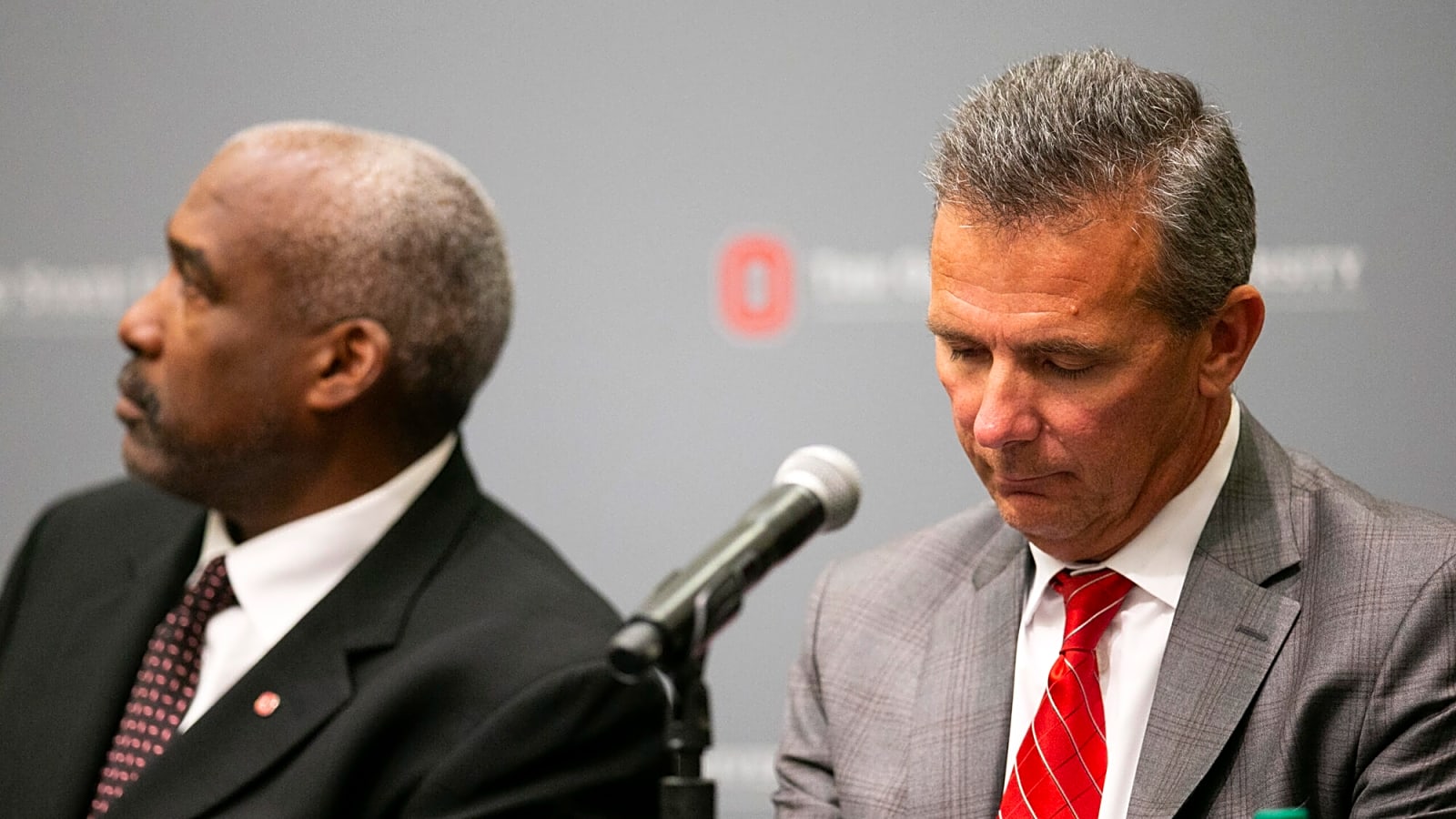
Thirty former Ohio State football players stepped forward on May 7, 2026, and did something decades of institutional pressure had prevented. They joined a class action lawsuit. Not walk-ons. Not fringe roster guys. Among them: more than a dozen former NFL professionals, including two confirmed team captains from the 1980 Rose Bowl squad with long professional careers. Al Washington played eight NFL seasons. Ray Ellis played seven. Keith Ferguson played ten. Men who made it to the highest level of the sport. Men who carried a secret from Columbus for over forty years. The flagship program had finally cracked open.
The Weight They Carried
These weren’t anonymous complaints. Ray Ellis and Keith Ferguson served as team captains at Ohio State, the highest ranking players in the locker room hierarchy. Their combined NFL tenures totaled seventeen seasons. And yet inside Ohio State’s athletic facilities, their authority meant nothing. Dr. Richard Strauss, the team physician from 1978 to 1998, had lockers in multiple team facilities and would watch athletes undress. He showered with teams for hours at a time. The men who led the Buckeyes on the field couldn’t protect themselves in the training room.
An Open Secret Nobody Stopped
The misconduct wasn’t hidden. Athletes joked about it. Rocky Ratliff, a former Ohio State wrestler and Strauss survivor now representing the 30 football players as their attorney, recalled that “the other guys would often crack jokes about Strauss, who was known to perform unnecessary and invasive physical exams on the athletes”. That Ratliff is both an attorney and a survivor is one of the more remarkable details of the case. He has spent years building the legal framework for the very wrong he himself endured. Coaches knew. Trainers knew. The Perkins Coie investigation found university personnel were aware of complaints about Strauss as early as 1979, but no meaningful action was taken until January 1996. The system absorbed every warning and kept running.
$61 Million and Still Failing
Ohio State has settled with 317 survivors for more than $61 million. The university has stated the agreements do not stop survivors from discussing the misconduct publicly, and that no tuition or taxpayer money is used to fund them. Survivors and watchdog groups have disputed the framing on funding, pointing to the broader institutional pool from which legal costs flow. Then, in June 2025, survivors published an op ed titled “We Survived Ohio State. The University Is Still Failing Us.” The people the university claimed to have reconciled with said otherwise. Publicly. By name. That collision between institutional narrative and survivor reality is the spine of this entire case.
The System Behind the Physician
Strauss wasn’t a rogue actor exploiting a gap. He operated inside a structure that gave him unsupervised physical access to male athletes across multiple sports for twenty consecutive years. No formal complaint mechanism existed to elevate grievances beyond isolated departments. Coaches, trainers, and medical staff operated in separate chains of command with no cross reporting protocol. Mandatory medical exams required to play football became the vehicle for misconduct. The institutional requirement itself protected the predator. That’s not a system that failed. That’s a system that functioned exactly as designed.
The Numbers That Reframe Everything
The independent Perkins Coie investigation documented at least 177 male student victims. Ohio State has separately acknowledged receiving reports of 1,429 incidents of misconduct and 47 assaults by Strauss. The HBO documentary “Surviving Ohio State,” produced by George Clooney and based on Jon Wertheim’s Sports Illustrated reporting, brought renewed national attention to the scope of the misconduct. The financial comparison is just as stark. Ohio State’s roughly $192,000 average payout per survivor sits next to Penn State’s $93 million paid to 33 Sandusky victims, an average of about $2.8 million each. Michigan State paid $500 million to 332 Nassar survivors, roughly $1.5 million each. More than 500 survivors have filed lawsuits since 2018, with 209 still awaiting settlement.
The Congressman in the Frame
U.S. Congressman Jim Jordan served as an assistant wrestling coach at Ohio State from 1986 to 1994. The HBO documentary highlighted allegations by former wrestlers that Jordan was aware of Strauss’s misconduct during his time on the coaching staff. Jordan has consistently denied any knowledge of wrongdoing and has called the allegations false. The dispute remains one of the most politically charged threads of the broader scandal, and his name surfaces in nearly every new round of filings. Whether the sealed 1996 Ohio State Medical Board investigation file, now ordered produced by Judge Watson, contains material relevant to Jordan’s tenure is one of the open questions the discovery process will answer.
The Courtroom Walls Are Closing
Federal Judge Michael Watson denied Ohio State’s motions to delay litigation in March 2026. Days later, he ordered the university to produce an unredacted 1996 Ohio State Medical Board investigation file within seven days. That file, sealed for nearly three decades, contains the first formal regulatory inquiry into Strauss’s conduct and is expected to document what officials knew and when. In April 2026, Watson ruled survivors can recover damages for lost earnings and opportunities beyond tuition costs alone. That single ruling blew the ceiling off potential judgments. Every university watching this case just recalculated its own exposure.
What October Decides
The first bellwether trials are scheduled for October 2026. A bellwether trial is a representative case selected from a large pool of similar claims. The verdict establishes how juries are likely to value the underlying claims and sets the benchmark for settlement negotiations across the remaining 209 plaintiffs awaiting their day in court. Readers should watch three specific markers. First, whether the lead plaintiffs include any of the newly joined football players. Second, whether the jury awards damages exceeding what Ohio State has offered per survivor in past settlements. Third, whether Watson permits introduction of the unsealed 1996 Medical Board file as evidence of institutional knowledge. If the first verdict lands above the $192,000 settlement average, every remaining case becomes exponentially more expensive for the university.
Football Changed the Equation
Before May 2026, this litigation belonged mostly to former wrestlers. The football program’s entry rewrites the scale. Thirty players from the flagship sport, with more than a dozen NFL careers among them, signal the misconduct penetrated every level of Ohio State athletics. This case now parallels Penn State and Michigan State as one of the largest institutional misconduct actions in American college sports history. The precedent being set is stark. Institutions cannot settle their way past systemic failures spanning decades. Once the football program joined, the story stopped being about one doctor.
The Silence That Broke Last
Twenty seven of the thirty football players chose to remain anonymous. Only three let their names be published. That ratio tells you everything about how deep the institutional pressure still runs, decades after Strauss died by suicide in 2005, never having been criminally charged in his lifetime. The university says it has reconciled. The survivors say it hasn’t. A federal judge is about to let a jury decide. And the people who understood this story before everyone else are the ones who noticed that survivors don’t sign an op ed called “The University Is Still Failing Us” when the failing has stopped.
If you played college sports between 1978 and 1998, did you ever hear of a doctor like Strauss on your campus? Tell us in the comments. The silence that protected him broke because survivors finally talked to each other. It can break again.
Sources:
ESPN, “Ex-Ohio State football players to join misconduct lawsuit against school,” May 7, 2026.
NBC News, “More than a dozen former NFL players join misconduct lawsuits against Ohio State University,” May 7, 2026.
WOSU Public Media, “Thirty former Buckeye football players join lawsuit against Ohio State over Strauss misconduct,” May 7, 2026.
Ohio State University News Office, “New settlements reached with survivors for cases involving Strauss,” April 14, 2026.
The Lantern, “Thirteen Strauss survivors settle in lawsuit against Ohio State,” April 14, 2026.
Ohio State Strauss Investigation Media Page, “Settlement Information and Reconciliation Statement,” accessed May 2026.
More must-reads:
- Troy Aikman makes strong statement about Eagles' Jalen Hurts after bombshell reports
- Victor Wembanyama's triumphant return downs Timberwolves in Game 5
- The 'Active NBA double-double leaders' quiz
Breaking News
Trending News








Customize Your Newsletter
 +
+




Get the latest news and rumors, customized to your favorite sports and teams. Emailed daily. Always free!
PRIVACY POLICY COOKIE POLICY CONTACT US
ABOUT YARDBARKER TERMS OF SERVICE


By using this site, you agree to our Terms of Service and Privacy Policy.
This site is for entertainment purposes only.
There is no gambling offered on this site.
Gambling Problem? Call 1-800-Gambler.
