
-

-


Follow Us
-

 On Facebook
 On Flipboard

Missouri’s casino industry continued its slow but steady growth this spring.
According to the Missouri Gaming Commission, the state’s 13 casinos brought in $170.9 million in adjusted gross revenue (AGR) in April 2026, a 1.1% increase compared to last year. While this isn’t a huge jump, it fits the pattern of stable performance the state has seen over the past few years.
It also comes at a time when lawmakers in “The Show Me State” are considering adding new taxes and raising entry fees for casino visitors. This would help cut Missouri’s educing reliance on income tax. Lawmakers are also considering making casinos smoke-free.
Slots Keep Growing While Table Games Struggle
Slots remain the backbone of Missouri casinos. In April:
- Slots earned $147.6 million, up 4.9% from last year.
- Table games earned $23.3 million, down a sharp 17.7%.
This isn’t new. Slots usually make up 85–90% of casino revenue in Missouri, and they tend to be more consistent. Table games, on the other hand, rise and fall more dramatically. In both March and April, weak table‑game performance held back stronger slot gains.
If you want to explore slot revenue trends or table game volatility, I can break those down too.
How 2026 Is Shaping Up So Far
The current fiscal year (FY2026), which runs from July 2025 to June 2026, has been mostly positive:
- January 2026: $158.3M (+13% YoY)
- February 2026: $160.6M (+7.6% YoY)
- March 2026: $175.1M (‑1.6% YoY)
- April 2026: $170.9M (+1.1% YoY)
Growth was strongest early in the year, especially in January and February. March and April slowed down, mainly because table games dipped.
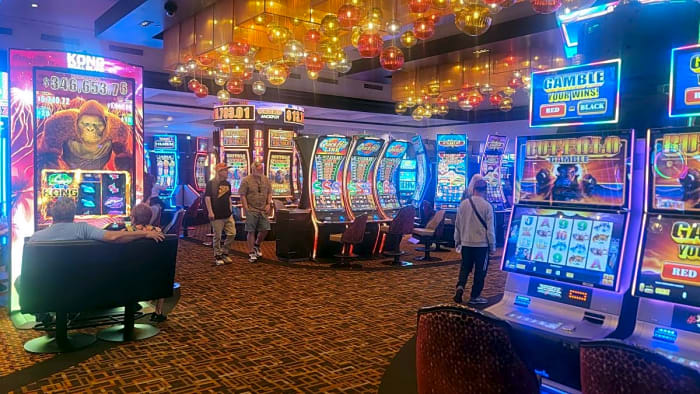
Top‑Performing Casinos in April 2026
Ten of Missouri’s 13 casinos earned more than they did last April. The leaders were:
- Ameristar St. Charles: $26.1M
- River City Casino (St. Louis): $23.4M
- Hollywood Casino (St. Louis): $22.4M
Two casinos stood out for big swings:
- Century Casino Caruthersville: +38.1% (to $6.6M)
- Harrah’s Kansas City: ‑29.1% (to $13.3M)
Long‑Term Trends: Slow but Steady
Missouri’s casino market is mature, meaning it doesn’t swing wildly like newer gambling states. Recent years show:
- FY2025: $1.91B AGR (+1%)
- Calendar Year 2025: $1.97B AGR (+5%)
- Recent years: Mostly in the $1.9B range, with small but steady growth
The state’s casinos don’t offer online casino gaming (iGaming), and sports betting was launched only in late 2025. Because of tax rules and heavy promotions, sports betting hasn’t yet made a big impact on casino revenue.
Missouri’s long‑term gaming trends can be summed up in one phrase: steady, predictable growth in a mature market, powered mostly by slot machines. Here’s a clear, structured breakdown of how the industry has evolved and why it behaves the way it does.

The Big Picture: Slow, Stable, and Slot‑Driven
Over the past decade, Missouri’s casino industry has settled into a reliable pattern.
Annual adjusted gross revenue (AGR) usually lands in the low‑to‑mid $1.9 billion range, with year‑to‑year changes typically between 0% and 5%. This is the hallmark of a mature gaming market—one that isn’t shrinking, but also isn’t experiencing explosive growth.
The most important long‑term trend is the dominance of slot revenue. Slots consistently make up 85–90% of total casino earnings, and they grow more steadily than table games. Because of this, slots act as a stabilizer for the entire industry.
1. Slots Provide the Foundation
Slots and electronic gaming devices (EGDs) have been the engine of Missouri casino revenue for years. Long‑term patterns show:
- Consistent year‑over‑year growth, even when table games fall
- High reliability, because slot play is less affected by economic swings
- A growing share of total AGR, as table games become more volatile
This is why months like April 2026—where slots rose 4.9% but table games fell 17.7%—still end up positive overall.
2. Table Games Are Volatile and Often Declining
Table games in Missouri have shown a long‑term pattern of:
- Higher month‑to‑month swings
- More sensitivity to economic conditions
- Occasional sharp declines, like the ‑17.7% drop in April 2026
This volatility means table games rarely drive growth. Instead, they often pull down otherwise strong months.
3. Seasonal Patterns Shape Revenue
Missouri gaming revenue tends to follow a predictable seasonal rhythm:
- Stronger months: January–March
- Moderate months: Summer
- Softer months: Late fall
This pattern has held for years and is tied to tourism, weather, and local entertainment habits.

4. A Mature Market With Limited Expansion
Unlike states that recently added online casinos or expanded sports betting, Missouri’s gaming landscape has been relatively unchanged:
- No iGaming (legal online casinos)
- No major new casino openings
- Sports betting only launched in late 2025
Because of this, Missouri doesn’t see the big spikes that come from new gambling products. Instead, it sees incremental growth driven by existing casinos improving operations and attracting steady local traffic.
5. Sports Betting Hasn’t Shifted the Landscape (Yet)
Sports betting is still new in Missouri, and early data shows:
- Strong betting interest
- Limited impact on casino AGR
- Promotional spending and tax structure keeping revenue modest
Over time, sports betting may grow, but it’s not yet a major driver of casino performance.
What It All Means
Missouri’s casino industry isn’t booming, but it’s not shrinking either. Instead, it’s showing:
- Reliable slot revenue
- Volatile table‑game results
- Seasonal ups and downs
- Overall stability in a mature market
In short, Missouri casinos continue to perform well enough to stay strong, even without major new forms of gambling driving growth.
More must-reads:
Breaking News
Trending News








Customize Your Newsletter
 +
+




Get the latest news and rumors, customized to your favorite sports and teams. Emailed daily. Always free!
PRIVACY POLICY COOKIE POLICY CONTACT US
ABOUT YARDBARKER TERMS OF SERVICE

