
-

-


Follow Us
-

 On Facebook
 On Flipboard
 On Twitter
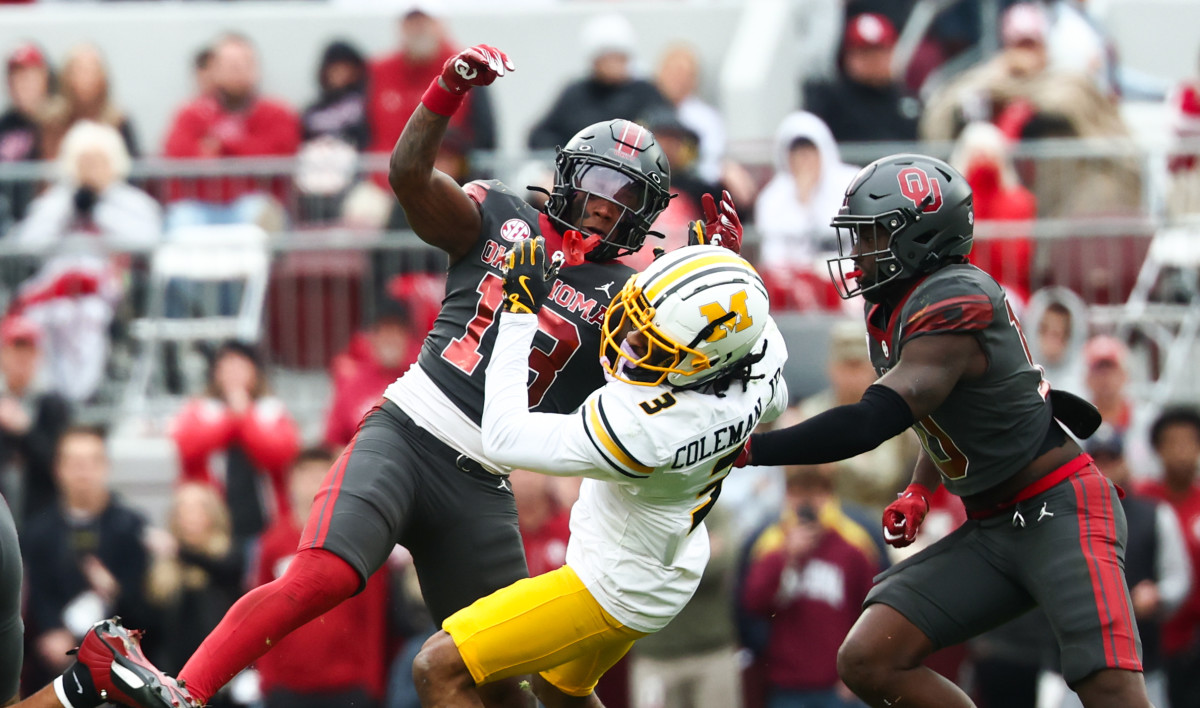
On Thursday, the Division I Football Rules Subcommittee submit a proposal that would change the way targeting is penalized.
As of now, college football players who get ejected for targeting have to miss the first half of their next game. There's a good chance that won't be a rule for the 2026 season. The Division I Football Rules Subcommittee is suggesting a major overhaul to the penalty structure for targeting.
If a player gets called for targeting once during the season, this proposal would make them eligible to play all of the next game regardless of which half the penalty occurs in. The first-half suspension wouldn't come into play until the second time a player gets penalized for targeting.
In the event a player gets a third targeting penalty during the season, they'll be forced to miss the entire next game.
"This continues the evolution of our targeting rule and balances the important safety impact with an appropriate penalty structure," said A.J. Edds, rules subcommittee chair and vice president of football administration for the Big Ten Conference. "We will closely monitor this one-year adjustment, and the committee believes it is important to enhance the progressive penalty to ensure proper coaching and player education."
What other rule changes could be coming?
Another proposal was submitted that would allow teams to attempt a fair catch kick after they complete a fair catch.
"The kick would be a field goal place kick with a holder (no tee) or a drop kick from the spot where the returner caught the ball," the Division I Football Rules Subcommittee said. "If the ensuing kick goes through the uprights, it would add 3 points to that team's total. The defense would be at least 10 yards from the spot of the kick."
There's also a proposal in place that would reduce offensive pass interference penalties to 10 yards. As of now, it's currently a 15-yard penalty.
More must-reads:
- Devils make significant front-office move, fire GM Tom Fitzgerald
- Jose Ramirez sets all-time mark with Cleveland Guardians
- The 'Most Elite Eight appearances' quiz
Breaking News
Trending News





Customize Your Newsletter
 +
+




Get the latest news and rumors, customized to your favorite sports and teams. Emailed daily. Always free!
PRIVACY POLICY COOKIE POLICY CONTACT US
ABOUT YARDBARKER TERMS OF SERVICE


By using this site, you agree to our Terms of Service and Privacy Policy.
This site is for entertainment purposes only.
There is no gambling offered on this site.
Gambling Problem? Call 1-800-Gambler.
