
-


Follow Us

 On Facebook
 On Flipboard
 On Twitter
All fantasy sports players know that the best part of playing fantasy sports is the DRAFT. Drafting with your friends or even just for practice is so much fun. Today we are going to discuss how you can use that draft experience to practice and to be sharper in your leagues’ drafts.
What Is Best Ball Fantasy Baseball?
The term “Best Ball” comes from a golf team format. Unlike Scramble where players only play the best shot from their team, in Best Ball, each player plays each hole, but the team ONLY gets the best score from that hole.
So for Best Ball fantasy baseball leagues, each starting roster spot is filled with the player who scores the most points each week or accrues the best Rotisserie stats.
The first time I saw this style of play was in the late 1990s. CDM, owners of the Diamond Challenge, had a very popular high prize national contest run with USA Today and added a “Draft & Play” option. People sent in their rosters and the computer would set their lineups each week AFTER the games were played.
The beauty of Best Ball (Draft & Play) is that there are no weekly lineups to set, no waiver claims to monitor, and no injuries to monitor. You draft your team, and the platform automatically counts your best scorers each week.
This concept exploded about 10-15 years ago when a popular league management platform called MyFantasyLeague started $10 best ball style competitions called MFL10s.
We will review the best places to play and the nuances in future articles but it suffices to say that companies like Underdog Fantasy, RTSports and DraftKings all have thriving Best Ball businesses with big prizes for the best players.
How Best Ball Differs From Traditional Fantasy Baseball
Traditional fantasy leagues require weekly attention. If you read the SMART System article, you know that there is a conservative approach to locking in certain types of players early in drafts. With Best Ball, you want ALL your players to have upside and inconsistent hitters and pitchers don’t hurt you as much.
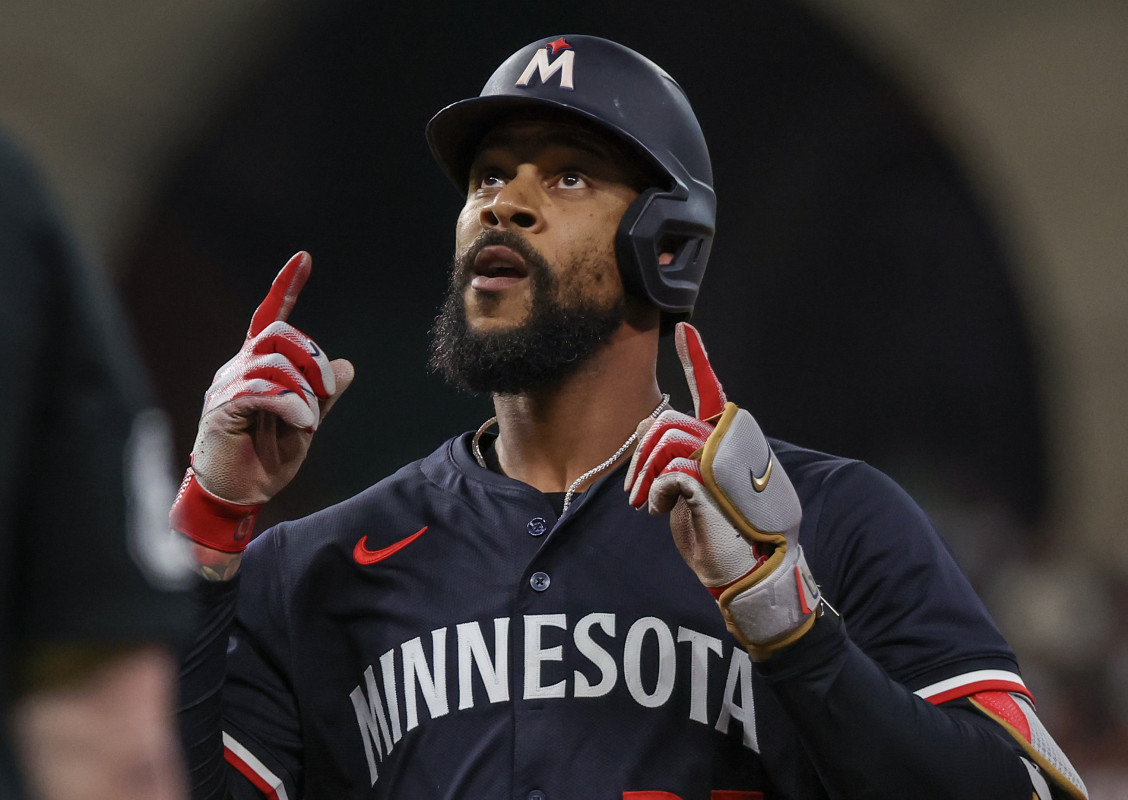
A player like Byron Buxton is never on my traditional teams, but in this format, if he is out for a month but crushes it the rest of the time, it is likely I will have a good bench player to replace for the time he misses.
How Best Ball Scoring and Lineups Work
Best Ball leagues still use familiar fantasy baseball scoring categories or point systems. What changes is how lineups are handled.
Automatic Lineup Selection
Each scoring period, the system automatically fills your lineup using the highest-scoring players on your roster. If your shortstop has a bad week but your backup shortstop goes on a power surge, the system uses the better performance.
You never have to predict hot streaks. You just need players capable of producing them.
Why Depth Matters More Than Stars
Acquiring players for your roster who qualify in your league to play multiple positions is a critical aspect of the Best Ball game. Generally, I raise on my rankings a significant number of spots, players who have two qualifying positions and draft at least one player who qualifies at three or more positions. This saves a roster spot to attack pitching deeper.
Because only your top scorers count, having multiple playable options at each position is critical. One superstar alone doesn’t carry a team. Depth protects you from injuries, slumps, and uneven playing time.
For platoon players, I only draft players who are left-handed. They are more likely to see 4-5 right-handed starters in a given week and have productive weeks. Having platoon right-handed hitters can really hurt your team.
Know Your League Format
Generally, Best Ball leagues are either total points or Roto scoring. The concept of draft and play does not convert well to the Head-to-Head formats. Knowing which scoring style you are playing with is important to how you assemble that roster. So for instance, if you are in a Roto-style league, you need to draft relief pitchers who will get saves. If you are in a points system, you just want the highest scoring pitchers.
Additionally, if your roster requirements have two catchers, it is more important to get good catchers as it can take value away from the other teams in your league and give you an advantage. Many leagues have different roster requirements and you need to change your approach.

Drafting Hitters for Roto-Style Leagues
When drafting your hitters in a Roto-style league, you can follow the SMART System with some minor adjustments. The main adjustment we will address later. You can take a lot more risks in a Best Ball format on players who switched cities or who are coming off injuries or who are less experienced. My Best Ball teams will have more rookies and second-year players than my normal leagues as they are less projectable.
Drafting Hitters for Points Leagues
In points leagues, you want to acquire as many plate appearances as possible. Focus on hitters who play everyday, are durable and bat early in the lineup. You can acquire a lot of points by simply getting your hitters to the plate.
Of course, reviewing the metrics that we talked about previously on your hitters and pitchers can help. For hitters, we suggested that you look at wOBA, BABIP and Barrels which combine exit velocity and launch angle.
Drafting Pitchers for Roto-Style Leagues
When drafting pitchers in Best Ball Roto-Style leagues for fantasy baseball, you need to have balance on your roster to make sure that you pick up enough saves and enough wins. It is important to understand the rules for the number of innings pitched to qualify for ERA and WHIP categories. When that number is low there are a lot more strategies that can be employed. For beginners, I still suggest the SMART System to eliminate mistakes. In Best Ball contests, I often take starting pitchers earlier and make sure I get two of them early enough to LOCK in statistics to stay competitive.
Drafting Pitchers for Points Leagues
Points leagues are very different on the pitching side. YOU NEED POINTS. You don’t need saves or wins. These differences allow many different strategies to take place. Many will tell you that you do not need closers for instance. A starting pitcher on a good team who is in the rotation should outscore all the closers.
Although this is generally true, that is only true for the aggregate. Every mid-level starting pitcher will have bad weeks.
A couple of interesting strategies emerge here:
First, make sure you get different level starters to maximize points. Most No. 1 starters on teams will more often than not face the #1 starters and so on. If you have No. 1, No. 3 and No. 5 starters, you will have a more balanced approach to those pitchers who have two starts in a given week. So BALANCE.
Second, getting multiple potential closers late can give you an edge. Having middle relief pitchers or starters who don’t strike out a lot of hitters and are on a bad team is way worse than having a closer on a mid-level team.
Here is the logic. In any week that a closer picks up two saves, he will be in your starting lineup. All of your pitchers cannot have the equivalent of the points for 1.4 wins. Usually a win is 10 pts and a save is seven. So if a mid-level starter gets 5IP, 5Ks, 3ER and a no decision. He gets seven points. The closer who gets 1IP, 2Ks and a save, accrues 10 points. If he does that twice, he gets 20 which is more than the starting pitcher even if he got the win.
Of course, reviewing the metrics that we talked about previously on your hitters and pitchers can help. For pitchers, we suggest that you look at SwK, velocity, xFIP, FpK and BABIP.
Why Best Ball Works So Well for Beginners
Best Ball teaches core fantasy concepts without overwhelming you. You learn how playing time, depth, and roster balance affect results. You can try many different strategies to see which ones work the best for you. For the most part, there is not a lot of interaction with the other teams so you can practice without the stress.
It is also an amazing way to study baseball. Many Best Ball leagues have clocks that give you hours to look at your options and therefore learn as you go without the pressure or a one-minute clock.
So play stress free fantasy baseball. Play Best Ball.
People Also Ask
What is Best Ball fantasy baseball?
A draft-only fantasy format where the system automatically starts your highest scorers each week.
Do you set lineups in Best Ball leagues?
No. Lineups are optimized automatically based on scoring.
Is Best Ball good for beginners?
Yes. It removes weekly management and focuses on drafting fundamentals.
How many players do you draft in Best Ball fantasy baseball?
Most leagues draft larger rosters than traditional formats to account for depth.
Can you make trades or waiver moves in Best Ball?
No. Once the draft ends, your roster is locked.
More must-reads:
- Team USA solidifies itself as world's best with third women's hockey Olympic gold medal
- NBA's new anti-tanking rules might not totally work
- The 'TD-catch leaders by NFL team' quiz
Breaking News
Trending News






Customize Your Newsletter
 +
+




Get the latest news and rumors, customized to your favorite sports and teams. Emailed daily. Always free!
PRIVACY POLICY COOKIE POLICY CONTACT US
ABOUT YARDBARKER TERMS OF SERVICE


By using this site, you agree to our Terms of Service and Privacy Policy.
This site is for entertainment purposes only.
There is no gambling offered on this site.
Gambling Problem? Call 1-800-Gambler.
