
-

-


Follow Us
-

 On Facebook
 On Flipboard
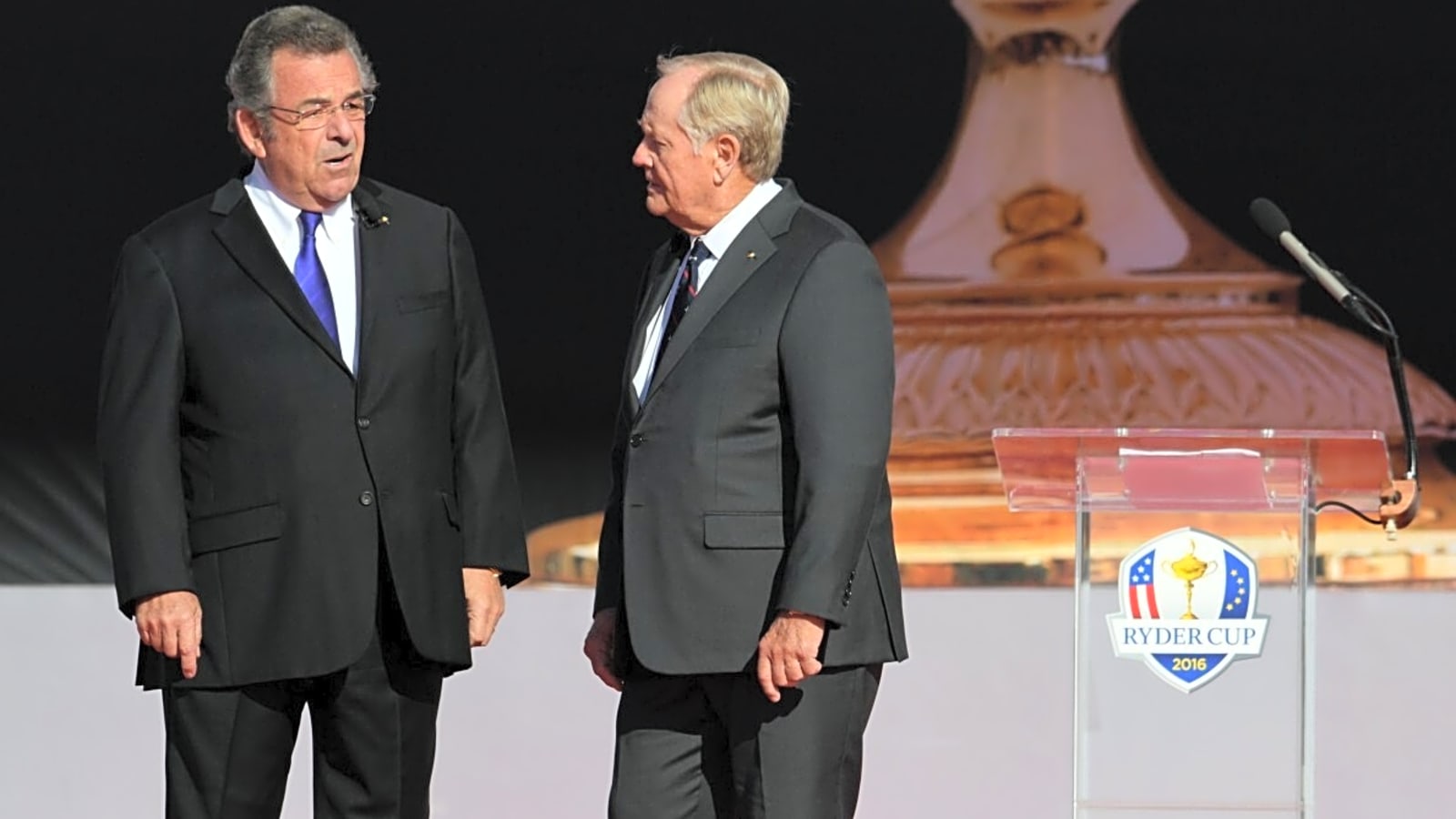
Among sport's transcendent moments, Jack Nicklaus's concession to Tony Jacklin on Sept. 20, 1969, at Royal Birkdale stands apart. That windswept afternoon in England produced more than just the conclusion of a golf match. It gave birth to a moment that would redefine the competitive spirit itself.
The 18th Ryder Cup had reached fever pitch. Three days of brutal competition, poisoned by petty gamesmanship from both teams, had culminated in this: everything hanging on the final putt of the final match.
The 29-year-old Nicklaus, playing his inaugural Ryder Cup, squared off against Tony Jacklin, Britain's golden boy fresh off his Open Championship triumph at Royal Lytham just two months prior.
All square at the 18th. Both men on the green. Nicklaus's birdie attempt drifted past. Jacklin's birdie putt died short, leaving him a treacherous 2-footer to halve both match and Cup.
Then history intervened.
As Jacklin crouched over what might be the tournament's deciding stroke, Nicklaus approached. He reached down, plucked up his opponent's ball marker, and delivered words that would outlive both men: "I don't think you would have missed it, but I wasn't going to give you the chance, either."
The first tie in Ryder Cup history. 16-16. America retained the Cup as defending champions, but scores had become irrelevant.
This wasn't just rare — concessions of this magnitude simply don't happen in professional golf's premier team event. The gesture's true power lay in its context. The 1969 Ryder Cup had festered with animosity.
British captain Eric Brown ordered his players to abandon the tradition of helping Americans search for wayward balls. Ken Still deliberately invaded Maurice Bembridge's putting space. Tensions reached such heights that both captains repeatedly intervened to prevent escalation.
Against this backdrop, Nicklaus delivered pure sportsmanship. This wasn't weakness. The Golden Bear already owned seven major championships and burned with competitive fire. His concession sprang from something deeper — an instinctive grasp of sport's higher calling.
The aftershocks persist today. Nicklaus and Jacklin forged a friendship spanning decades. They co-designed The Concession Golf Club in Florida. Faced each other as captains in 1983 and 1987. The Nicklaus-Jacklin Award now celebrates sportsmanship at every Ryder Cup, ensuring their moment's immortality.
More crucially, golf historians widely credit this gesture with transforming the Ryder Cup into today's global phenomenon. By steering the competition away from bitter controversy toward mutual respect, Nicklaus safeguarded its integrity for generations to come.
Sam Snead, the U.S. captain, reportedly seethed that Nicklaus had surrendered outright victory. History vindicated the Golden Bear. In an era where victory justifies any means, Nicklaus proved that method matters as much as outcome.
The concession endures as golf's paramount teaching moment. True champions aren't measured solely by their wins, but by their grace under fire. When Nicklaus lifted that ball marker, he transcended the match itself — he elevated an entire sport.
More must-reads:
- Scottie Scheffler shuts down a reporter after a bizarre Masters question
- Ranking the best European golfers of all time after Rory McIlroy's Masters triumph
- The 'Masters runners-up since 2000' quiz
Breaking News
Trending News



Customize Your Newsletter
 +
+




Get the latest news and rumors, customized to your favorite sports and teams. Emailed daily. Always free!
PRIVACY POLICY COOKIE POLICY CONTACT US
ABOUT YARDBARKER TERMS OF SERVICE


By using this site, you agree to our Terms of Service and Privacy Policy.
This site is for entertainment purposes only.
There is no gambling offered on this site.
Gambling Problem? Call 1-800-Gambler.
