
-

-


Follow Us
-

 On Facebook
 On Flipboard


[Editor’s note: The following article comes from Athlon Sports’ 2026 Golf Annual magazine. Order your copy online now, or pick one up at newsstands and retail racks nationwide.]
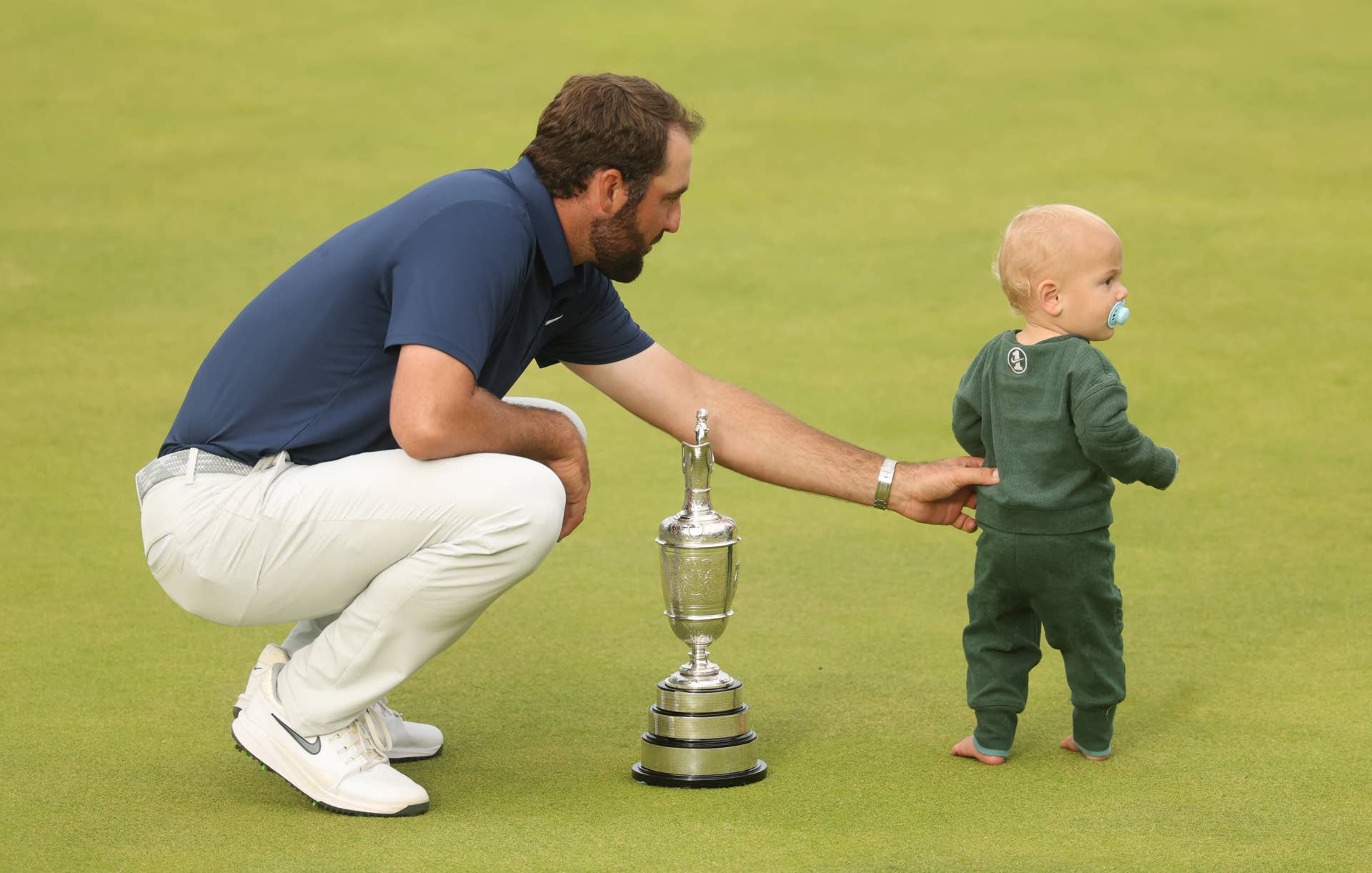
By the time Scottie Scheffler walked off the 18th green at Royal Portrush last July, cradling the Claret Jug after a dominant four-stroke victory at The Open Championship, he had accomplished something that seemed almost inevitable yet remained breathtaking in its execution. At 29 years old, with four major championships to his name, Scheffler had captured three-quarters of golf’s career Grand Slam. Only the U.S. Open, that most democratic and punishing of golf’s four pillars, remained unconquered.
The math is simple, even if the achievement is anything but: Scheffler has won the Masters twice (2022, 2024), the PGA Championship once (2025) and The Open Championship once (2025). He’s finished as the runner-up at the U.S. Open once (2022) and posted four total top-10 finishes in his previous five appearances at America’s national championship. The stage is set. The venue, Shinnecock Hills in Southampton, New York, from June 18-21, could hardly be more fitting for golf’s most dominant player to complete the rarest of feats.
But history teaches us that the final piece of the Grand Slam puzzle is often the most elusive. Just ask Phil Mickelson, who has spent decades chasing the U.S. Open, finishing second six times. Or Jordan Spieth, who at 32 still seeks the PGA Championship to complete his own career slam, despite winning three majors before his 24th birthday.
Also see:
● Athlon 2026 Golf Annual: Order the mag!
● Shipnuck: What Can Rory Do for Encore?
● Miceli: Q&A with Bryson DeChambeau
The Weight of History
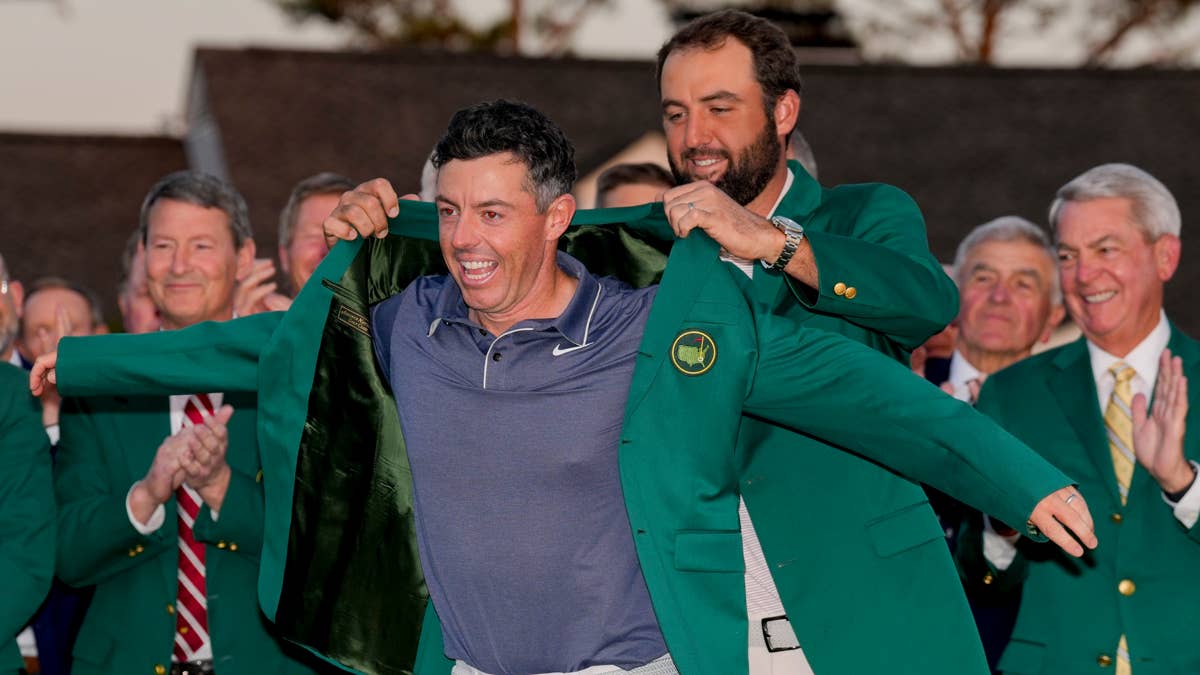
Only six men in the history of professional golf have won all four modern major championships: Gene Sarazen, Ben Hogan, Gary Player, Jack Nicklaus, Tiger Woods and Rory McIlroy. It’s a list so exclusive that merely being in the conversation represents a career of extraordinary achievement. Scheffler, who had at press time won 20 PGA Tour events including those four majors, has positioned himself to join this pantheon before his 30th birthday.
The timeline matters. Scheffler completed his first three legs in just over three years, from his breakthrough Masters victory in April 2022 to his Open triumph last July. By comparison, it took Nicklaus four years to win his first three different majors (1962-66), Woods three years (1997-2000) and McIlroy four years (2011-14). Scheffler’s trajectory suggests not just excellence but a kind of relentless inevitability that recalls Woods at his peak.
“When you watch Scottie play, especially from tee to green, you’re watching something we haven’t seen since Tiger in his prime,” said NBC analyst and former U.S. Open champion Johnny Miller in a recent interview. “The question isn’t if he’ll win the U.S. Open. It’s when.”
That confidence is backed by data. During the 2024 season, Scheffler averaged 2.614 strokes gained: tee-to-green per round, the second-best performance since the statistic began being recorded in 2003, trailing only Woods’ otherworldly 2.982 mark from 2006. His ball-striking is so consistently superior that even mediocre putting weeks still leave him in contention. When Scheffler’s putter cooperates, as it did during his six-win 2025 season, he doesn’t just win: He dominates.
Shinnecock: Where Legends Are Made (and Broken)
If there’s a U.S. Open venue that seems ready-built for Scheffler’s game, it’s Shinnecock Hills. The windswept links-style course on Long Island’s eastern end rewards precisely the skills that define Scheffler’s dominance: elite ball-striking, strategic course management and the ability to manufacture shots in difficult conditions.
Shinnecock has hosted five U.S. Opens, most recently in 2018 when Brooks Koepka claimed his second consecutive U.S. Open title. The course’s reputation for difficulty is well-earned: Its firm, fast conditions and penal rough punish even minor mistakes. But for Scheffler, a player who led the PGA Tour in strokes gained: approach in 2024 by a margin of 57% over the second-place finisher, Shinnecock represents an opportunity, not an obstacle.
“Scottie’s game is built for U.S. Open golf,” says his longtime coach Randy Smith, who has worked with Scheffler since the golfer was seven. “He doesn’t need to overpower courses. He picks them apart with precision. That’s exactly what Shinnecock demands.”
The course’s strategic complexity should also favor Scheffler’s cerebral approach. Unlike some major venues that reward pure power, Shinnecock requires constant decision-making: when to attack, when to play defensively, how to use the wind rather than fight it. These are the situations where Scheffler excels, where his combination of technical skill and tactical intelligence separates him from the field.
History offers encouraging precedents. The last five U.S. Open champions have all been elite ball-strikers who could control their trajectory and spin in difficult conditions — exactly Scheffler’s profile. And while Shinnecock’s greens can be treacherous, Scheffler’s improved putting (he ranked 22nd in strokes gained: putting in 2025 after working with coach Phil Kenyon) should be more than adequate on surfaces where lag putting and speed control matter more than making everything inside 10 feet.
The Psychological Dimension
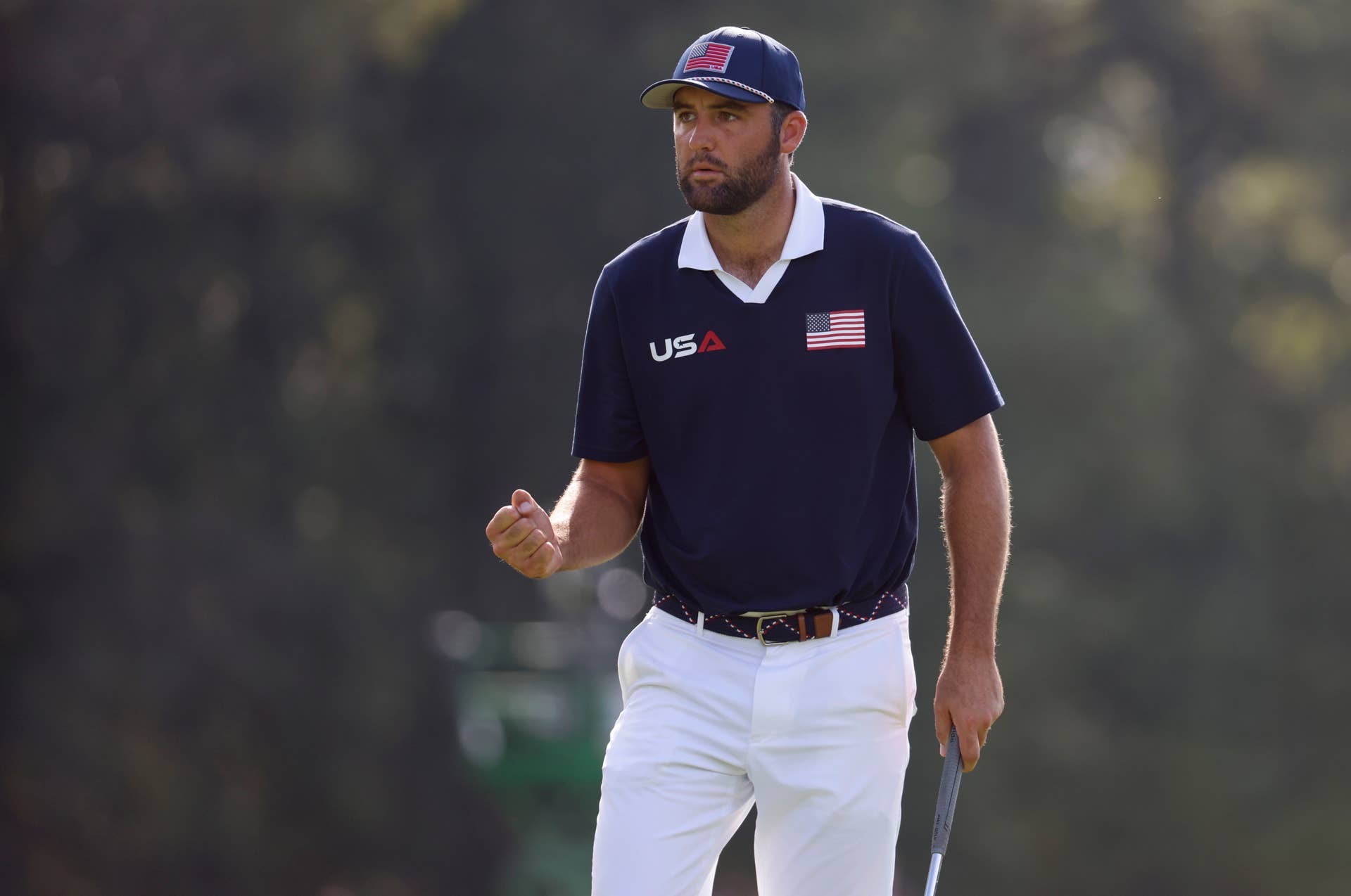
Yet for all the statistical and strategic reasons to favor Scheffler at Shinnecock, the psychological element cannot be ignored. The pursuit of the career Grand Slam has broken stronger players than Scheffler. The weight of expectation, the knowledge that history hangs on every shot, the awareness that opportunities like this don’t come around often: These factors have derailed many a champion.
Consider Scheffler’s own experience at the 2024 PGA Championship at Valhalla, where his preparation was disrupted by his arrest on the tournament’s second morning following a traffic incident. Despite the chaos (being detained, processed and released just in time to make his tee time), Scheffler shot 66 that day and remained in contention through the weekend. The episode revealed something essential about his temperament: an almost preternatural ability to compartmentalize and focus on the task at hand.
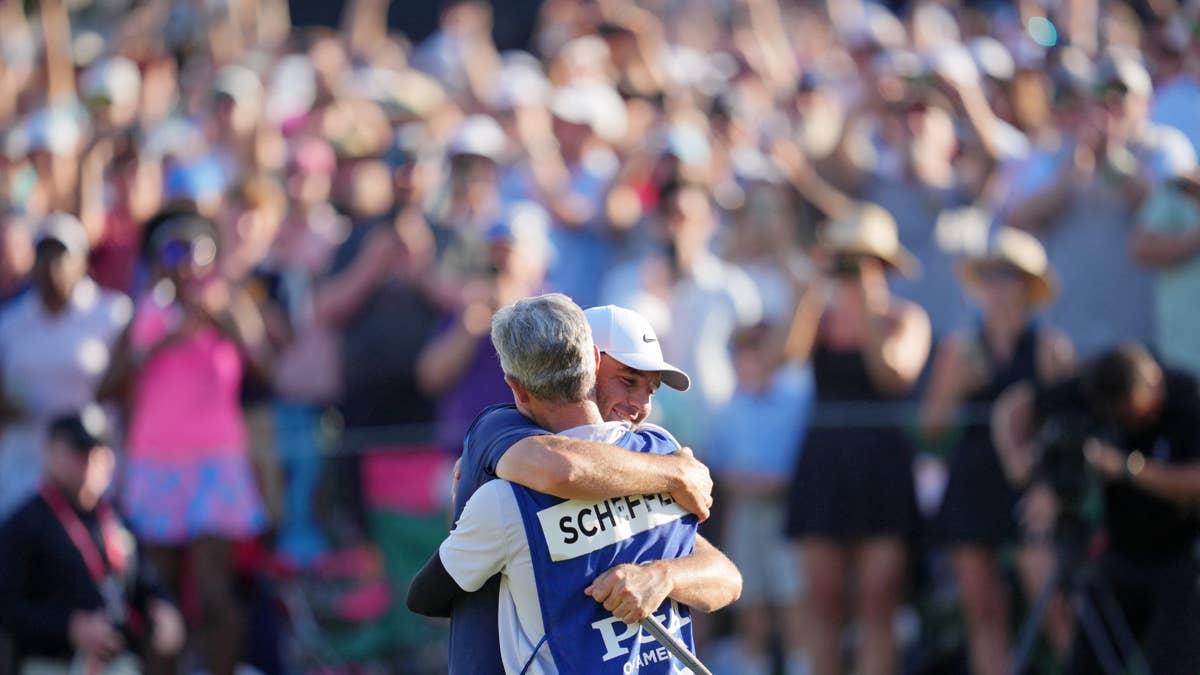
“I’ve never seen anything like it,” says his caddie, Ted Scott, who previously worked with Bubba Watson for 15 years. “Most guys would have been completely rattled. Scottie went out and played some of his best golf of the week.”
That mental fortitude will be tested at Shinnecock. The U.S. Open has a way of exposing psychological weaknesses, of turning three-shot leads into three-shot deficits in the span of a few holes. The course’s difficulty, combined with the USGA’s traditional setup philosophy of firm greens and thick rough, creates an environment where patience and emotional control matter as much as ball-striking.
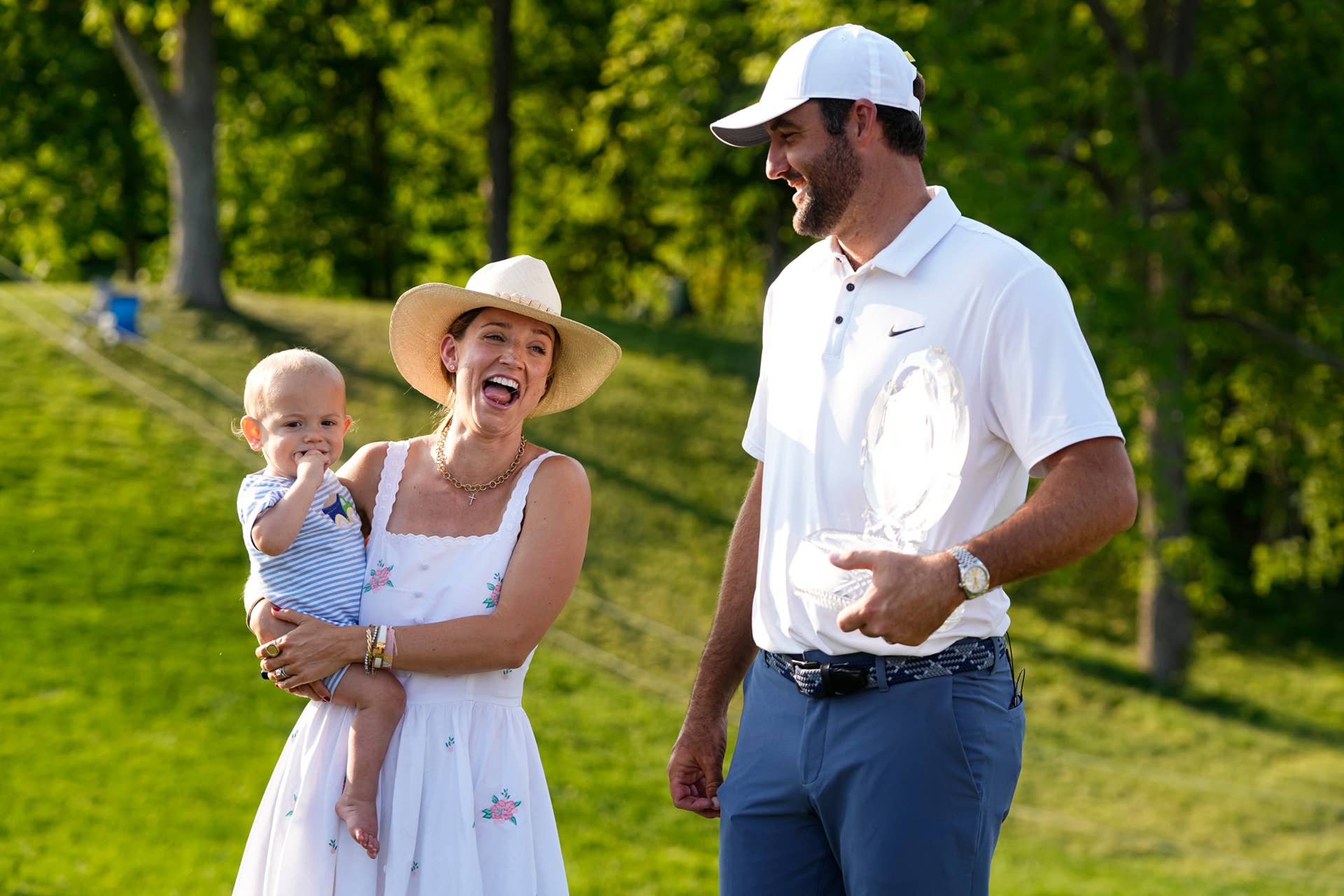
Scheffler’s faith (he’s a devout Christian who regularly attends Bible study with Scott) provides a foundation that seems to insulate him from the sport’s psychological pressures. “My greatest priorities are my faith and my family,” he said after winning the 2025 Open Championship. “Golf is third in that order.” It’s a perspective that might seem at odds with the single-minded focus required to dominate professional golf, yet it appears to free Scheffler from the burden of needing golf to define his worth.
The Spieth Parallel: A Cautionary Tale
Spieth’s ongoing quest for the career Grand Slam offers both inspiration and warning for Scheffler. Like Scheffler, Spieth burst onto the scene with early major success, winning the Masters and U.S. Open in 2015 at age 21, then adding The Open Championship in 2017. At 23, with three legs of the slam complete, Spieth seemed destined to join golf’s most exclusive club.
Eight years later, he’s still waiting. Spieth has recorded a pair of top-10 finishes at the PGA Championship, including a runner-up showing in 2015, but the fourth major has remained elusive. His game, once marked by otherworldly short-game wizardry and fearless putting, has been plagued by inconsistency off the tee and periodic struggles with his iron play.
The comparison isn’t perfect. Spieth’s game was always more volatile than Scheffler’s metronomic excellence, but it illustrates how quickly windows can close. Spieth is only 32, still young enough to win multiple majors, but each passing year makes the career slam feel less inevitable and more like a long shot.
The Mickelson Specter
If Spieth’s story is a cautionary tale, Phil Mickelson’s U.S. Open odyssey is a tragedy. Six times, Mickelson has finished as runner-up at America’s national championship, including the heartbreaking 2006 edition at Winged Foot, where he double-bogeyed the 72nd hole to hand the title to Geoff Ogilvy. The U.S. Open became Mickelson’s white whale, the one prize that would forever elude him despite winning six other majors.
“The U.S. Open is the one that got away,” Mickelson said years later, the pain still evident in his voice. “I had my chances. I just couldn’t close the deal.”
Mickelson’s struggles at the U.S. Open stemmed partly from a mismatch between his aggressive, high-risk style and the championship’s demand for patience and precision. Where Mickelson attacked, the U.S. Open required restraint. Where he gambled, it demanded calculation. The result was a career-long frustration that no amount of success elsewhere could fully erase.
Scheffler’s game presents no such stylistic conflict. His approach is fundamentally conservative: hit fairways, hit greens, make pars, capitalize on birdie opportunities when they arise. It’s U.S. Open golf distilled to its essence. If anything, the setup should favor Scheffler more than any other major.
Yet Mickelson’s example reminds us that golf doesn’t always follow the script. Sometimes the golf gods simply say no, regardless of how well-suited a player might be for a particular challenge.
The 2026 Season: A Perfect Storm?
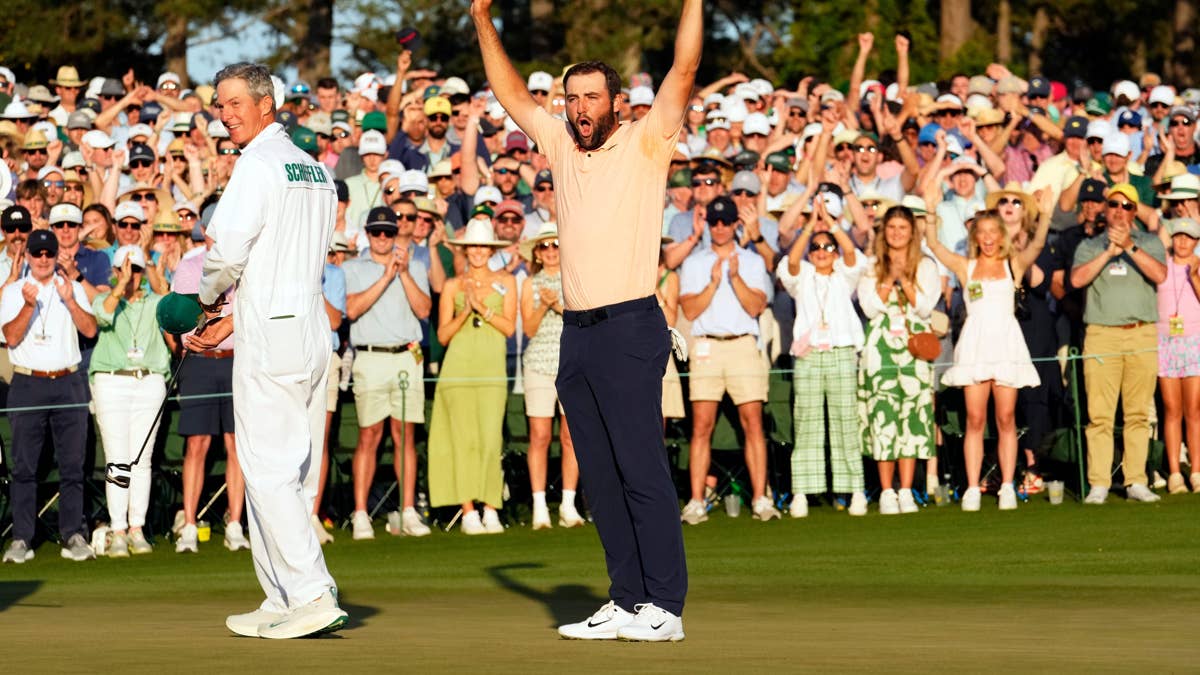
Looking ahead to 2026, the calendar sets up intriguingly for Scheffler’s Grand Slam pursuit. The Masters at Augusta National (April 9-12) offers a chance to tie Tiger Woods’ record of three Masters victories before age 30. He’ll be the defending champion at the PGA Championship at Aronimink Golf Club in Pennsylvania (May 14-17). But it’s the U.S. Open at Shinnecock (June 18-21) that represents the main event, the tournament where history could be made.
If Scheffler arrives at Shinnecock having won either or both of the year’s first two majors, the pressure will be immense. The media narrative will be inescapable: Can he complete the slam? Will this be the year? Every shot will be analyzed through that lens, every round dissected for signs of tension or triumph.
Conversely, if he struggles early in the season, the U.S. Open could become a release valve, a chance to play freely without the weight of recent success. There’s no predicting which scenario would better serve Scheffler’s chances, but his track record suggests he thrives regardless of external pressure.
The final major of 2026, The Open Championship at Royal Birkdale (July 16-19), would offer a chance at redemption if Shinnecock doesn’t deliver. But by then, the narrative might have shifted, the momentum lost.
Beyond 2026: The Long View
Even if Scheffler doesn’t complete the career Grand Slam at Shinnecock, his youth and dominance suggest he’ll have many more opportunities. At 29, he’s younger than Nicklaus was when he completed his first career slam (30). He’s older than Woods was (24), but with a more complete game at this stage of his career than Tiger had at the same age.
The real question isn’t whether Scheffler will complete the career Grand Slam, but how many times he’ll do it. Nicklaus and Woods both completed it three times. Both players won 15 or more major championships. Scheffler, with four majors already and no apparent weaknesses in his game, seems positioned to challenge those totals.
“Scottie’s ceiling is as high as anyone who’s ever played,” says McIlroy, who completed his own career slam at the 2025 Masters. “He’s got the game, the temperament and the work ethic. If he stays healthy, I don’t see why he couldn’t win 15 majors.”
That’s the long view, the perspective that transcends any single tournament or season. But in golf, as in life, we can only live in the present. And the present reality is that Scheffler stands one major championship away from joining the most exclusive club in golf.
Shinnecock Hills awaits. History beckons. The only question is whether the golf gods will grant their blessing or demand that Scheffler, like so many before him, learn the virtue of patience.
The Verdict
Scheffler will complete the career Grand Slam. The only uncertainty is when. His game is too complete, his mental approach too sound, his physical skills too superior for it not to happen. Whether it occurs at Shinnecock in 2026, at Pebble Beach in 2027 or at Winged Foot in 2028 matters less than the inevitability of the achievement itself. One thing is certain: We’ll be watching.
More must-reads:
- The first domino has fallen in LIV Golf's impending demise
- Tiger Woods still has one final comeback left, but it must start off the course
- The 'Season triple-double leaders by team' quiz
Breaking News
Trending News




Customize Your Newsletter
 +
+




Get the latest news and rumors, customized to your favorite sports and teams. Emailed daily. Always free!
PRIVACY POLICY COOKIE POLICY CONTACT US
ABOUT YARDBARKER TERMS OF SERVICE


By using this site, you agree to our Terms of Service and Privacy Policy.
This site is for entertainment purposes only.
There is no gambling offered on this site.
Gambling Problem? Call 1-800-Gambler.
