
-

-


Follow Us
-

 On Facebook
 On Flipboard
Following a 76-win 2025 season, A’s fans were finally beginning to see the light at the end of the tunnel.
After all, the team had improved by seven wins from 2024 and a remarkable 26 wins from 2023. For the first time in years, the days of tumultuous relocation conversations and widespread angst throughout the fanbase appeared to be fading into the rearview mirror. The franchise’s first season in Sacramento had provided enough promise to give fans hope that brighter days were ahead.
Entering 2026, there was plenty of reason for optimism. The Athletics had one of the brightest young cores of position players in baseball, with even more dynamic talent developing in the upper levels of the minor leagues and seemingly not far from making their major league debuts.
That young core featured not only 2025 American League Rookie of the Year Nick Kurtz, but also the award’s runner-up, Jacob Wilson.
Perhaps even more importantly to A’s fans, the organization had finally begun to invest more heavily in its on-field product. According to Spotrac, the Athletics’ 2026 payroll approached $98 million, a franchise high for the decade and nearly a $40 million increase from their 2025 total.
With a promising young core and an improved willingness to spend, there was legitimate hope that the pendulum was finally beginning to swing back toward contention. Fans and even some pundits entered the season believing the A’s could make a push for the playoffs and return to October baseball for the first time since the COVID-shortened 2020 season.
Unfortunately, that optimism never translated to the field.
Instead, the Athletics stumbled to a measly 64-98 record, while injuries and regression ravaged the roster. Kurtz and Wilson both failed to reach 100 games, while Brent Rooker, the team’s All-Star slugger from the previous season, appeared in fewer than 50.
What began as a season filled with promise quickly became one of the most disappointing campaigns in a decade consisting of seemingly only disappointing campaigns.
The 2026 season was the kind that could make any A’s fan wish they could wake up and discover it had all been nothing more than a bad dream.
Despite the doom and gloom brought on by regression and the injury bug that made its way through the A’s clubhouse, the 2026 season was not without its silver linings. Beneath the disappointing record were several developments that deserve a closer look — developments that could shape not only the makeup of the Athletics’ big league roster heading into next season, but the direction of the franchise for years to come.
So, while 64-98 may not be the record A’s fans envisioned when the season began, there are still plenty of lessons to take from a season that fell well short of expectations.
Here are three of the biggest takeaways from the Athletics’ 2026 season.
Finding a Rotation Building Block
In the hitter-friendly environments of Sacramento and, eventually, Las Vegas, the Athletics will likely face an uphill battle when it comes to luring free agent pitchers to the Green and Gold. That makes developing pitching internally all the more important.
If the A’s want to build a sustainable rotation, they will need to identify and develop their own arms rather than rely on the external options to fill the gaps.
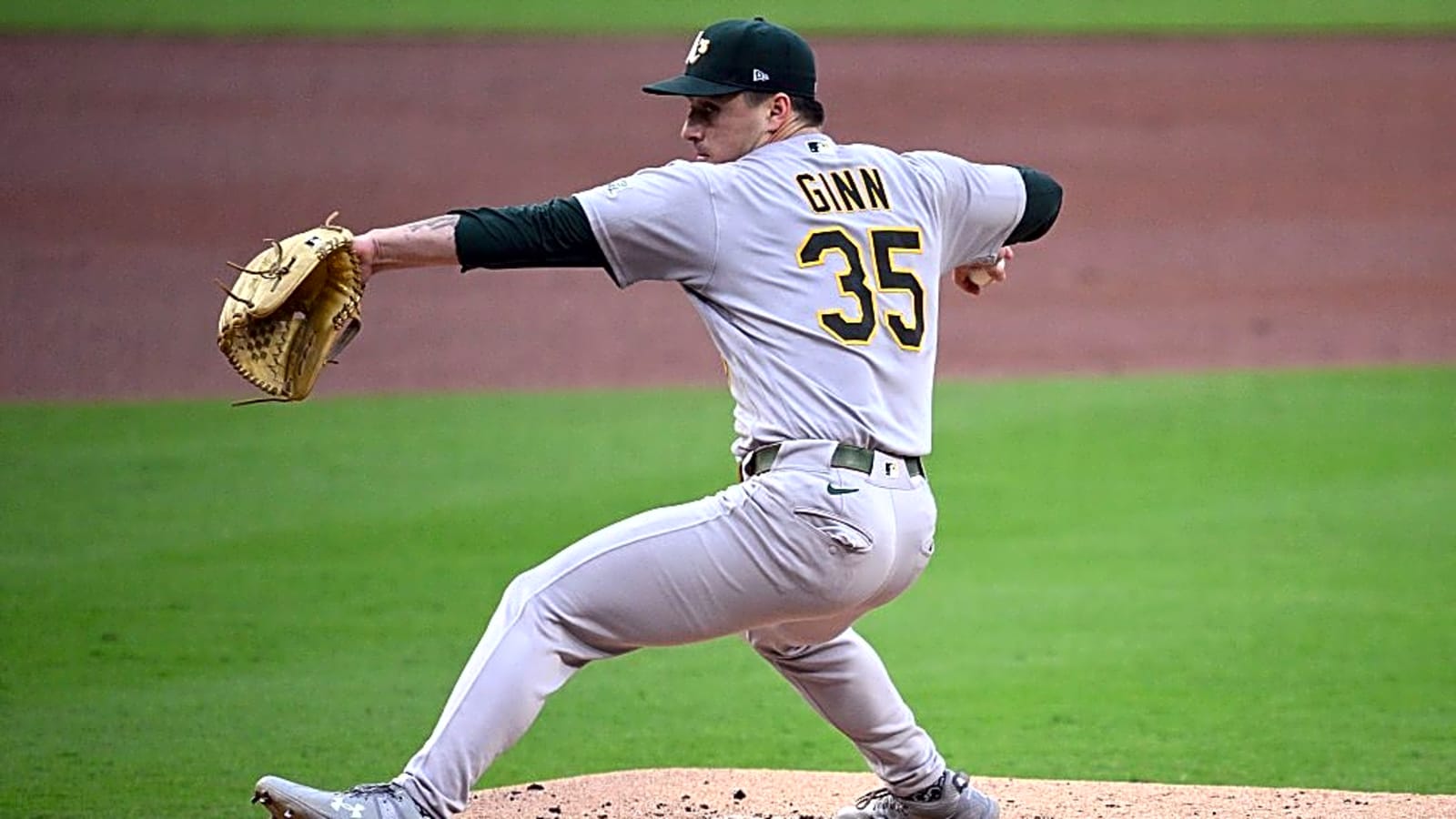
Entering the 2026 season, the Athletics were searching for glimpses of what could become the building blocks of a quality rotation in the years ahead. Despite the team’s underwhelming season as a whole, they may have found one of those pieces in J.T. Ginn.
Ginn was seemingly the lone beacon of hope in an otherwise dreadful 2026 Athletics rotation. The 27-year-old out of Mississippi State posted a 3.71 ERA, emerging as an unlikely breakout that the A’s desperately needed to find.
The right-hander was selected in the second round of the 2020 MLB Draft by the New York Mets before spending nearly half a decade working his way through the minor leagues. He was traded to the A’s in 2022 as part of the deal that sent veteran starter Chris Bassitt to New York.
Ginn eventually made his major league debut in 2024, posting a 4.24 ERA, before an uninspiring 2025 campaign in which he bounced between the bullpen and rotation and finished with an ERA above 5.00.
Heading into 2026, few expected Ginn to emerge as the leader of the rotation. He was largely viewed as an afterthought — a back-end starter expected to eat innings while more established veterans such as Luis Severino and Jeffrey Springs, along with highly regarded prospects like Jamie Arnold and Gage Jump, received much of the attention.
That changed quickly.
Ginn clearly made an intentional and deliberate adjustment to his pitch mix in 2026, and it did not take long for A’s fans and the organization to notice the tangible improvement in his results.
The young right-hander significantly cut his sinker usage from more than 50% in 2025 to a much more modest 36%. What he took away from his sinker usage, he gave to his changeup.
Once the fourth-most-used pitch in his arsenal, the changeup became Ginn’s most prominent secondary weapon, increasing in usage by nearly 11 percentage points. The pitch proved to be an especially effective complement to the rest of his arsenal, with opposing hitters batting just .183 against it.
The change in his arsenal came with a tradeoff. Ginn’s strikeout rate declined, but his ability to limit hard contact improved dramatically. In a ballpark where keeping the ball in the park and preventing extra-base damage is especially important, that proved to be a valuable development.
The A’s newfound ace also saw his home run rate drop significantly, falling from 1.7 home runs per nine innings to a much more respectable 1.1. That improvement was largely driven by a decrease in pulled fly balls and lower average exit velocities from opposing hitters.
Ginn also excelled at limiting barrels. The combination of similar movement profiles and changes in velocity between his sinker and changeup kept hitters off balance and made it more difficult for them to square him up consistently.
For an Athletics team searching for answers on the mound, Ginn may have provided one of the most important ones of the entire season. More than simply emerging as a potential fixture in the rotation, Ginn may have also provided the organization with a roadmap for how to succeed in an environment like Sutter Health Park, where the ball can carry.
His 2026 season demonstrated that, at least for one pitcher, success in Sacramento does not necessarily have to come from chasing strikeouts. Instead, Ginn found success by attacking contact: generating weak contact, limiting barrels and keeping the ball in the ballpark. That could prove to be an especially valuable philosophy for an organization that will continue to play in hitter-friendly environments for the foreseeable future.
A pitcher who was once viewed as a back-end rotation option now looks like someone the organization can legitimately view as a building block for years to come.
Lawrence Butler’s Resurgence
My first article with Just Baseball, published in July, was titled “The Athletics and the Cost of a Bad Extension.” In that piece, I examined the Athletics’ history of pre-arbitration extensions and the struggles of several players who had been handed long-term deals.
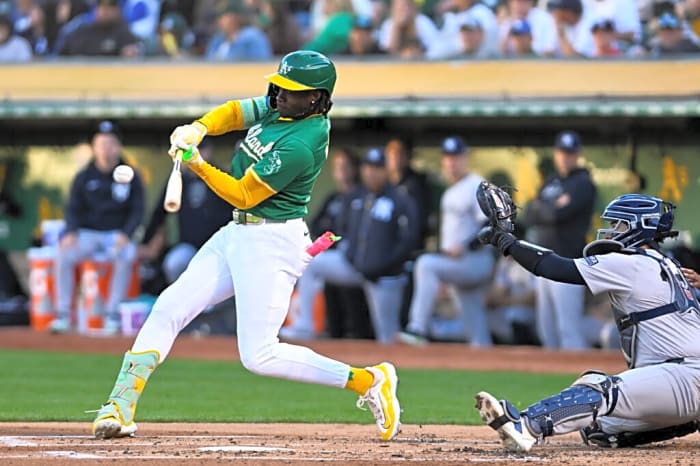
One of the players I spent the most time discussing was right fielder Lawrence Butler.
In the 2024 offseason, the Athletics signed Butler to a seven-year contract extension that would keep him under team control through 2031. At the time, the deal was largely celebrated by A’s fans, who were thrilled to see the organization finally fork over some cash to a homegrown player and make him part of the franchise’s long-term core.
By the first half of the 2026 season, however, that excitement had largely disappeared.
Butler had gone from a promising and productive young star to an offensive black hole, while his defense in the outfield remained below average. By the end of May, his OPS had fallen below .500, making him one of the worst qualified hitters in baseball. Suddenly, the contract that had once represented a commitment to the future looked like it could become an albatross.
But then, as the calendar turned toward summer, something changed for the Law Dog.
Butler slowly began to rediscover the swing that had made him such an exciting player in 2024. His full-season OPS began to climb, and with it came some of the biggest moments of the Athletics’ season. Perhaps none was more memorable than his two-run walk-off home run off Andrés Muñoz on September 13, which was perhaps the knockout punch that cost the Mariners their playoff hopes.
Just as it appeared Butler’s seven-year contract could become one of the defining negatives of the Athletics’ rebuild, he began to remind everyone why the organization had made the commitment in the first place.
By season’s end, Butler had raised his full-season OPS to .720 and posted a positive WAR, completing a remarkable turnaround from where he stood just a few months earlier. More importantly, he showed that the player the A’s believed they were investing in was still there.
Butler’s season should serve as an important reminder for both the organization and its fans: A difficult stretch does not necessarily define a player’s trajectory. His toughness and ability to make adjustments, endure the lowest point of his season and ultimately turn things around showed the value of perseverance over the course of a 162-game season.
For an Athletics team attempting to build a winning core in Sacramento and eventually Las Vegas, Butler’s resurgence could prove particularly important. The season may have started with serious questions about whether he belonged in that core. It ended with a much more encouraging answer: Butler still looks like a player who can be a major part of the next good Athletics team.
But perhaps the most important takeaway from Butler’s 2026 season extends beyond his numbers. The mental fortitude he displayed while navigating the lowest point of his young career could ultimately make him more than just another piece of the Athletics’ core.
If Butler can carry that resilience forward, he has the opportunity to become one of the leaders of the A’s. For a young roster still learning how to navigate the highs and lows of a major league season, having a player who has already experienced the worst and found a way through it could prove invaluable.
A Season of Injuries Built the A’s Depth
For an organization that has consistently failed to reach a .500 winning percentage or even sniff playoff contention, the A’s certainly possess no shortage of promising names offensively.
From the aforementioned 2025 Rookie of the Year contenders to Brent Rooker, Shea Langeliers, and many others, the A’s lineup is chock-full of promising young bats who have either already been All-Stars or possess All-Star potential in the near future.
Unfortunately, as mentioned earlier in the article, a great deal of those promising names went down with injuries, leaving A’s fans to watch far too few games with the offense fully loaded with the stars they have come to know and love.
While their absences undoubtedly contributed to an underwhelming season, these key injuries also opened the door for depth pieces to not only flourish but establish themselves as legitimate pieces of the A’s future.
Carlos Cortes is one name A’s fans have become familiar with after he stepped into the role left vacant by Rooker, who went down with an injury incredibly early in the season.
Cortes proved to be a bat with some thump and, more importantly, some staying power at the major league level. The 29-year-old appeared in over 120 games and impressed offensively, posting a .714 OPS while launching 10 home runs for the A’s.
That type of production opens the door for Cortes to potentially serve as a pinch-hitter off the bench against right-handed pitching, especially considering that all 10 of his home runs came against righties. Alternatively, he could fill a role similar to the one he occupied throughout 2026, serving as an injury replacement in the corner outfield or at designated hitter.
Two other notable names who played key roles for the A’s in the infield during the prolonged absences of Wilson were Alika Williams and Joshua Kuroda-Grauer. The two spent time at various infield positions and excelled defensively throughout the season, combining for just six errors across 109 games.
At the plate, Williams and Kuroda-Grauer impressed in a very similar fashion. Both players consistently put the ball in play, worked quality at-bats, and ultimately produced above-average OPS numbers. Their ability to contribute both offensively and defensively made them valuable pieces during a season in which the A’s were forced to rely heavily on their depth.
All in all, both are players the A’s would be foolish not to have Sharpied onto their major league roster next year as reliable depth options.
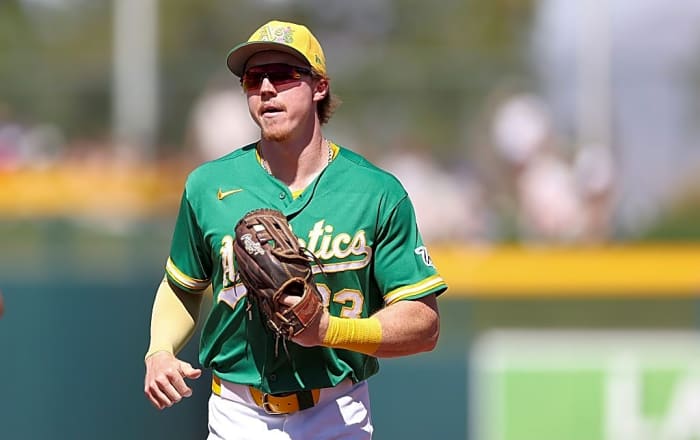
Finally, the biggest success story of these depth pieces getting an opportunity to become full-time major league players is the emergence of Henry Bolte.
On May 13, the A’s promoted the promising outfield prospect after he got off to a phenomenal start to his 2026 season with the Triple-A Las Vegas Aviators. His promotion almost directly coincided with the injury to Gold Glove-caliber center fielder Denzel Clarke, who dealt with a variety of injuries throughout the 2026 season.
Throughout the remainder of the season, Bolte performed exceptionally well as Clarke’s replacement. In 119 games, Bolte posted a .764 OPS while displaying a solid combination of both power and speed. That speed also translated to success defensively, as Bolte graded out as a well-above-average center fielder.
By the end of the season, Bolte had accrued 3.3 bWAR and firmly established himself as one of the next budding stars in the Athletics organization.
Regardless of who the Athletics ultimately opt to move forward with as their everyday center fielder between Bolte and Clarke, it is unquestionable that they have struck gold within their minor league system with Bolte. He is the perfect embodiment of the success the A’s have found in an otherwise lost year, proving that even in a disappointing season, opportunities for the organization’s depth pieces can create the foundation for something much more promising moving forward.
More must-reads:
- Kyle Schwarber makes feelings clear on Don Mattingly after Phillies season ends
- Padres suffer another brutal NLDS loss as Mason Miller blows save
- The 'Most HRs by an MLB first baseman' quiz
Breaking News
Trending News


Customize Your Newsletter
 +
+




Get the latest news and rumors, customized to your favorite sports and teams. Emailed daily. Always free!
PRIVACY POLICY COOKIE POLICY CONTACT US
ABOUT YARDBARKER TERMS OF SERVICE


By using this site, you agree to our Terms of Service and Privacy Policy.
This site is for entertainment purposes only.
There is no gambling offered on this site.
Gambling Problem? Call 1-800-Gambler.
