
-

-


Follow Us
-

 On Facebook
 On Flipboard

Only one team in the history of Major League Baseball has won more World Series than the St. Louis Cardinals. As such, picking the greatest hitters in franchise history is a mighty task.
The Cardinals have rostered 55 players who call the Hall of Fame home. Seventeen of those were inducted as Cardinals, and another 10 feature the team’s logo on their cap on the Hall plaque.
All five of the players on this list have made it. The question is in what order. So without further ado:
5. Enos Slaughter, Outfield
A common refrain for players from Slaughter’s era holds true for him, too: What might have been had Slaughter not missed three seasons for military service? The man they called “Country” spent three years in the Army Air Corps from 1943-45, sapping his 27-, 28- and 29-year-old seasons, otherwise commonly known as the most productive seasons for a majority of MLB players.
Slaughter was productive, anyway. From his second season in the league in 1939, he was earning Most Valuable Player votes. That year, as a 23-year-old, he led all of baseball with 52 doubles. In 1941, he earned his first All-Star Game and in ‘42, he finished second National League MVP voting after collecting an NL-high 188 hits and ML-high 19 triples.
Slaughter wasn’t finished after the war. He went on to make a total of 10 All-Star Games and finished top 10 in MVP voting six times. His most memorable season came in his first year back from WWII.
He led all of baseball with 138 RBIs despite hitting just 18 home runs and his famous “Mad Dash” scored the winning run in Game 7 of the World Series, one of four Slaughter would win before he retired after the 1959 season.
4. Ken Boyer, Third Base/Outfield
Boyer served as the bridge from the Slaughter era into the 60s, getting his start with the Cardinals in 1955 and, like Slaughter, he became an All-Star in his second season. He was aces in the field, leading all of baseball in double plays-turned three times and the NL five times. This despite playing a grand total of 31 of 1,992 games of his career at shortstop.
At the plate, Boyer was simply Mr. Reliable for the Cardinals. And while his career didn’t fall apart the final four years after he left St. Louis, it was almost like he missed the Gateway to the West.
Boyer made 11 All-Star Games and won NL MVP in 1964 putting up an OPS of .854 with an ML-high 119 RBIs in a season that concluded with his only World Series ring as the Cardinals beat the New York Yankees in seven games.
3. Albert Pujols, First Base
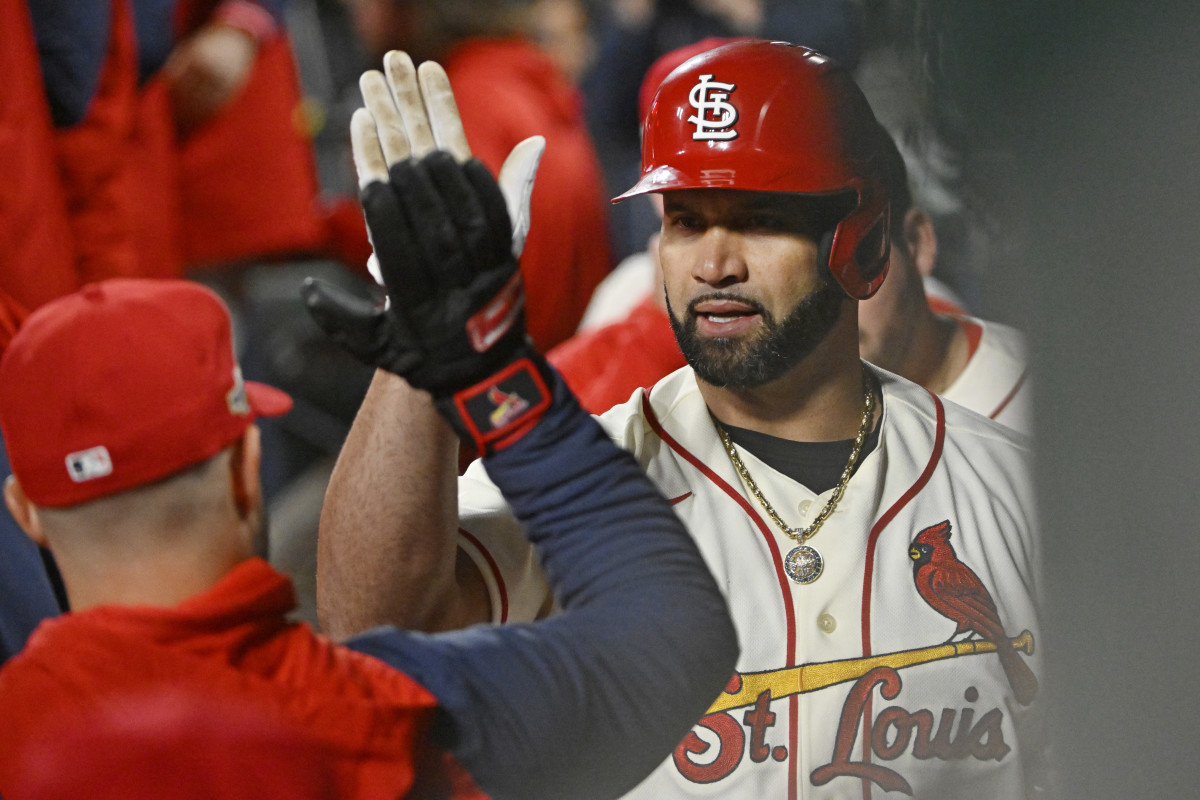
If Pujols would not have left St. Louis after his 11th season, he would trail only the No. 1 player on this list in most statistical batting categories in Cardinals history. As it stands, those 11 years - plus one final resurgent season at the end - are the seasons that qualify for this list.
It’s difficult to overstate Pujols’ stranglehold on baseball in the 2000s. The only hitter to rival Pujols’ fame during the decade was Barry Bonds. And Bonds was just about the only thing stopping Pujols from taking home more than his three MVP awards as the San Francisco Giants leftfielder won the award twice when Pujols finished second (the other Pujols second-place finish was won by Ryan Howard).
Pujols led the NL in WAR for six straight seasons from 2005-10. He led the NL in runs five times, hits once, doubles once, home runs twice, batting average once, on-base percentage once, slugging three times and OPS three times.
He had a few good seasons in Anaheim with the Angels after leaving St. Louis following the 2011 season, but faded badly starting 2017. Then, the return back to STL in 2022, as a 42-year-old stunned. Pujols, in a largely part-time role, went out with 24 home runs and an .895 OPS, his highest total since - dig this - his final season in St. Louis the first time.
2. Rogers Hornsby, Second Base
To people born in the 60s through the early 90s, at least, Hornsby is most famous for having one of the most valuable baseball cards in the world. He wasn’t a player many of the later generations considered along the likes of Babe Ruth, Lou Gehrig, and Ty Cobb. But, oh, he was.
Like Pujols, Hornsby would rank higher on this list had played a few more years with the Cardinals. Instead, his first 12 of his ultimate 23 were played in St. Louis. And they were monstrous. Hornsby led the NL in WAR an incredible eight times in those 12 seasons. He remains one of just three players to record 215 or more hits in at least five seasons, tied with Ichiro Suzuki and Paul Waner.
But Hornsby was hardly just a slap hitter. When Major League Baseball changed the ball itself and removed itself from the dead-ball era following the 1920 seasons, Hornsby’s power numbers exploded.
He went from 36 home runs combined over his first five full seasons to 21 in 1921 and he ultimately led all of baseball with 42 in 1922. On top of those 42, he scored 141 runs, knocked 250 hits, 46 doubles and 152 RBIs. There’s a reason his card is what it is.
1. Stan Musial, Outfield/First Base
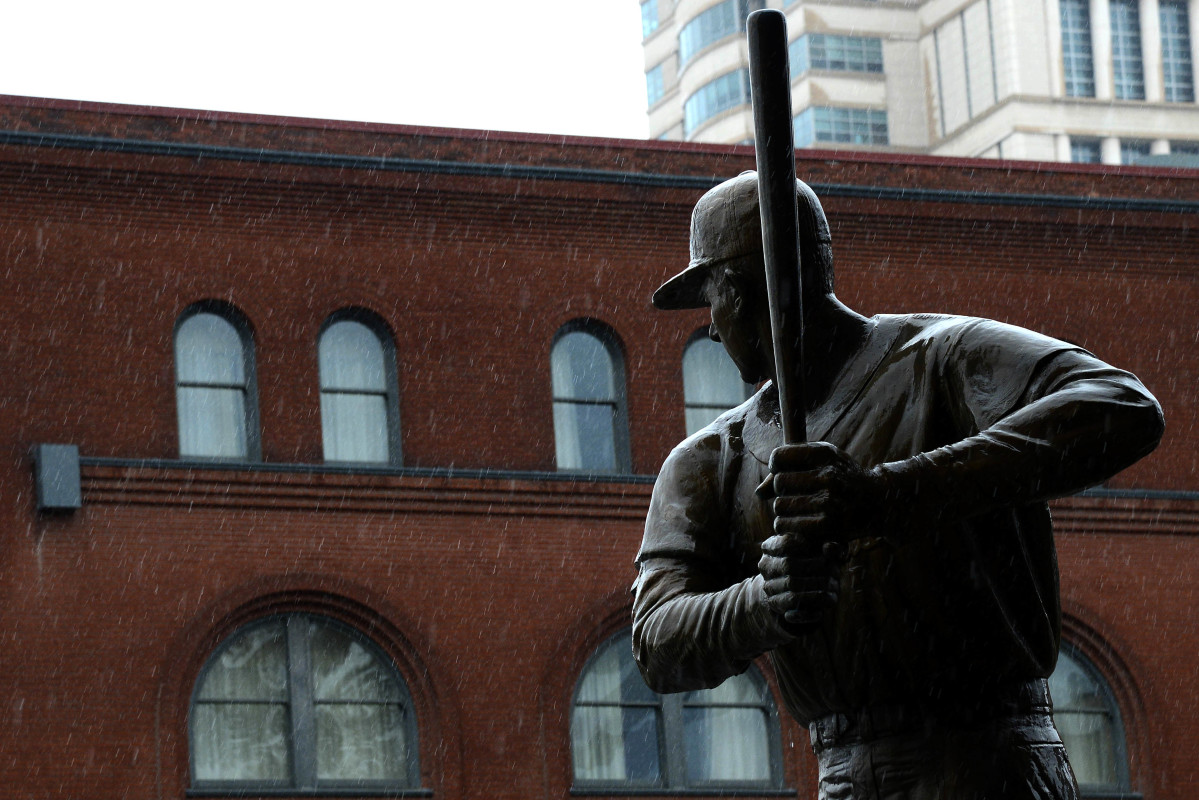
Was there ever any doubt? Stan “The Man” is a cut above and is largely considered one of the 10 or 15 best players to ever play the sport.
First, his stats: Musial slashed .331/.417/.559 with 475 home runs, 1,951 RBIs and 3,630 hits over the course of his 22-year career, all with the Cardinals. He won NL MVP three times, but finished in the top 10 in voting 10 times, including in his penultimate season in 1962 as a 41-year-old.
Only three players rank ahead in hits (Pete Rose, Cobb, Hank Aaron) and Musial won seven batting titles and three World Series in addition to being named an All-Star in 20 seasons. The Cardinals record books are owned by Musial, who leads the franchise in WAR, games, at-bats, plate appearances, total bases, doubles, triples, home runs, RBIs, walks and runs.
More must-reads:
- Three options for the Phillies to improve right field
- Tigers manager drops huge Tarik Skubal injury update
- The 'ERA leaders since 2003' quiz
Breaking News
Trending News


Customize Your Newsletter
 +
+




Get the latest news and rumors, customized to your favorite sports and teams. Emailed daily. Always free!
PRIVACY POLICY COOKIE POLICY CONTACT US
ABOUT YARDBARKER TERMS OF SERVICE


By using this site, you agree to our Terms of Service and Privacy Policy.
This site is for entertainment purposes only.
There is no gambling offered on this site.
Gambling Problem? Call 1-800-Gambler.
