
-

-


Follow Us
-

 On Facebook
 On Flipboard

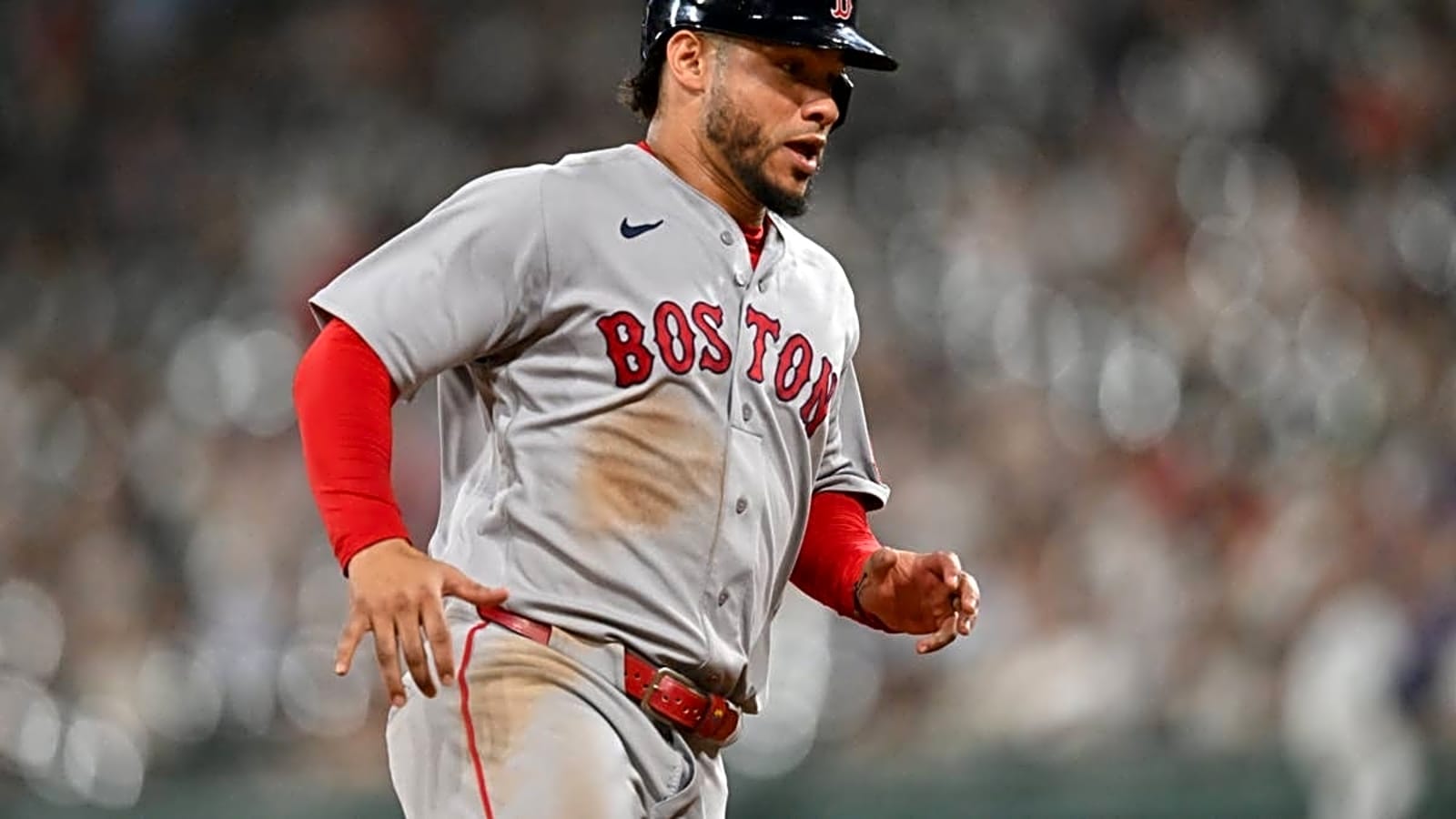
Bat speed numbers are the new exit velocity. Every leaderboard refresh produces a tweet, and every tweet implies the same thing: swinging harder is good, full stop. It isn't. A bat speed gain only means something once you check whether the hitter is actually squaring the ball up more. For four names on this year's leaderboard, the answer is no. Let’s dig in and let you know what to expect from this group in the second half.
What Squared-Up Rate Actually Tells You
Bat speed measures effort. Squared-up rate measures whether the effort did anything useful.
The metric compares the exit velocity a hitter actually produced on a given swing to the maximum exit velocity that swing could have generated, given his bat speed and the incoming pitch speed. Hit at least 80% of that ceiling, and Statcast calls it a squared-up swing. Your squared-up rate is how often you reach that 80% threshold per competitive swing.
The cleanest real-world version: a squared-up swing is what it feels like to hit one on the absolute screws — where the bat path met the pitch at exactly the right moment and you felt almost nothing in your hands. A bat speed gain without more of those swings is a faster miss. The hitter is putting more horsepower into the engine but the wheels are still spinning.
League average bat speed among qualified hitters this season is 72.25 mph. League average squared-up rate per swing is 25.3%. Those two numbers are the baseline against which everything below is measured.
Four Swings Worth a Second Look

The four hitters here share a common profile: each is running a 2026 bat speed at or above league average, and each is squaring up a smaller fraction of competitive swings than that speed figure suggests he should be.
| Hitter | Team | Bat Speed | vs. Lg Avg | Sq-Up Rate (per swing) | vs. Lg Avg | Hard Swing% |
|---|---|---|---|---|---|---|
Willson Contreras |
BOS |
76.96 mph |
+4.7 mph |
19.0% |
-6.3 pts |
70.9% |
Colton Cowser* |
BAL |
74.87 mph |
+2.6 mph |
17.3% |
-8.0 pts |
50.1% |
Tyler Soderstrom |
ATH |
74.46 mph |
+2.2 mph |
24.2% |
-1.1 pts |
45.1% |
Trevor Larnach |
MIN |
71.87 mph |
-0.4 mph |
24.6% |
-0.7 pts |
19.9% |
Cowser's 371 competitive swings fall below the Statcast qualification threshold for the standard bat-tracking leaderboard. His numbers are real; the sample size means treat them as a strong signal, not a confirmed verdict.
All four bat speed and squared-up rate figures are sourced directly from the Baseball Savant Bat Tracking Leaderboard, 2026 season-to-date.
Tyler Soderstrom
Soderstrom is the most interesting case in the group because his season looks fine on the surface. He's hitting .242 with 13 home runs, a .805 OPS, and a barrel rate around 10%. Those are solid numbers for a 23-year-old who just signed a seven-year extension through 2033. Nobody is panicking.[6][7][^8]
But his bat speed of 74.46 mph ranks well above league average, and his squared-up rate of 24.2% per swing is just a tick below the league mean of 25.3%. His xwOBA (.337) runs below his actual wOBA (.347), which means his surface results are slightly outpacing what the contact quality suggests they should be. The power upside the bat speed implies hasn't fully shown up yet because the squared-up rate hasn't moved to match it.
The athletic franchise is clearly betting that it does. Hold, and use the squared-up rate as your early indicator that the 30-home-run ceiling is opening up before the box score confirms it.
Colton Cowser

Cowser's bat speed of 74.87 mph ranks comfortably above league average. His squared-up rate of 17.3% per swing ranks last in this group and more than eight points below the league mean. His batting line — .221 average, .671 OPS — is exactly the kind of number a 17.3% squared-up rate produces.
This is not a new story. Cowser's 2025 barrel rate was at the 88th percentile, his strikeout rate was 35.6%, and his batting average was .196. He is a hitter with real raw damage who consistently fails to make contact at the rate needed to sustain a useful batting line. The bat speed is loud. The swing is not catching up to it.
A note on sample: Cowser's 371 competitive swings fall below the Statcast qualification threshold, which makes his figures slightly noisier than the rest of the group. That said, the direction of the data is clear and consistent with his career profile. He is a speculative add in formats deep enough to absorb batting average risk, not a confident roster move off bat speed alone.
Willson Contreras
Let's get the obvious disclaimer out of the way: Willson Contreras is Willson Contreras of the Boston Red Sox — traded from St. Louis last December — and not William Contreras, his brother, who catches for the Milwaukee Brewers. The two get conflated constantly and it matters here because one of them is having a career year.
That would be Willson. He is batting .285 with 20 home runs, a .921 OPS, and by any meaningful measure is having the best offensive season of his career at 34 years old. So what is he doing in this piece?[^12]
His bat speed of 76.96 mph is among the best in the league — nearly five miles per hour above average. His squared-up rate of 19.0% per swing is almost seven points below league average. By the logic of this article, he should be struggling. He is not struggling at all.
The answer to that contradiction is in his approach. Contreras has explicitly shifted toward a contact-first strategy in 2026, prioritizing pitch selection and zone contact over maximizing swing speed on every pitch. His strikeout rate has dropped, his walk rate has held, and when he does put the ball in play, the quality is good enough — an average exit velocity near 91 mph and a barrel rate around 14%. His squared-up rate is low because he is not trying to square up every competitive swing; he is managing at-bats.
The fantasy read is not that Contreras is fragile. He is a hold with legitimate second-half value. The useful question for his owners is whether the contact-first approach is sustainable as pitchers adjust — not whether his squared-up rate is a warning sign. In his case, it isn't.
Trevor Larnach

Larnach is the inverse of the other three, and his inclusion in this group requires a small asterisk.
His bat speed of 71.87 mph is fractionally below league average. And his results are actually the most improved of the group — he is hitting .281 with a .817 OPS after posting a .250/.727 season a year ago. The swing-harder-but-squaring-up-less narrative fits him least cleanly.
What fits him instead is a sustainability question. His hard-swing rate is just 19.9%, the lowest of this group by a wide margin and well below the league average of 28.0%. His improved results appear to be driven largely by better plate discipline and a higher BABIP rather than a swing-quality upgrade — his average exit velocity is down year-over-year, and his hard-hit rate has followed it. His squared-up rate per swing of 24.6% is right at league average.
For fantasy purposes: Larnach is performing better than his underlying tools suggest he should, which is a pattern that tends to correct. He is a hold if you have him, but the second half is harder if pitchers adjust to his improved zone contact and the BABIP comes back toward earth.
Why This Pattern Exists
A swing gets faster before it gets better. Bat speed is trainable in the weight room and through rotational work; swing-path consistency and timing are not. Hitters who add speed in an offseason program often show up with faster swings well before their timing and sequencing have caught up. The upgrade is real. The rest of the swing hasn't arrived yet.
The statistical signature of that lag is specific: bat speed rises, squared-up rate holds flat or drops, and hard-hit rate follows the squared-up rate rather than the bat speed number. Soft contact and weak grounders tend to precede the power breakout, not follow it. The bat speed you see on the leaderboard is the promise. The squared-up rate is whether that promise is being kept.
The Fantasy Read
Bat speed measures effort. Squared-up rate measures quality. Fantasy managers need both numbers — not just the one that gets tweeted more.
If you are holding a player because his bat speed jumped and you are waiting for the power to follow, squared-up rate will tell you whether the translation is happening roughly four to six weeks before the batting average or BABIP confirms the same thing. It is a leading indicator, not a trailing one.
The practical calls for these four right now:
- Soderstrom: Hold. The tools are there; the contact quality just hasn't matched the speed yet. Squared-up rate moving up is your buy signal on the power upside.
- Cowser: Speculative add in deep formats that can absorb a low batting average. Do not roster him based on the bat speed number alone.
- Contreras: Hold with confidence. His results are real and his approach explains the squared-up gap. The question to watch is sustainability, not collapse.
- Larnach: Hold short-term, monitor second half. His underlying numbers suggest the production is ahead of the swing quality, which is rarely a stable arrangement.
The stat line will catch up to the squared-up rate eventually. It usually does.
Questions About Squared-Up Rate, Answered
What is squared-up rate in baseball?
Squared-up rate is a Statcast metric measuring how much exit velocity a hitter actually produced on a swing compared to the maximum exit velocity available given his bat speed and the pitch speed. Any swing reaching at least 80% of that theoretical ceiling counts as squared up. A higher rate reflects more efficient contact, while a lower rate indicates speed without execution.
Does higher bat speed always mean better hitting?
No. Bat speed tells you how hard a player is swinging, while squared-up rate tells you how well he is making contact. A bat speed gain paired with a falling squared-up rate usually reflects increased effort before improved mechanics, meaning the swing is ahead of itself rather than producing better results.
Why is Colton Cowser's sample flagged?
Colton Cowser's 371 competitive swings fall below Statcast's qualification threshold for the standard bat-tracking leaderboard. His numbers are still valid, but the smaller sample makes them noisier than the figures produced by a hitter who meets the full-season qualification standard.
Is Willson Contreras the same player as William Contreras?
No. Willson Contreras plays for the Boston Red Sox after a December 2025 trade from St. Louis. William Contreras is his brother and catches for the Milwaukee Brewers. They share a surname and position, which frequently leads to confusion in fantasy baseball coverage.
More must-reads:
- Braves' Matt Olson makes franchise history in start vs. Cardinals
- Cardinals lock up Rookie of the Year favorite with nine-figure extension
- The '2026 American League All-Stars' quiz
Breaking News
Trending News



Customize Your Newsletter
 +
+




Get the latest news and rumors, customized to your favorite sports and teams. Emailed daily. Always free!
PRIVACY POLICY COOKIE POLICY CONTACT US
ABOUT YARDBARKER TERMS OF SERVICE


By using this site, you agree to our Terms of Service and Privacy Policy.
This site is for entertainment purposes only.
There is no gambling offered on this site.
Gambling Problem? Call 1-800-Gambler.
